Making bread at home is easier when mixing, kneading, and proofing happen in one countertop appliance. The best electric dough kneading machines can reduce hands-on work while giving you more consistent dough for bread, pizza, buns, and pastries.
This roundup compares 10 options across compact household mixers, larger dough makers, and commercial-style machines. Use the guide below to match capacity, controls, fermentation features, and cleanup needs to your baking routine.
Best 10 Electric Dough Kneading Machines Picks for 2026
Best Compact Mixer
Kitchen in the box 3.2Qt Stand Mixer
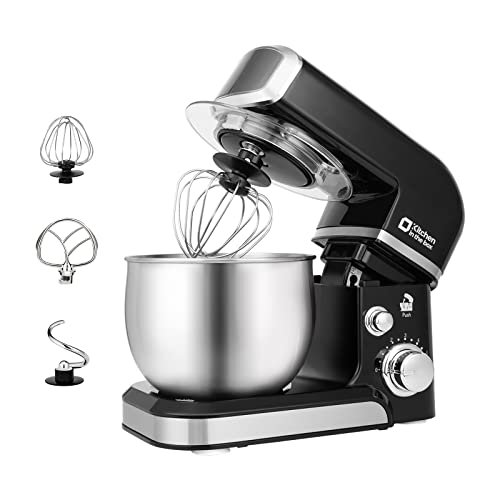
- Small, lightweight countertop design
- Six speeds for varied recipes
- Includes hook, beater, and whisk
Best For: Small kitchens and everyday baking
Best Large-Batch Versatility

- 9.5-quart capacity for large batches
- Mix, blend, ferment, and combo modes
- Winter and Summer fermentation settings
Best For: Frequent bakers and larger households
Best Straightforward Proofing Machine

- Kneads and proofs in one appliance
- 6.5-liter stainless steel bowl
- Detachable chute for adding ingredients
Best For: Family baking with simple proofing needs
Best Overall
Joydeem 7.4Qt Smart Dough Maker

- Large 7.4Qt bowl for family-size batches
- Gentle and Strong modes with four speeds
- 360° proofing plus whisk and filling functions
Best For: Frequent bakers wanting maximum versatility
Best for Quiet Operation
6.5Qt Dough Maker with Ferment Function

- 6.5Qt stainless steel bowl for 300–1400g of dough
- Knob controls and mix-pause-mix kneading
- Constant-temperature fermentation with stable base
Best For: Routine bread and pizza dough preparation
High-Capacity Commercial Pick

- Handles up to 14.88 pounds of dough
- Includes timed mixing and 100–108°F fermentation
- Detachable stainless steel bowl and hook
Best For: High-volume baking and large household batches
Family-Batch Value Pick
7.4Qt Dough Maker with Fermentation

- Mixes, kneads, and proofs in one bowl
- Intermittent kneading supports controlled dough handling
- Suction feet improve stability during mixing
Best For: Families making recurring bread and pizza batches
Best Timed Fermentation Pick – Joydeem 7.4Qt Dough Maker
For shoppers comparing electric dough kneading machines, the Joydeem JD-HMJ7L combines timed mixing with fermentation in a vertical, space-conscious design. Its 250W motor and 6.6-quart capacity are suited to household batches of bread, pizza, buns, and dumplings.
Best For: Home bakers who want preset kneading and proofing cycles with a large stainless steel bowl.
Pros:
- Preset programs can complete kneading in 15 minutes or kneading plus proofing in 45 minutes.
- 6.6-quart capacity supports larger family-sized batches.
- Removable top cover and dishwasher-safe bowl and blade simplify cleanup.
- Intermittent kneading motion is designed to simulate manual dough making.
Cons:
- Only one speed is listed, so speed adjustment is limited.
- The stated noise level is 70 dB.
- The base is not dishwasher safe.
This is a practical choice when automated timing and proofing matter more than variable speed control. Its suction-cup base and weighted body add stability, while the stainless steel components support frequent kitchen use.
Best Compact Mixer – Kitchen in the box 3.2Qt Stand Mixer
Among electric dough kneading machines, this Kitchen in the box stand mixer is the compact, multi-purpose option. Its 3.2-quart stainless steel bowl, six speeds, and included dough hook make it suitable for smaller dough batches as well as batters, whipped mixtures, and meringues.
Best For: Apartment kitchens, couples, beginners, and shoppers who need a lightweight mixer for varied baking tasks.
Pros:
- Compact footprint and weight under 7 pounds support easy storage.
- Six speeds provide more control for dough, batter, whipping, and gentle stirring.
- Includes a dough hook, flat beater, whisk, and stainless steel bowl.
- Four anti-slip suction cups help keep the mixer steady.
Cons:
- The 3.2-quart capacity is smaller than the dough makers in this roundup.
- It does not list a dedicated fermentation function.
- The included dough hook is aluminum rather than stainless steel.
This mixer makes the most sense if versatility and storage convenience are priorities. It is less specialized for proofing, but the six-speed control and three attachments expand its usefulness beyond dough preparation.
Best Large-Batch Versatility – Joydeem 9.5Qt Dough Maker
This Joydeem model stands out among electric dough kneading machines for its 9.5-quart capacity, dual mixing functions, and seasonal fermentation settings. The 300W motor can handle dough for bread, pizza, roti, dumplings, sourdough, and steamed buns, while Blend mode also mixes fillings.
Best For: Larger households and frequent bakers preparing substantial dough batches or mixed fillings.
Pros:
- 9.5-quart bowl handles 900g to 2800g of flour, with up to 2500g for fermented dough.
- Four modes cover mixing, fermenting, combined mixing and fermenting, and blending.
- Winter and Summer fermentation modes offer temperature ranges for different conditions.
- Mixing and fermentation times are adjustable across broad intervals.
Cons:
- Its 12.9-by-12.2-by-13.8-inch footprint requires substantial counter space.
- The listed flour limits mean users still need to follow batch guidelines.
- The vertical design may be less convenient for kitchens with limited overhead clearance.
This is the most capable choice for high-volume home baking and recipes that require more than basic kneading. Its adjustable modes add flexibility, though the larger body is best suited to kitchens with dedicated storage or counter space.
Best Straightforward Proofing Machine – VEVOR 6.9Qt Dough Mixer
The VEVOR Dough Mixer is a straightforward option among electric dough kneading machines, combining continuous mixing with constant-temperature proofing. Its 250W motor, 6.5-liter stainless steel bowl, and digital time controls are designed for household batches of bread, pizza, sourdough, buns, and dumpling wrappers.
Best For: Families that want a dedicated dough mixer with built-in fermentation and ingredient access during operation.
Pros:
- 6.5-liter bowl can handle up to 1600g of flour for larger family batches.
- Combines kneading and constant-temperature proofing in one appliance.
- Detachable ingredient chute allows additions without stopping the machine.
- 304 stainless steel bowl and face-up digital control panel support practical daily use.
Cons:
- The 250W motor is specified for continuous mixing at 150 RPM, without variable speeds.
- The supplied notes do not specify separate fermentation temperature settings.
- Its approximately 11.6-by-11.4-by-13.2-inch size may require dedicated counter space.
Choose this model when you want a focused dough-and-proofing appliance without the broader multi-mode system of the larger Joydeem. The ingredient chute and digital timing controls make it convenient for routine family baking.
Best Overall – Joydeem 7.4Qt Smart Dough Maker
For shoppers comparing electric dough kneading machines, the Joydeem 7.4Qt model stands out for its broad capacity, customizable kneading, and automated proofing workflow. Gentle and Strong modes, four speed levels, and 360° surround heating give it flexibility for everything from dumplings and noodles to bread, pizza, and sourdough.
Best For: Families and frequent home bakers who want one machine for kneading, fermentation, fillings, and whipping.
Pros:
- Large 7.4Qt 304 stainless steel bowl supports approximately 600–2200g of flour.
- Offers Gentle and Strong intermittent kneading modes, adjustable from 5–30 minutes.
- Automatically transitions from kneading to proofing and provides separate summer and winter fermentation settings.
- Includes a whisk, filling blade, dumpling mold, and egg separator in addition to the dough blade.
Cons:
- The relatively large footprint may be more than smaller kitchens need.
- For fermentation, the manufacturer recommends limiting flour to 1600g to leave room for expansion.
- Egg whipping is intended for at least 350g of egg whites.
Its combination of capacity, controls, and multi-function accessories makes this the most versatile choice in the group. It is especially appealing if you regularly prepare different dough styles and want proofing handled in the same bowl.
Best for Quiet Operation – 6.5Qt Dough Maker with Ferment Function
This 6.5Qt option is one of the more practical electric dough kneading machines for bakers who value simple controls and stable operation. Its stainless steel S-shaped blade uses a mix-pause-mix rhythm, while constant-temperature fermentation and a removable lid support a straightforward bread, pizza, pasta, or dumpling workflow.
Best For: Home cooks seeking a large-capacity dough maker with knob controls, low-noise operation, and basic fermentation.
Pros:
- 6.5Qt 304 stainless steel bowl is recommended for 300–1400g of dough.
- Mechanical knob controls are easy to adjust with flour-covered or wet hands.
- Built-in fermentation maintains approximately 77–95°F for a consistent yeast environment.
- Suction-cup base, lid buckles, ventilation, and claimed low-noise technology support stable use.
Cons:
- The notes do not specify multiple kneading speeds or detailed time ranges.
- The bowl is not recommended for dishwasher cleaning, although the dough blade can be washed that way.
- Fermentation requires yeast or baking powder to work properly.
This model keeps the feature set focused: substantial capacity, uncomplicated knob operation, and integrated fermentation. It is a good fit for routine dough preparation when you do not need advanced speed programming or extra attachments.
Best Compact Option – Joydeem 3.7Qt Seasonal Dough Maker
For smaller batches, the Joydeem HMJ-A351 is a compact alternative among electric dough kneading machines. Its intermittent kneading action handles bread, pizza, pasta, sourdough, roti, dumplings, and steamed buns, while seasonal fermentation modes help adapt proofing to warmer or cooler conditions.
Best For: Smaller households and occasional bakers who want automated kneading and seasonal proofing without a large-capacity machine.
Pros:
- Compact 3.7Qt bowl handles 200–1100g of flour, with up to 900g recommended for fermented dough.
- Summer and Winter modes provide separate temperature and time ranges for proofing.
- Supports mixing only, fermentation only, or a combined mixing-and-fermentation cycle.
- 304 stainless steel bowl and blade, silicone suction cups, and a small ingredient window aid everyday use.
Cons:
- Its smaller capacity is less suitable for large family-size batches.
- The machine is not speed-adjustable.
- The heating unit is located at the base rather than using surround heating.
This is the most space-conscious choice of the three. Its capacity limits are worth noting, but the seasonal proofing controls and combined-cycle operation make it useful for smaller batches of common homemade doughs.
High-Capacity Commercial Pick – 13.8QT Commercial Dough Mixer
For bakeries, food-service kitchens, or households that make unusually large batches, this commercial-style option is one of the most capable electric dough kneading machines in this roundup. Its 13.8-quart stainless steel bowl, 500W motor, timer, and fermentation function are designed for high-volume dough preparation.
Best For: High-volume bread, pizza, and general dough mixing in commercial or large household kitchens.
Pros:
- Large 13.8-quart bowl handles up to 14.88 pounds of dough per batch.
- Built-in fermentation function maintains approximately 100–108°F for proofing.
- Touch controls offer a 5–120-minute timer and the motor is rated below 60 dB.
- Removable bowl and spiral hook simplify cleaning and handling.
Cons:
- Its 19.7-inch width and 17.3-inch height require substantial counter space.
- The large capacity may be more than needed for occasional small batches.
- It is a 110V appliance intended for a compatible electrical setup.
This is the strongest fit when capacity and throughput matter more than compactness. The timer, cooling system, and proofing mode add practical convenience for frequent baking, while the detachable stainless steel components help offset the machine’s larger footprint.
Family-Batch Value Pick – 7.4Qt Dough Maker with Fermentation
Families looking for practical electric dough kneading machines may find this 7.4-quart model a useful middle ground between hand kneading and commercial equipment. It mixes, kneads, and proofs in one stainless steel bowl, while intermittent kneading is intended to provide more controlled dough handling.
Best For: Regular family baking, including bread, pizza, sourdough, rolls, and dumplings.
Pros:
- 7.4-quart capacity suits large homemade dough batches.
- Combines kneading and fermentation in one bowl to reduce transfers and cleanup.
- Intermittent kneading allows rest periods that may help limit heat buildup.
- Suction feet help stabilize the machine during heavier mixing.
Cons:
- The 250W motor is less powerful than the commercial model in this roundup.
- The supplied details do not specify a timer range or number of speeds.
- Its 120V requirement should be matched to the available outlet.
This model emphasizes straightforward family use rather than commercial output. The bowl size is generous for home baking, and the combination of intermittent kneading, proofing, and suction feet makes it a sensible choice for recurring bread and pizza preparation.
Hand-Kneading Simulation Pick – AIZIYO DoughChief 7.4QT
For home bakers who want more control over the dough process, the AIZIYO DoughChief is among the more flexible electric dough kneading machines here. Its mix-pause-mix program is designed to simulate hand kneading, and three operating modes combine mixing with constant-temperature fermentation.
Best For: Home bakers making bread, pizza, pasta, or sourdough who want integrated proofing and hand-kneading-style cycles.
Pros:
- Mix-pause-mix operation is designed to mimic hand kneading and support gluten development.
- Three modes provide Mix, Ferment, and Mix & Ferment options.
- Fermentation mode maintains approximately 77–100°F for more consistent proofing.
- Removable lid, stainless steel bowl, and dishwasher-safe removable parts support cleanup.
Cons:
- The 250W motor and one listed speed offer less adjustment than a multi-speed mixer.
- The listed noise level is 75 dB.
- Fermentation requires yeast or fermentation powder.
The DoughChief is best suited to home users who value a guided, repeatable dough routine. Its 7.4-quart capacity handles family-size batches, while the pause-based mixing program and integrated proofing mode make it especially appealing for bread and sourdough workflows.
How We Picked the Best Electric Dough Kneading Machines
We focused on the features that matter most in real kitchens: bowl capacity, dough-focused performance, fermentation control, ease of operation, cleanup, footprint, and versatility. The selection includes compact mixers for occasional baking, mid-size dough makers for regular household use, and larger machines for batch baking or small-scale production.
We also considered practical details such as stainless steel bowls, removable lids, touch panels, timers, seasonal fermentation settings, speed selection, and whether an appliance can handle tasks beyond dough kneading. Since capacity claims do not always equal usable dough capacity, buyers should check the manufacturer’s recommended limits before making dense or enriched dough.
Quick Comparison
- Best for compact kitchens: A 3.2- or 3.7-quart model takes up less counter space and suits smaller batches.
- Best all-around capacity: 6.5- to 7.4-quart machines offer a useful balance of batch size and countertop practicality.
- Best for larger batches: A 9.5-quart or 13.8-quart dough maker is better suited to frequent baking and multiple loaves.
- Best for multifunction use: Stand mixers with several speeds may handle eggs, batters, fillings, and lighter kitchen tasks.
- Best for scheduled proofing: Models with fermentation functions, timers, and seasonal temperature settings can simplify bread-making routines.
Key Buying Factors for Electric Dough Kneading Machines
Capacity and Batch Size
Choose capacity based on the amount of dough you make—not just the advertised bowl size. Smaller bowls are easier to store and clean, while larger bowls are more convenient for family-size recipes or repeated batches. Very large machines may need a permanent countertop position.
Kneading Power and Controls
Dense dough places more strain on a motor than cake batter or whipped eggs. Look for multiple speeds, a dough-specific setting, stable construction, and clear operating instructions. Timers and preset programs are useful when you want repeatable results without constant supervision.
Fermentation and Temperature Management
A built-in fermentation function can provide a more controlled environment for proofing, especially in cool kitchens. Seasonal or adjustable settings are helpful, but they do not replace checking dough volume and readiness. A removable lid also makes it easier to inspect and handle dough.
Materials, Cleaning, and Countertop Fit
Stainless steel bowls are durable and generally straightforward to clean. Check whether the bowl, lid, and attachments are removable, and confirm the machine’s height, width, and weight before buying. Face-up controls and bright displays can improve visibility when the appliance sits beneath cabinets.
Who Should Buy Which Electric Dough Kneading Machines?
Occasional or space-conscious bakers should consider a compact stand mixer or smaller dough maker. These models are suitable for modest batches and are easier to store between uses.
Families and regular home bakers will usually get the best balance from a 6.5- to 7.4-quart machine with kneading and fermentation functions. This range offers room for everyday bread and pizza dough without the footprint of a commercial unit.
Batch bakers and serious hobbyists should look at 9.5-quart or larger machines. Higher capacity reduces the need to divide recipes, although buyers should verify motor limits and available counter space.
Small food businesses or high-volume users may prefer a commercial-style 13.8-quart model with a timer and larger working capacity. For any choice, confirm voltage, warranty coverage, replacement-part availability, and the manufacturer’s dough-capacity guidance before purchase.