Making bread, pizza, pasta, or sourdough at home is easier when a machine handles repetitive kneading without taking over your kitchen. The best compact models balance manageable batch sizes with steady mixing, simple controls, and convenient cleanup.
We compared 10 dough kneading machines for small batches across capacity, fermentation features, bowl design, timing controls, and everyday usability. Use the guide below to narrow the list to the right fit for your recipes and counter space.
Best 10 Dough Kneading Machines for Small Batches Picks for 2026
Compact Mixer Pick
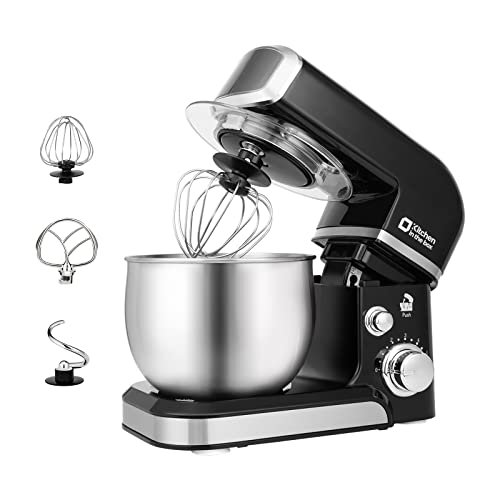
- 3.2-quart stainless steel bowl
- Six speeds with dough hook included
- Lightweight, space-saving design
Best For: Couples, apartments, and everyday small-batch baking
Large-Batch Control Pick

- Handles 300–1,400 grams of dough
- S-shaped blade with timed kneading
- Built-in 77–95°F fermentation
Best For: Families needing flexible small-to-medium batch capacity
Family Batch Pick

- 6.9-quart capacity for larger recipes
- Up to 1,600 grams of flour
- Mixing, fermentation, and timer functions
Best For: Families and larger home dough batches
Hands-Free Fermentation Pick

- Dough-focused kneading design
- Timer and 100°F fermentation function
- Handles up to 1.4 kg of dough
Best For: Home bakers wanting automatic kneading and proofing
Compact Small-Batch Pick

- Compact 3.7-quart capacity
- Adjustable kneading and fermentation times
- Constant-temperature fermentation from 77°F to 100°F
Best For: Small households needing compact, controlled dough preparation
Quiet Fermentation Pick
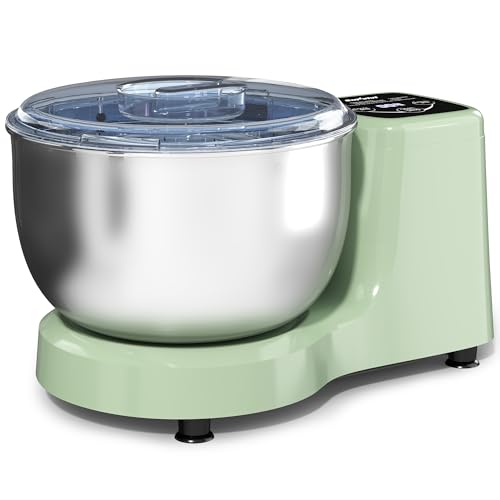
- Adjustable fermentation timer up to 105 minutes
- Compact stainless-steel-bowl design
- Low-noise full-copper DC motor
Best For: Home bakers needing quiet, timed kneading and proofing
Timed Kneading Value

- Adjustable five- to 40-minute timer
- 200-watt DC copper motor
- 5-liter stainless steel bowl
Best For: Home users wanting simple timed kneading and fermentation
Compact Mixer Pick – Small-Batch Stand Mixer
For shoppers comparing dough kneading machines for small batches, this 3.2-quart stand mixer is a space-conscious option for everyday baking. Its 300-watt motor, six speeds, dough hook, and lightweight 7-pound design suit smaller kitchens and modest recipes.
Best For: Couples, apartment kitchens, and new bakers who want one compact machine for dough, batters, whipping, and mixing.
Pros:
- Compact 3.2-quart bowl and lightweight body are easy to store.
- Includes a dough hook, flat beater, and whisk for versatile preparation.
- Six speeds, a tilt head, splash lid, and suction feet support convenient use.
Cons:
- Its smaller bowl is better suited to modest batches than high-volume baking.
- The 300-watt motor and general-purpose mixer design may be less specialized for frequent heavy dough work.
This is the most practical choice when counter space matters and you also want attachments for cakes, creams, and batters. Choose it over a dedicated dough maker if versatility is more important than fermentation features.
Fermentation Feature Pick – Timed Dough Maker
This 5.3-quart Joydeem is one of the more dough-focused dough kneading machines for small batches, combining intermittent kneading with controlled fermentation. Adjustable mixing and proofing times make it useful for bread, pizza, pasta, dumplings, roti, and steamed buns.
Best For: Home bakers who want a dedicated dough machine with proofing support and capacity for roughly 300 to 1,600 grams of flour, depending on the recipe.
Pros:
- Supports mixing, fermentation, or a combined mixing-and-fermentation cycle.
- Temperature range of 77–100°F helps provide a consistent proofing environment.
- 304 stainless steel bowl and blade are durable and easy to clean.
- Silicone suction cups help stabilize the machine and reduce noise.
Cons:
- It has one operating speed rather than adjustable speed control.
- The manufacturer recommends warm water during winter because the fermentation temperature is limited.
- Its 5.3-quart capacity may be more than needed for very small dough portions.
With dedicated proofing controls and a hand-kneading-style intermittent motion, this model is a strong middle-ground option. It is especially appealing if fermentation consistency matters as much as kneading.
Large-Batch Control Pick – 6.5-Quart Dough Maker
Although larger than many dough kneading machines for small batches, this 6.5-quart dough maker offers useful capacity flexibility for households that sometimes bake more. Its S-shaped blade, timed kneading, fermentation function, and removable lid support a mostly hands-off workflow.
Best For: Families and bakers who want to prepare up to about 1,400 grams of dough while still having a machine designed for pizza, bread, pasta, and dumplings.
Pros:
- 6.5-quart 304 stainless steel bowl handles 300–1,400 grams of dough.
- Mix-pause-mix kneading is designed to simulate hand kneading and form gluten efficiently.
- Built-in 77–95°F fermentation helps support proofing in the same vessel.
- Mechanical knob controls, suction feet, and a removable lid are practical during use.
Cons:
- The larger capacity may occupy more space than necessary for truly small batches.
- Fermentation requires yeast or baking powder.
- The bowl is not recommended for dishwasher cleaning, although the dough blade is dishwasher-safe.
This model makes the most sense for shoppers who want small-to-medium batch flexibility rather than the smallest footprint. Its fermentation and kneading features add convenience, while the larger bowl leaves room to scale recipes up.
Family Batch Pick – VEVOR Fermenting Dough Mixer
For households that regularly make larger recipes, this VEVOR model extends beyond the smallest dough kneading machines for small batches with a 6.9-quart capacity. Its 250-watt motor, 6.5-liter stainless steel bowl, timer, and ferment function are aimed at repeat home preparation.
Best For: Families of about six to seven people and home cooks preparing larger quantities of bread, pizza, dumpling wrappers, or steamed-bun dough.
Pros:
- 6.5-liter bowl can handle up to 1,600 grams of flour.
- Combines dough mixing and constant-temperature fermentation.
- Detachable ingredient chute allows additions without stopping the machine.
- Digital controls and a timer simplify everyday operation.
Cons:
- Its 6.9-quart size is less suitable for very small kitchens or single portions.
- The supplied notes do not specify an adjustable temperature range for fermentation.
- Its 9.3-pound body is heavier than the compact stand mixer in this roundup.
This is the capacity-first choice for families and gatherings. If your priority is genuinely small portions and minimal storage, a compact stand mixer will be easier to place; if you want fewer batches, the VEVOR offers more room and a dedicated fermentation function.
Hands-Free Fermentation Pick – 5.3QT Dough Kneader
If you want dough kneading machines for small batches that can also support family baking, this 5.3-quart model offers hands-free kneading with a stainless steel bowl and blade. Its timer and fermentation function make it a practical option for bread, pizza, pasta, and sourdough.
Best For: Home bakers who want automatic kneading plus controlled fermentation for batches up to 1.4 kg of dough.
Pros:
- Designed specifically for dough rather than general-purpose mixing.
- 304 stainless steel bowl and removable S-shaped kneading blade.
- Built-in timing and fermentation heat up to 100°F (38°C).
- Low-speed, high-torque motor is designed for stable, low-noise operation.
Cons:
- The 5.3-quart capacity may be more than needed for very small batches.
- Its 150-watt motor and single dough-focused design may offer less versatility than a multi-speed stand mixer.
This is a strong fit when consistent, hands-free dough preparation matters more than having multiple mixing attachments or speed settings.
Programmable Family Batch Pick – Joydeem 7.4Qt Dough Maker
Among dough kneading machines for small batches, the Joydeem is better suited to bakers who sometimes prepare larger quantities. Its microcomputer controls, preset timing, intermittent kneading motion, and fermentation program reduce hands-on work for bread, pizza, buns, and dumplings.
Best For: Larger households that want programmable kneading and proofing with a stainless steel bowl and touch-style controls.
Pros:
- Preset programs can finish kneading in about 15 minutes or kneading and proofing in about 45 minutes.
- Intermittent kneading motion is designed to simulate manual dough making.
- Face-up control panel and vertical design can help save counter space.
- Removable, dishwasher-safe bowl and blade simplify cleanup.
Cons:
- The 6.24-liter capacity is relatively large for genuinely small batches.
- It has one speed and no speed adjustment.
- The listed noise level is 70 dB.
The Joydeem makes the most sense if programmable convenience and capacity are priorities, though small-batch users may prefer a more compact machine.
Compact Small-Batch Pick – Bear 3.7-Quart Dough Maker
For shoppers specifically comparing dough kneading machines for small batches, the Bear’s 3.7-quart bowl is the most compact option in this group. It combines a 120-watt motor, intermittent kneading, adjustable timing, and thermostatic fermentation for pizza, bread, roti, dumplings, and sourdough.
Best For: Small households and home bakers who want a compact dough maker with adjustable kneading and fermentation times.
Pros:
- 3.7-quart capacity accommodates dry flour weights from 198 to 1,077 g.
- Mixing time adjusts up to 40 minutes, while fermentation adjusts up to 120 minutes.
- Constant-temperature fermentation operates from 77°F to 100°F.
- 304 stainless steel construction, suction-cup feet, and low-noise operation support everyday use.
Cons:
- It has only one speed and no speed adjustment.
- The smaller bowl is less suitable for large family batches.
- Its 120-watt motor may be less suited to heavier workloads than higher-powered models.
The Bear is the clearest choice for compact, repeatable dough preparation when batch size and countertop footprint matter more than maximum capacity.
Quiet Fermentation Pick – Sunvivi 5.3-Qt Dough Maker
For shoppers comparing dough kneading machines for small batches, the Sunvivi offers a useful balance of countertop size and capacity. Its 5.3-quart stainless steel bowl suits roughly three- to five-person households, while the adjustable fermentation timer and quiet belt-driven motor support hands-off bread and bun preparation.
Best For: Home bakers who want adjustable proofing, low-noise operation, and a compact machine for everyday dough making.
Pros:
- Adjustable fermentation timer up to 105 minutes.
- Clear LED display with separate Knead and Ferment controls.
- Compact 5.3-quart design with a 304 stainless steel bowl.
- Full-copper DC motor and belt drive are rated for low-noise operation.
Cons:
- The 5.3-quart bowl may be more capacity than needed for very small batches.
- The supplied information does not specify multiple mixing speeds.
The Sunvivi is a well-rounded choice when quiet operation and built-in fermentation matter as much as kneading. Its compact footprint makes it particularly practical for smaller kitchens.
Hand-Kneading Simulation Pick – AIZIYO DoughChief 7.4-Qt
The AIZIYO DoughChief is a larger option among dough kneading machines for small batches, but its hand-kneading simulation can appeal to households making pizza, bread, pasta, or dumpling dough. The mix-pause-mix program is designed to develop dough gradually, and the built-in ferment mode maintains a stated 77–100°F range.
Best For: Families and home bakers who prioritize multiple dough programs and controlled fermentation over the smallest possible capacity.
Pros:
- Mix-pause-mix program is designed to simulate hand kneading.
- Offers Mix, Ferment, and Mix & Ferment modes.
- Built-in ferment function maintains a stated 77–100°F range.
- Removable lid allows ingredients to be added during mixing.
Cons:
- Its 7.4-quart capacity is relatively large for genuinely small batches.
- The listed 75 dB noise level may be noticeable in a quiet kitchen.
- Only one speed is listed in the supplied specifications.
The DoughChief stands out for its dough-focused programming and fermentation control. Consider it when versatility and family-size capacity are more important than minimizing the bowl size.
Timed Kneading Value – 5L Electric Dough Maker
This 5-liter electric dough maker is a straightforward candidate among dough kneading machines for small batches. Its 200-watt DC copper motor, 140–170 rpm operating speed, and adjustable five- to 40-minute timer are aimed at hands-off kneading for pizza and bread, with a separate fermentation function for dough preparation.
Best For: Budget-conscious home users who want timed kneading in a relatively compact 5-liter machine.
Pros:
- Microcomputer timer adjusts kneading time from five to 40 minutes.
- 200-watt DC copper motor operates at a stated 140–170 rpm.
- 304 stainless steel bowl and touch controls.
- Includes a fermentation function for bread and pizza dough.
Cons:
- The listed 30-day warranty is shorter than the one-year coverage supplied with some alternatives.
- Its stated 75 dB noise level may be noticeable during operation.
- The product information lists only touch control rather than multiple speeds.
The 5L model is best suited to shoppers who value simple timing controls and a smaller footprint. Its short stated warranty is worth weighing against the low-effort preparation it provides.
How We Picked the Best Dough Kneading Machines for Small Batches
We focused on machines that suit household baking rather than high-volume production. Key considerations included usable bowl capacity, dough limits, motor versatility, timer and fermentation functions, control layout, bowl materials, removable parts, and overall footprint. We also considered whether each machine appears practical for common tasks such as kneading bread, pizza, pasta, and enriched dough.
Capacity claims can vary by recipe and flour type, so shoppers should treat maximum figures as upper limits rather than everyday targets. A machine that performs comfortably below its stated maximum may be more useful than one that struggles when fully loaded.
Quick Comparison
| Best For | Look For | Why It Matters |
|---|---|---|
| Very small batches | 3.2- to 4.5-quart bowl | Uses less counter space and suits modest recipes |
| Regular family baking | 5.3- to 6.5-quart capacity | Handles larger loaves, pizza dough, or multiple batches |
| Large dough portions | 7.4-quart bowl and sturdy construction | Provides more room, but usually requires more storage space |
| Hands-off preparation | Timer and fermentation mode | Helps coordinate proofing and scheduled mixing |
Key Buying Factors for Dough Kneading Machines for Small Batches
Capacity and Minimum Batch Size
A larger bowl is not automatically better. For small batches, check whether the kneading attachment can reach a modest amount of dough effectively. Compact 3.2- to 4.5-quart models may be preferable for one or two loaves, while 5.3-quart and larger machines offer more flexibility for family-sized recipes.
Fermentation and Timing Controls
Built-in fermentation can provide a warmer, more controlled environment for proofing, especially in cool kitchens. Adjustable timing is useful for repeatable recipes, but it should complement—not replace—checking dough temperature and rise. Favor clear controls and easy-to-read displays over unnecessary settings.
Construction, Noise, and Stability
Stainless steel bowls are durable and generally easy to wipe clean. A stable base, non-slip feet, and a well-supported head matter during stiff dough kneading. Compact machines can still move or vibrate, so consider where you will use and store one.
Cleanup and Accessories
Removable lids and attachments simplify cleaning, while covered bowls can reduce flour spray. Confirm which parts are removable, whether they are dishwasher-safe, and whether replacement accessories are available before buying.
Who Should Buy Which Dough Kneading Machines for Small Batches?
Choose the smallest model that comfortably matches your usual recipe size if counter space and storage are priorities. Pick a mid-capacity machine if you regularly make bread and pizza for several people or want room for dough expansion. Larger 7.4-quart options make sense for frequent baking and bigger batches, but they may be excessive for occasional small loaves.
For shoppers comparing Dough Kneading Machines for Small Batches, the best choice is usually the model with the right minimum working capacity, dependable kneading performance, and controls you will actually use. Fermentation and scheduling features are valuable conveniences, but capacity, stability, and easy cleanup should come first.