Making pasta for a crowd is easier when your machine can mix, knead, extrude, or roll dough consistently without constant manual effort. The best pasta machines for large batches combine useful capacity with dependable construction and a workflow that matches your kitchen.
This roundup includes high-output commercial machines, automatic home models, and durable manual or motorized rollers. Use the buying guide below to compare capacity, power, pasta options, cleanup, and the level of hands-on control each type provides.
Best 10 Pasta Machines for Large Batches Picks for 2026
Best Commercial Power
750W Stainless Steel Pasta Maker

- Stated output of 45–66 lb per hour
- Presses, kneads, and cuts dough
- 0.1–20mm adjustable thickness
Best For: Restaurants and high-volume home kitchens
Best Family-Size Automatic
Philips 7000 Series Pasta Maker

- Makes up to eight portions
- Eight discs provide shape variety
- Dishwasher-safe parts aid cleanup
Best For: Families and casual entertaining
Best Electric Roller
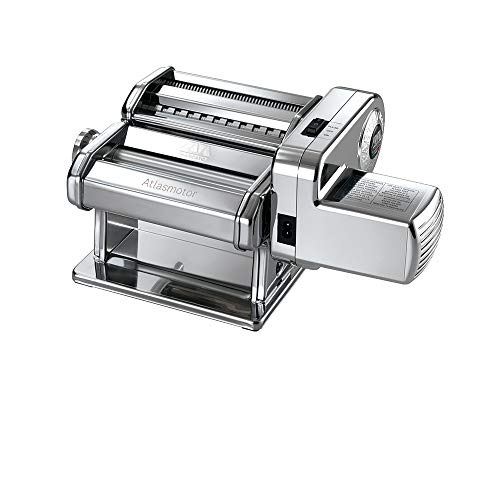
- Includes motor and hand crank
- Rolls sheets up to six inches wide
- Offers 10 thickness positions
Best For: Home cooks making rolled pasta sheets
Best Dual-Function Value
Newhai 750W Commercial Pasta Maker

- Presses and cuts without blade removal
- 0.12–18mm thickness adjustment
- 750W motor with steel construction
Best For: Small restaurants and serious home users
Best Traditional Roller

- 150 mm dough width
- 10 thickness settings
- Includes cutter and clamp
Best For: Home cooks seeking versatile manual pasta making
Best Powered Option

- 11 lb/h stated efficiency
- Presses and cuts dough
- Two noodle sizes
Best For: Home users wanting powered countertop production
Best Classic Chrome Model

- Makes three classic pasta shapes
- 10 thickness settings
- Chrome-steel construction
Best For: Traditional manual pasta preparation
High-Output Electric Roller

- 550W motor for faster dough pressing
- 3–9 mm adjustable roller range
- Dual-purpose 3 mm and 9 mm noodle knife
Best For: Home and small-business batch preparation
Shape-Forward Automatic Maker

- 500g flour capacity for about four people
- Eight discs for varied pasta shapes
- Four automatic modes and dishwasher-safe parts
Best For: Convenient family-sized batches at home
Heavy-Duty Press Option
550W Stainless Steel Noodle Maker

- 550W motor for high-gluten dough and batch work
- Stainless steel body with adjustable thickness
- 3 mm round knife for uniform noodles
Best For: Repeated noodle and wrapper production
Best Commercial Power – 750W Stainless Steel Pasta Maker
For pasta machines for large batches, this heavy-duty electric model stands out with a 750W motor, stainless steel construction, and a stated output of 45–66 pounds of fresh noodles per hour. It also presses and cuts dough, making it suited to demanding kitchen workflows.
Best For: Restaurants, catering operations, and home cooks who need high-volume noodle and dough production.
Pros:
- Produces a stated 45–66 pounds of fresh noodles per hour.
- Combines kneading, pressing, and cutting in one machine.
- Adjustable dough thickness from 0.1 to 20mm.
- Includes a 2-in-1 cutter for 3mm and 9mm noodles, with additional cutter options available.
Cons:
- At 46 pounds, it requires substantial counter or storage space.
- Its commercial construction may be more machine than occasional home cooks need.
This is the strongest choice here when throughput matters most. Its large footprint and weight are trade-offs, but the integrated functions and high stated capacity make it well suited to large-batch production.
Best Family-Size Automatic – Philips 7000 Series Pasta Maker
If you want pasta machines for large batches without stepping up to restaurant equipment, the Philips 7000 Series offers automatic preparation for up to eight portions. Its under-10-minute preparation claim, eight shaping discs, and dishwasher-safe parts make it practical for family meals and gatherings.
Best For: Families and hosts who want convenient, varied fresh pasta with minimal hands-on work.
Pros:
- Makes up to eight portions in one batch.
- Offers eight discs for different pasta shapes.
- Automatic mixing and extrusion can prepare pasta in under 10 minutes.
- Non-stick, dishwasher-safe parts simplify cleanup.
Cons:
- Its 150W motor and eight-portion capacity are aimed at home use rather than continuous commercial production.
- It does not offer the very wide thickness range of the commercial machines in this roundup.
The Philips is a balanced large-batch home option. It prioritizes speed, shape variety, guided recipes, and easy cleanup over industrial throughput, making it especially appealing for regular family cooking.
Best Electric Roller – Marcato Atlasmotor 150
Among pasta machines for large batches, the Marcato Atlasmotor is the most compact roller-style choice. Its included motor supports electric operation, while the hand crank, clamp, and 10-position thickness adjustment preserve manual control for producing sheets up to six inches wide.
Best For: Home cooks who make repeated batches of rolled pasta sheets and want electric or manual flexibility.
Pros:
- Includes both the Pastadrive motor and hand crank.
- Creates pasta sheets up to 150mm, or six inches, wide.
- Provides 10 clearly marked thickness positions.
- Compatible with 11 separately available Marcato accessories.
Cons:
- Its six-inch sheet width and roller format are less suited to high-volume commercial production.
- Additional pasta shapes require separately available accessories.
This machine is a good fit when versatility and traditional sheet rolling matter more than maximum hourly output. The electric drive reduces repetitive cranking, while the manual option remains available when you want more control.
Best Dual-Function Value – Newhai 750W Commercial Pasta Maker
For pasta machines for large batches that combine pressing and cutting, the Newhai uses a 750W motor and a 2-in-1 design that does not require blade removal between functions. Its adjustable 0.12–18mm thickness range also supports pasta sheets, dumpling wrappers, and other dough work.
Best For: Small restaurants and serious home users who need sturdy pressing and cutting in one machine.
Pros:
- Combines dough pressing and pasta cutting without removing the blades.
- Offers a broad 0.12–18mm adjustable thickness range.
- Uses thickened steel construction, stainless steel components, and steel gears.
- Includes 2.5mm round and 2mm/6mm blade options.
Cons:
- Automatically shuts down after one to two hours of continuous operation for cooling.
- At 22kg, it is heavy for a typical household countertop.
- Its semi-automatic operation may require more oversight than fully automatic home models.
The Newhai offers a practical middle ground between home convenience and commercial durability. Its cooling pause limits uninterrupted production, but the dual-function layout and wide thickness adjustment are useful for varied large-batch dough work.
Best Traditional Roller – Marcato Atlas 150 Green
MARCATO Atlas 150 Machine, Made in Italy, Green, Includes Pasta Cutter, Hand Crank, and Instructions
Check Price On AmazonFor cooks comparing pasta machines for large batches, the Marcato Atlas 150 is a sturdy manual option that rolls dough up to 150 millimeters wide and offers 10 thickness settings. It makes lasagne sheets, fettuccine, and tagliolini, with a hand crank and included cutter.
Best For: Home cooks who want broad thickness control and several traditional pasta shapes.
Pros:
- Rolls dough up to 150 millimeters wide.
- Offers 10 thickness settings from 0.6 to 4.8 millimeters.
- Includes a cutter, clamp, hand crank, instructions, and a 10-year warranty.
Cons:
- Manual operation requires turning the hand crank.
- Additional cutters and the optional motor are sold separately.
Its wide roller and adjustable settings make it a flexible choice for repeated home pasta making, although users preparing especially large quantities may prefer powered operation.
Best Powered Option – Newhai Electric Pasta Maker
Among pasta machines for large batches, the Newhai stands out for its electric operation and stated efficiency of up to 11 pounds per hour. It presses dough and cuts two noodle styles, while its adjustable settings also support different sheet thicknesses.
Best For: Home users who want powered pressing and cutting for regular countertop batches.
Pros:
- 135W motor with a stated efficiency of 11 pounds per hour.
- Switches between dough pressing and noodle cutting with one key.
- Stainless-steel food-contact rollers and blades.
Cons:
- Produces only two noodle sizes: 1.5 mm round and 4 mm flat.
- Designed for home use, not commercial use.
- The dough sheet width is 5.5 inches.
This machine offers a convenient powered workflow for home-scale production, but its limited noodle formats and noncommercial design may not suit users seeking extensive shape variety or professional throughput.
Best Classic Chrome Model – Marcato Atlas150 Manual
MARCATO Atlas150 Manual Pasta Maker Machine-LASAGNA, FETTUCCINE & TAGLIOLINI. Made in Italy
Check Price On AmazonThe classic Marcato Atlas150 is a practical manual pick for pasta machines for large batches when you value established roller-and-cutter design. It makes lasagne, fettuccine, and tagliolini, with 10 settings for adjusting dough thickness from 0.8 to 4.8 millimeters.
Best For: Traditional pasta makers who want a chrome-finished manual machine for core pasta shapes.
Pros:
- Supports lasagne, fettuccine, and tagliolini.
- Provides 10 thickness settings.
- Includes the black crank handle and pasta maker.
Cons:
- Manual cranking can require more hands-on effort for large quantities.
- Its listed minimum sheet thickness is 0.8 millimeters, less thin than some models.
- The supplied components list does not mention a clamp or cutter accessory.
This straightforward Atlas model suits batch preparation built around classic pasta shapes and manual control, but buyers should account for the extra effort involved in producing larger quantities.
High-Output Electric Roller – 550W Adjustable Pasta Maker
For shoppers comparing pasta machines for large batches, this 550W stainless steel roller-style model prioritizes dough pressing speed and sturdy construction. Its adjustable roller handles sheets from 3 to 9 mm, while the dual-purpose knife cuts either 3 mm or 9 mm noodles.
Best For: Home cooks, restaurants, canteens, hotels, and snack bars that need an electric machine for pasta sheets, dumpling wrappers, wonton skins, and noodles.
Pros:
- 550W motor is designed to reduce dough-pressing time.
- Food-grade stainless steel construction is corrosion-resistant and easy to maintain.
- Adjustable thickness and dual-purpose knife support multiple sheet and noodle sizes.
- Suitable for both home and business use.
Cons:
- Its 18-by-16-by-19-inch footprint requires substantial counter space.
- The included knife offers 3 mm and 9 mm noodle options rather than a broad range of cutter sizes.
- Users must keep hands away from the rollers and cutter during operation.
This is a practical choice when batch preparation involves both rolled dough sheets and cut noodles. Its larger commercial-style design favors throughput and versatility over compact storage.
Shape-Forward Automatic Maker – 500g 8-Shape Pasta Machine
Among pasta machines for large batches, this automatic model is aimed at convenient home production rather than heavy commercial throughput. It accepts up to 500g of flour, makes pasta for about four people in roughly 14 minutes, and includes eight shaping discs.
Best For: Home kitchens that want hands-off noodle making, multiple pasta shapes, and guided operation with included measuring tools and recipes.
Pros:
- 500g flour capacity supports a family-sized batch.
- Eight discs provide a variety of pasta shapes.
- Four automatic modes simplify mixing, kneading, and extrusion.
- Dishwasher-safe parts, a cleaning brush, and a spatula help with cleanup.
Cons:
- The manufacturer emphasizes careful flour-to-water ratios; too much or too little water can cause sticking or failed extrusion.
- Its 150W motor and home-oriented design may be less suited to sustained commercial production than higher-powered machines.
- The 500g capacity is more appropriate for family batches than very large-volume service.
This machine stands out for ease of use and shape variety. It is a sensible pick for households making several servings at once, but buyers seeking continuous restaurant-scale output may prefer a heavier-duty roller or press.
Heavy-Duty Press Option – 550W Stainless Steel Noodle Maker
For pasta machines for large batches, this 550W stainless steel press is built around motor power and adjustable dough thickness. Its pure-copper motor is described as suitable for high-gluten dough and batch production, while the included 3 mm round knife produces evenly sized round noodles.
Best For: Restaurants, hotels, food-processing settings, and households that need a durable electric press for noodles, dumpling skins, wonton skins, and wide noodles.
Pros:
- 550W pure-copper motor is designed to handle high-gluten dough and batch work.
- Stainless steel construction resists rust and is easy to clean.
- Adjustable thickness control supports more uniform dough sheets.
- Automatic operation can reduce time and manual labor.
Cons:
- The supplied cutter is a 3 mm round knife, so shape and width options are more limited.
- The listed dimensions are approximately 13.78 by 11.81 by 19.69 inches, making it a sizable countertop appliance.
- The notes list a minimum and maximum sheet thickness of 3 mm, so the stated adjustment range is unclear.
This model is a strong fit when motor capacity and robust stainless steel construction matter most. Its focused cutter setup makes it less flexible than multi-disc machines, but the press format suits repeated dough processing.
How We Picked the Best Pasta Machines for Large Batches
We focused on the factors that matter most when producing several portions at once: dough capacity, motor power, construction, pasta-shape flexibility, thickness control, operating speed, and ease of cleanup. The lineup includes automatic extruders, electric roller-and-cutter machines, and manual models so you can match the machine to your volume and workflow.
Commercial stainless-steel units generally offer the highest throughput and durability, while countertop automatic machines prioritize convenience. Manual Marcato models are slower but provide excellent control and can be paired with a motor for easier batch production.
Quick Comparison
| Machine type | Best for | Main advantage | Trade-off |
|---|---|---|---|
| Commercial electric | Restaurants and frequent large batches | High power and durable construction | Larger footprint and higher cost |
| Automatic countertop | Home cooks serving groups | Mixes, kneads, and extrudes with less effort | Usually lower capacity than commercial models |
| Electric roller and cutter | Lasagna, fettuccine, and tagliolini | Consistent sheet thickness and repeatable cuts | May require dough preparation first |
| Manual roller | Occasional use and hands-on control | Simple, compact, and easy to maintain | More labor-intensive for large quantities |
Key Buying Factors for Pasta Machines for Large Batches
Capacity and Throughput
Check both the stated flour or dough capacity and the recommended duty cycle. A machine that accepts 500g of flour may suit family meals, but a restaurant may need repeated cycles, faster extrusion, or a larger commercial hopper. Avoid judging performance by wattage alone.
Power and Construction
Higher-powered motors can handle heavier dough more confidently, but gearing and cooling also affect reliability. Stainless-steel bodies and components are preferable for frequent use because they resist wear and are easier to sanitize. Confirm whether removable parts are dishwasher-safe before buying.
Shape and Thickness Options
Extruders are useful for producing several shaped pastas with interchangeable dies. Roller machines are better for sheets and long cuts such as lasagna, fettuccine, and tagliolini. If your menu requires both, look for a machine or setup that supports the styles you actually prepare rather than paying for unused accessories.
Workflow, Cleanup, and Space
Automatic mixing reduces labor, while rollers give you greater control over hydration and sheet thickness. Consider counter depth, clamp clearance, cord placement, attachment storage, and how easily dried dough can be removed from the parts.
Who Should Buy Which Pasta Machines for Large Batches?
Choose a commercial electric model if you operate a restaurant, catering business, or high-volume kitchen and need durable stainless-steel construction with repeatable output. Choose an automatic countertop model if convenience matters most and you typically prepare several family-sized portions rather than continuous production.
Choose an electric Marcato-style roller for efficient sheets and cut noodles with less hand cranking. Choose a manual roller if you make pasta occasionally, want precise hands-on control, or need a compact machine that is simple to store. Before ordering, verify the included dies or cutters, voltage, warranty, and manufacturer’s recommended batch limits.