The best manual masticating juicers make it easier to prepare fresh juice with controlled pressing, gentle extraction, and less waste. This roundup includes compact citrus presses alongside slow juicer machines for fruits, vegetables, and leafy greens.
Use the comparisons below to match your priorities—such as hands-on control, feed-chute size, cleanup, noise, or countertop space—to the right juicer for your routine.
Best 10 Manual Masticating Juicers Picks for 2026
Effortless Citrus Press

- Extended lever helps reduce hand strain
- Wide bowl handles common citrus sizes
- Dishwasher-safe parts and cleaning brush
Best For: High-yield citrus juicing at home or in batches
Compact Cold Press Pick
SIFENE Mini Slow Masticating Juicer

- Compact design for small spaces
- Dual chute reduces some prep work
- Slow 101 RPM extraction with reverse
Best For: Individual servings of fruit, vegetables, and greens
High-Torque Cold Press
Ninja NeverClog Cold Press Juicer

- 150-watt motor handles fibrous produce
- Two filters customize pulp level
- Includes 24-ounce juice and 36-ounce pulp containers
Best For: Frequent cold-press juicing with adjustable pulp
Versatile Citrus Tool

- 16.9-ounce measuring cup with markings
- Dual reamers for small and large citrus
- Compact BPA-free multifunctional design
Best For: Citrus drinks, measured recipes, and portable kitchen use
Quiet Everyday Pick
Juilist Slow Masticating Juicer
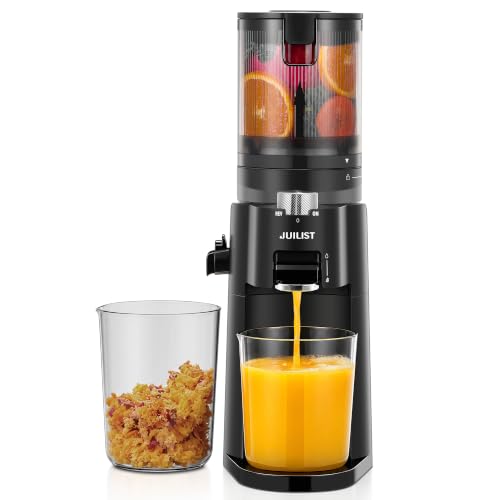
- Wide feed opening reduces chopping
- Quiet 60 dB motor with overheat protection
- Compact, easy-rinse design
Best For: Small kitchens and routine produce juicing
Heavy-Duty Citrus Press
Zulay Kitchen Cast Iron Juicer

- Strong lever action for easy citrus pressing
- Five-inch bowl handles common citrus sizes
- Cast-iron build suits frequent use
Best For: Citrus, cocktails, and high-volume pressing
Whole-Fruit Electric Option

- 5.2-inch chute reduces ingredient prep
- 60 RPM system with triple strainers
- Dishwasher-safe removable parts
Best For: Whole-fruit convenience and larger juicing sessions
Best with Extra Features

- Lever-assisted cast-iron construction
- Stainless steel collection cup included
- Best suited to citrus and pomegranates
Best For: Frequent manual citrus pressing
Whole-Fruit Cold Press
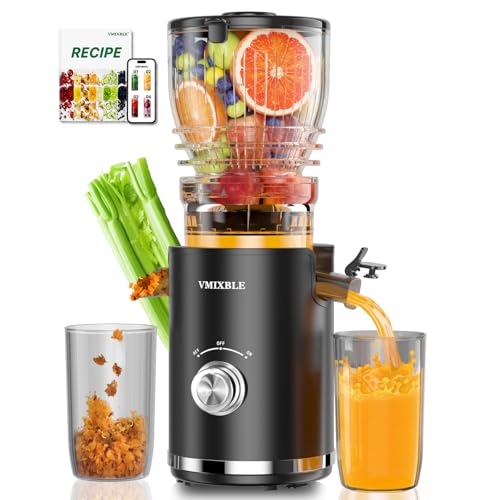
- 5.8-inch chute for whole produce
- 57 RPM slow cold-press extraction
- Quiet operation with reverse and safety features
Best For: Daily family juicing with minimal prep
High-Yield Cold Press

- 5.8-inch chute handles whole produce
- 43 RPM extraction with stated 99.6% yield
- Reverse anti-clog function and cleaning brush
Best For: High-volume home juicing with easy prep
Effortless Citrus Press – Stainless Steel Manual Juicer
If you want manual masticating juicers without motors, this lever-style citrus press focuses on easy, high-yield extraction. Its extended handle reduces hand strain, while the wide bowl accommodates common oranges as well as lemons, limes, grapefruits, and pomegranates.
Best For: Home citrus juicing, batch squeezing, parties, travel, and users who prefer a sturdy countertop press.
Pros:
- Extended ergonomic handle helps reduce effort during squeezing.
- Wide 4.3-inch bowl fits most commercial oranges and several other citrus fruits.
- Dishwasher-safe fruit-contact parts and an included cleaning brush simplify cleanup.
- Stable stainless steel and aluminum construction is suitable for home or commercial use.
Cons:
- Designed for citrus and similar fruits rather than leafy greens or vegetables.
- Heavier and less compact than handheld citrus squeezers.
This is a practical choice when extraction power and counter stability matter more than portability. The two-year replacement warranty and lifetime free-parts support add reassurance for regular use.
Compact Cold Press Pick – SIFENE Mini Slow Masticating Juicer
For shoppers comparing manual masticating juicers with compact electric alternatives, this mini slow masticating model offers powered cold-press extraction in a small footprint. Its dual feed chute accepts long produce such as celery or smaller fruit pieces, reducing preparation time.
Best For: Apartments, dorms, RVs, and everyday servings of juice from apples, carrots, celery, ginger, leafy greens, or wheatgrass.
Pros:
- Compact 4.3-pound design suits small kitchens and limited storage.
- Dual feed chute can reduce chopping for certain ingredients.
- 101 RPM slow masticating operation and reverse function support fibrous produce.
- Dishwasher-safe removable parts and included brush make cleanup easier.
Cons:
- This is corded electric, not a truly manual juicer.
- The included 280 ml juice jug is better suited to individual servings than large batches.
The SIFENE is a useful compact cold-press option when you want broader produce compatibility than a manual citrus press. Its quiet motor, small footprint, and reverse setting make it convenient for routine juicing.
High-Torque Cold Press – Ninja NeverClog Cold Press Juicer
Although it is electric rather than one of the traditional manual masticating juicers, the Ninja NeverClog uses low-speed auger extraction for fruit, vegetables, and leafy greens. Its high-torque motor, reverse function, and interchangeable filters are aimed at consistent, customizable countertop juicing.
Best For: Families or frequent juicers who want cold-press juice, adjustable pulp levels, and larger included containers.
Pros:
- 150-watt high-torque motor is designed for apples, carrots, celery, and leafy greens.
- Two filters let you choose less pulp or more pulp.
- Reverse and start/stop programs keep operation straightforward and help address jams.
- 24-ounce juice jug and 36-ounce pulp container support larger sessions.
Cons:
- Requires a power outlet and is not manually operated.
- Its 15.93-inch height may be less convenient beneath low cabinets.
The JC151 is a strong fit when capacity and pulp control are more important than the simplicity of a hand press. Dishwasher-safe juice-contact parts and an anti-drip lever help make repeated use less messy.
Versatile Citrus Tool – 4-in-1 Manual Orange Juicer
This multifunctional option expands beyond basic manual masticating juicers with a 16.9-ounce measuring cup, dual-size reamers, and additional kitchen uses. The lemon and orange heads target different fruit sizes, while the side grips are designed for squeezing and the detachable handle is intended for carrying and pouring.
Best For: Citrus drinks, marinades, cocktails, camping, and kitchens that want one compact tool for several small food-preparation tasks.
Pros:
- 16.9-ounce cup with measurement markings reduces the need for a separate measuring vessel.
- Dual heads accommodate smaller lemons and limes or larger oranges.
- Flip-top design stores compactly in drawers or cabinets.
- BPA-free food-grade plastic, non-slip silicone base, and detachable handle support convenient use.
Cons:
- The cup is plastic rather than glass.
- It is intended for side-grip squeezing; the handle is for carrying and pouring, not pressing.
- Its added functions may be unnecessary if you only need a dedicated citrus squeezer.
This is a space-saving choice for users who value versatility and measured output. Its dual reamers make it more adaptable than a single-size citrus tool, while the compact design suits occasional juicing and travel.
Quiet Everyday Pick – Juilist Slow Masticating Juicer
For shoppers comparing manual masticating juicers with electric alternatives, the Juilist offers slow 60 RPM extraction, a wide feed opening, and a compact design. Its triple-press technology is intended to reduce prep and improve yield, while the 60 dB motor keeps operation relatively quiet.
Best For: Small kitchens and everyday fruit, vegetable, or leafy-green juicing.
Pros:
- Wide feed opening accepts larger cuts, reducing chopping.
- 60 dB operation and overheat protection support quieter, extended use.
- Detachable silicone plug makes the pulp outlet easier to rinse.
- Compact stackable design saves counter space.
Cons:
- Hand-wash-only care may require more cleanup time.
- Its 20-fluid-ounce capacity may be limiting for larger batches.
- It is corded electric, so it does not provide the portability of a truly manual press.
The Juilist is a practical choice when convenience, lower noise, and space-saving storage matter more than strictly manual operation. Its auto-reverse function and safety interlocks add useful everyday usability.
Heavy-Duty Citrus Press – Zulay Kitchen Cast Iron Juicer
Among manual masticating juicers, the Zulay Kitchen press is a dedicated citrus tool rather than a general produce extractor. Its cast-iron lever provides mechanical advantage for lemons, limes, oranges, and grapefruits, while the stainless-steel components help separate seeds and limit pulp.
Best For: Citrus juice, cocktails, lemonade stands, and high-volume home or commercial use.
Pros:
- Lever action extracts citrus with minimal effort.
- Five-inch bowl accommodates fruit from small limes to large grapefruits.
- Heavy-duty cast-iron construction is designed for repeated high-pressure use.
- Rubberized feet help keep the press stable during operation.
Cons:
- Designed primarily for citrus rather than leafy greens or hard vegetables.
- At 15.75 inches tall, it may require considerable storage space.
- Hand-wash-only care is less convenient than dishwasher-safe parts.
This is the strongest fit for buyers who specifically want a durable manual citrus press. It is fast and leverage-driven, but its specialized design makes it less versatile than a slow juicer for broader produce types.
Whole-Fruit Electric Option – AMZCHEF Slow Juicer
Although it is electric rather than manual, the AMZCHEF is a useful comparison for anyone evaluating manual masticating juicers against more automated options. Its 5.2-inch reversible chute, built-in cutting blades, and 60 RPM cold-press system are designed to reduce preparation and clogging while supporting high juice yield.
Best For: Users who want whole-fruit convenience, larger batches, and simple cleanup.
Pros:
- Wide self-feeding chute handles larger ingredients with less chopping.
- 60 RPM processing and triple strainers support smoother juice separation.
- Large auger is designed to maximize juice extraction.
- Removable parts are dishwasher safe, and assembly uses three main components.
Cons:
- It requires a power source and does not offer manual operation.
- At 16.3 inches tall, it may be awkward under low cabinets.
- The 200-watt unit is heavier and less portable than a hand press.
The AMZCHEF makes the most sense when convenience outweighs the simplicity of a manual juicer. Its whole-fruit chute and dishwasher-safe removable parts can shorten both preparation and cleanup, while the included one-year limited warranty adds purchase support.
Best with Extra Features – Cast Iron Hand Squeezer
For shoppers comparing manual masticating juicers, this Eurolux is a different kind of option: a sturdy hand press designed for citrus and pomegranates rather than leafy greens or whole-vegetable extraction. Its lever-assisted cast-iron build is suited to frequent countertop use when you want fresh juice without electricity.
Best For: Citrus juice, pomegranate juice, and users who prefer a durable manual press.
Pros:
- Heavy-duty cast-iron construction with a lever that helps reduce squeezing effort.
- Removable fruit-contact parts are dishwasher safe, according to the supplied details.
- Includes a stainless steel cup and suction-cup base for more secure countertop use.
Cons:
- It is intended primarily for halved citrus fruits and pomegranates, not broad masticating-juicer recipes.
- At 7.23 kg, the cast-iron construction is substantially heavier than electric countertop juicers.
This is a practical choice when durability and simple manual operation matter more than versatility. The built-in cup and stable base make it convenient for repeated citrus pressing, while the heavy frame adds confidence during use.
Whole-Fruit Cold Press – 300W Slow Masticating Juicer
This electric slow masticating juicer is designed for convenient everyday extraction, with a 5.8-inch feed chute that can accept many whole fruits and vegetables. Its 57 RPM operation, 300W motor, and juice-and-pulp separation make it a flexible choice for home users who want less preparation and quieter operation.
Best For: Busy households making juice from apples, carrots, celery, leafy greens, and other fruits and vegetables.
Pros:
- Wide 5.8-inch chute accommodates whole fruits and vegetables, reducing prep work.
- Low-speed 57 RPM extraction is designed to limit heat and oxidation.
- Features quiet operation, reverse function, safety protection, and easy disassembly.
Cons:
- It requires a 120-volt AC power source rather than manual operation.
- The plastic construction may feel less substantial than a metal-bodied press.
Choose this model if convenience and broad ingredient compatibility are priorities. Its large chute and simple three-step assembly support regular use, while the safety lock and reverse function add practical features for family kitchens.
High-Yield Cold Press – EUHOMY 400W Slow Juicer
Among manual masticating juicers and electric cold-press alternatives, this EUHOMY model emphasizes high yield and reduced prep time. Its 5.8-inch chute, 43 RPM slow extraction, and reverse anti-clog function are aimed at users who want to process whole produce with a straightforward cleanup routine.
Best For: Home juicers seeking whole-fruit processing, high stated yield, and convenient cleanup.
Pros:
- The 5.8-inch feed chute is designed to fit whole apples, oranges, carrots, and celery.
- 400W motor and 43 RPM multi-stage cold-press operation are specified for high juice yield.
- Three-core-part design, included cleaning brush, and reverse anti-clog function simplify use.
Cons:
- This is an electric juicer, so it is not suitable for shoppers specifically seeking hand-powered extraction.
- Its 17.28-inch height may require careful countertop and cabinet clearance planning.
The EUHOMY is a strong convenience-focused option for frequent fruit and vegetable juicing. Its large capacity, whole-produce chute, and unclogging function make it practical for larger batches, while the included brush supports routine maintenance.
How We Picked the Best Manual Masticating Juicers
We compared these 10 models by looking at extraction style, intended ingredients, construction, capacity, ease of use, cleaning demands, and overall practicality. The selection includes true hand-operated citrus presses as well as electric slow masticating juicers, since shoppers often use “manual” to describe hands-on juicing or non-centrifugal pressing.
We also considered useful design details such as wide feed chutes, dual reamers, pulp handling, quiet operation, self-feeding performance, and the stability needed during repeated use. Product claims should still be checked against the manufacturer’s current specifications before purchase.
Quick Comparison
| Best For | Look For | Typical Strength |
|---|---|---|
| Occasional citrus juice | Manual lever, reamer, or press | Simple setup and no motor |
| Daily mixed-ingredient juicing | Slow motor and broad ingredient support | More versatility |
| Large produce | Wide feed chute | Less chopping and faster prep |
| Small kitchens | Compact footprint and easy storage | Lower countertop commitment |
| Higher-volume citrus use | Cast-iron frame and stable base | Leverage and durability |
Key Buying Factors for Manual Masticating Juicers
Manual Press or Electric Slow Juicer?
A hand press is ideal for oranges, lemons, limes, and similar citrus. It is quiet, straightforward, and easy to use for small batches, but it is not designed for carrots, leafy greens, or whole produce. Electric slow juicers offer broader ingredient compatibility and less repetitive hand pressure, though they add motor noise, parts, and cleanup.
Feed-Chute Size and Preparation
A wide chute can reduce chopping, especially when juicing apples, cucumbers, or other firm produce. Smaller chutes may improve control and reduce jamming but require more preparation. Confirm that the opening and included components match the produce you normally buy.
Yield, Pulp, and Texture
Masticating designs generally prioritize slower extraction and can produce a different texture from high-speed centrifugal models. Yield depends on ingredient freshness, cutting technique, pressure, and pulp-screen design. If pulp level matters, check whether the unit offers strainers or adjustable control.
Cleanup and Storage
Removable parts, a supplied cleaning brush, and a simple pulp path can make more difference than a small performance claim. Measure the assembled height and storage footprint, and verify whether parts are dishwasher-safe if that is important to you.
Who Should Buy Which Manual Masticating Juicers?
- Choose a compact manual citrus press if you mainly make occasional orange, lemon, or lime juice and want no electrical components.
- Choose a heavy-duty cast-iron press if stability, leverage, and repeated citrus batches are more important than portability.
- Choose a compact electric slow juicer for a smaller kitchen, limited daily quantities, or a lower storage footprint.
- Choose a wide-chute slow juicer if you want to reduce chopping and regularly juice larger pieces of produce.
- Choose a versatile masticating machine if your recipes include vegetables, apples, leafy greens, and mixed combinations rather than citrus alone.
Before buying, prioritize the ingredients you juice most, the amount you make per session, and how often you are willing to disassemble and wash the machine. The best choice is the one that fits those habits consistently.