The best dough sheeters for small bakeries make it easier to produce evenly rolled pastry, pizza, cookie, and fondant dough without relying on repetitive hand work. The right machine can improve consistency while fitting a limited production space.
This roundup compares compact folding models, wide manual sheeters, and adjustable electric machines so you can match capacity, control, cleanup, and budget to your bakery’s daily workflow.
Best 10 Dough Sheeters for Small Bakeries Picks for 2026
Best Space-Saving Manual Option

- 0–25 mm adjustment with 10 settings
- Folds for compact storage
- Works with pastry, pizza, fondant, and more
Best For: Small, flexible baking operations without electricity
Best Wide Countertop Design
15.5-Inch Folding Dough Sheeter

- Wide board for larger portions
- Stainless steel, food-safe construction
- Stable, detachable, and easy to clean
Best For: Countertop production in small bakeries and cafes
Best Large Manual Work Surface
40.6-Inch Foldable Manual Sheeter

- Large 40.6-inch working platform
- 56 settings from 0–25 mm
- Manual, foldable, and multi-purpose
Best For: Larger batches in compact bakery, food-truck, or pizza-shop setups
Best Electric Efficiency
22.7-Inch Commercial Electric Sheeter

- Electric rolling reduces manual effort
- 2–30 mm thickness adjustment
- Foldable 304 stainless steel countertop design
Best For: Small commercial operations prioritizing efficient, consistent rolling
Best for Easy Setup
Foldable 40.5-Inch Dough Sheeter

- Folds for compact storage
- 304 stainless steel construction
- Adjusts from 2–30mm
Best For: Small bakeries needing a versatile manual sheeter
Best Electric Option
22.7-Inch Electric Dough Sheeter
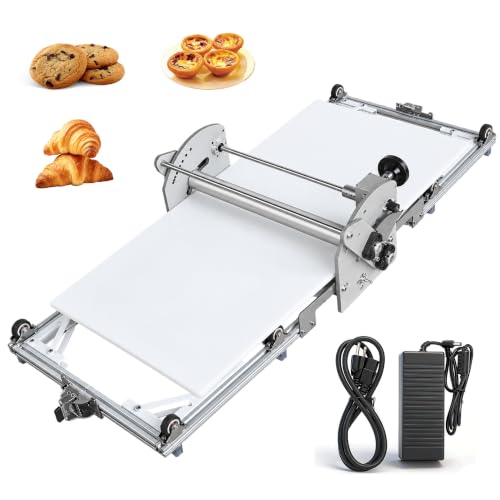
- Fast, consistent electric rolling
- 2–30mm thickness adjustment
- Detachable stainless steel design
Best For: Small bakeries prioritizing speed and repeatability
Best Compact Starter
12-Inch Folding Manual Sheeter

- Compact folding design
- 0–17.5mm graduated adjustment
- Includes two sheeter boards
Best For: Small spaces and lower-volume pastry batches
Best Manual Stainless Steel Pick

- Manual, electricity-free operation
- 0–12 mm adjustable thickness
- Removable parts and stainless steel body
Best For: Small bakeries needing a sturdy countertop manual sheeter
Best Space-Saving Starter
12-Inch Foldable Dough Sheeter

- Folds for compact storage
- Includes two PE sheeter boards
- 0.2–17.5 mm thickness adjustment
Best For: Small baking spaces and entry-level pastry preparation
Best Wide-Range Folding Model

- 0–25 mm range with 56 settings
- Wide 40.5-inch operating length
- Folds for easier storage
Best For: Small bakeries needing versatile thickness control and a wide work surface
Best Space-Saving Manual Option – Foldable 25 mm Manual Sheeter
For small bakeries seeking dough sheeters for small bakeries without adding an electric appliance, this foldable manual model offers adjustable thickness, a non-slip base, and a compact storage footprint. It is designed for pastry, pizza, cookies, fondant, and other doughs.
Best For: Small bakeries and mobile or space-limited baking setups that want a versatile, electricity-free sheeter.
Pros:
- Adjustable 0–25 mm thickness range with 10 settings.
- Foldable design stores in cabinets, closets, or RVs.
- Handles puff pastry, croissants, pizza dough, cookies, fondant, and soft candy.
- Food-grade construction and wipe-clean surfaces simplify cleanup.
Cons:
- Manual operation requires more physical effort than an electric model.
- The smaller 30 × 60 cm version may be limiting for larger production batches.
This is a practical choice when flexibility and storage matter more than automated throughput. Its two size options let buyers choose between a more compact home-style footprint and a larger working surface.
Best Wide Countertop Design – 15.5-Inch Folding Dough Sheeter
This 15.5-inch model is one of the more practical dough sheeters for small bakeries that need a broad working surface without committing to a large floor machine. Its stainless steel construction, adjustable control knob, and rotating handle support consistent manual production.
Best For: Small bakeries, cafes, pizzerias, and home-based businesses making repeated batches on a countertop.
Pros:
- Extra-wide 15.5-inch dough board rolls larger portions in one pass.
- Handles pizza, croissants, puff pastry, tortillas, fondant, and laminated dough.
- Food-safe stainless steel rollers and frame are rust- and deformation-resistant.
- Non-slip feet, a low-friction system, and a detachable structure support stable use and easier cleaning.
Cons:
- At 35 pounds, it is less portable than lighter manual models.
- Manual operation may not suit bakeries needing high-volume automated output.
The wide board and stable base make this a solid countertop option for routine manual production. It prioritizes controlled, even rolling and durability while remaining more compact than a full commercial line.
Best Large Manual Work Surface – 40.6-Inch Foldable Manual Sheeter
For small bakeries that need to process larger dough portions manually, this 40.6-inch foldable model combines a large platform with precise thickness control. It works without electricity and is built around a stainless steel contact surface and reinforced alloy frame.
Best For: Bakeries, food trucks, and pizza shops that need a large manual rolling area with compact storage after use.
Pros:
- Large 40.6 × 22.8-inch working platform accommodates bigger batches.
- 0–25 mm range with 56 adjustment settings supports consistent thickness.
- 360-degree rotating handle helps produce even sheets with less effort.
- Suitable for pizza, pasta, dumpling wrappers, pie crust, and fondant.
Cons:
- The expanded footprint requires substantial counter or setup space during use.
- Manual operation is less efficient than powered equipment for continuous high-volume work.
Its main advantage is capacity without electricity: the broad platform can reduce the need to divide dough into smaller pieces. The folding structure helps offset its large operating size when storage space is limited.
Best Electric Efficiency – 22.7-Inch Commercial Electric Sheeter
Among dough sheeters for small bakeries, this electric model is the efficiency-focused choice for operators who want consistent rolling with less manual effort. It offers 2–30 mm adjustment, a foldable countertop format, and food-safe 304 stainless steel construction.
Best For: Small commercial bakeries, pizza shops, and restaurants that have power available and want to reduce manual rolling time.
Pros:
- Electric operation reduces physical effort and supports faster preparation.
- Adjustable 2–30 mm thickness range suits pizza, croissants, puff pastry, pasta, and empanadas.
- Foldable countertop design helps improve storage efficiency.
- 304 stainless steel construction is rust-resistant, food-safe, and easy to clean.
Cons:
- At 52 pounds, it is relatively heavy for a countertop appliance.
- Requires access to electricity, unlike the manual alternatives.
This model makes the most sense when throughput and reduced operator strain outweigh portability. Its wide adjustment range and electric rolling system offer a practical upgrade for small businesses preparing dough regularly.
Best for Easy Setup – Foldable 40.5-Inch Dough Sheeter
For small bakeries comparing dough sheeters for small bakeries, this manual stainless steel model stands out for its foldable design and broad 2–30mm thickness range. The hand crank provides an electricity-free way to roll dough for pastries, pizza crusts, and other baked goods.
Best For: Small bakeries and home-based baking spaces that need a manually operated sheeter with compact storage.
Pros:
- Folds into a compact, suitcase-like form for storage.
- 304 stainless steel construction is food-grade and easy to rinse clean.
- Adjustable 2–30mm thickness supports varied pastry and dough applications.
- Hand-crank operation helps produce more even sheets than traditional hand rolling.
Cons:
- Manual operation requires physical effort and does not offer electric-speed production.
- Its larger unfolded footprint may still require dedicated counter space during use.
This is a practical choice when storage flexibility and material hygiene matter more than automation. Its wide thickness adjustment makes it versatile, while the foldable frame helps it fit smaller work areas.
Best Electric Option – 22.7-Inch Electric Dough Sheeter
For small bakeries seeking faster production, this electric dough sheeter automates the rolling process and is designed to deliver consistent sheets. Its adjustable 2–30mm range accommodates croissant, pizza, pastry, cookie, and pasta dough.
Best For: Small bakeries, cafés, and home bakers that prioritize quicker, more consistent rolling with electric operation.
Pros:
- Electric operation reduces the effort and time associated with manual rolling.
- Adjustable 2–30mm thickness supports multiple dough types.
- Stainless steel body and food-grade rollers are designed for durability and stability.
- Detachable construction can simplify assembly and storage.
Cons:
- Requires access to power, unlike a hand-crank model.
- Its electric mechanism may be more equipment than low-volume bakers need.
This model makes the most sense for operations where repeatable output and reduced manual labor are priorities. The detachable design adds storage flexibility, while its broad thickness range keeps it useful across a varied menu.
Best Compact Starter – 12-Inch Folding Manual Sheeter
Among dough sheeters for small bakeries, this 12-inch folding model is a compact manual option with simple assembly and two sheeter boards. Its graduated 0–17.5mm adjustment is suited to smaller batches of croissants, egg tarts, pizza crust, and similar doughs.
Best For: Small bakeries and home bakers with limited space who want a compact hand-crank sheeter for lighter-duty pastry work.
Pros:
- Folding and disassembly help minimize storage needs.
- Simple setup can be completed without complex tools or skills.
- Food-grade 304 stainless steel is hygienic and easy to clean.
- Graduated 0–17.5mm adjustment supports precise thickness selection.
Cons:
- The 12-inch format offers less working width than larger sheeters.
- Manual hand-crank operation may be slower for higher-volume production.
This is a sensible starter choice for space-constrained operations and smaller pastry batches. Its compact footprint and straightforward setup are appealing, though businesses producing wide or high volumes of dough may need a larger model.
Best Manual Stainless Steel Pick – VEVOR Manual Dough Sheeter
For small bakeries seeking dough sheeters for small bakeries without adding electrical equipment, this VEVOR model offers straightforward manual rolling in a compact countertop format. Its stainless steel construction, removable components, and adjustable thickness make it suitable for pastry, fondant, pasta, and pizza preparation.
Best For: Small commercial kitchens and bakeries that want a sturdy manual sheeter with precise thickness control and easy cleanup.
Pros:
- Manual operation requires no electricity.
- Adjusts from 0 to 0.5 inches, or 0 to 12 mm.
- Removable handle, panel, and roller simplify storage and cleaning.
- Fixed base and stainless steel build support stable countertop use.
Cons:
- Manual operation requires repeated hand cranking.
- At 23.2 pounds, it is not especially lightweight to move.
- The compact format may be less suitable for very large production batches.
This is a practical choice when durability, control, and a relatively small footprint matter more than automated throughput. The widened inlet and outlet help with larger portions, but the manual design remains best suited to modest production volumes.
Best Space-Saving Starter – 12-Inch Foldable Dough Sheeter
Among dough sheeters for small bakeries, this 12-inch manual model stands out for its foldable design and included work boards. It provides a broad working surface when open while folding down for easier storage, making it a sensible fit for compact baking areas and smaller pastry operations.
Best For: Home bakers and small bakeries that prioritize storage efficiency, included accessories, and simple manual operation.
Pros:
- Folds from 31.4 × 13.7 × 7.6 inches to 13.7 × 7.6 × 5.5 inches.
- Includes two food-grade PE sheeter boards with rough and smooth surfaces.
- Offers thickness adjustment from 0.2 to 17.5 mm.
- Stainless steel construction is rust-resistant and easy to wipe clean.
Cons:
- Manual rolling does not provide powered production.
- Its 12-inch format may limit the width of larger dough sheets.
- Assembly and disassembly may add setup time between uses.
The combination of folding storage and two boards makes this an approachable option for kitchens where counter space is limited. Its adjustment range covers common doughs, though higher-volume bakeries may want a wider machine.
Best Wide-Range Folding Model – 400B Manual Dough Sheeter
For small bakeries that need a wider working area and fine control, this folding manual sheeter offers a 0–25 mm range with 56 adjustment settings. It handles pizza, puff pastry, croissants, fondant, and other doughs while folding down for storage when the work area is needed for other tasks.
Best For: Small bakeries, pastry shops, and home-commercial kitchens needing a broad manual sheeting surface and detailed thickness adjustment.
Pros:
- Provides 56 settings across a 0–25 mm thickness range.
- Folds from 40.5 × 22.8 inches to 18.5 × 11.8 inches.
- Food-contact components use stainless steel, with an oxidation-resistant plated surface.
- 360-degree handle and gear system are designed for smoother manual rolling.
Cons:
- Requires substantial counter space when fully opened.
- Manual operation still requires physical effort for extended production.
- Its larger footprint may be inconvenient in very small kitchens during use.
This model balances a generous working size with foldable storage, giving small operations more flexibility than a compact countertop roller. The broad adjustment range is particularly useful for bakeries producing several dough styles, provided there is enough room to operate it comfortably.
How We Picked the Best Dough Sheeters for Small Bakeries
We organized these machines around the practical needs of smaller commercial kitchens: usable roller width, thickness adjustment, operating method, storage footprint, cleaning access, and the types of dough each design can handle. Manual models generally offer lower upfront cost and more control, while electric sheeters reduce physical effort and make repeated batches faster.
Because bakery layouts and production volumes vary, there is no single best format for every business. A compact folding unit may be the smarter choice for a shared kitchen, while a wider machine can save time when preparing larger pastry sheets.
Quick Comparison
| Best For | Recommended Format | Main Advantage | Potential Trade-Off |
|---|---|---|---|
| Occasional pastry production | Compact manual sheeter | Lower cost and simple operation | More hands-on effort |
| Small daily batches | Folding 12- to 15.5-inch model | Good balance of capacity and storage | Narrower working width |
| Large pastry or pizza sheets | Wide 40-inch manual sheeter | Handles broad dough pieces | Needs substantial counter or floor space |
| Frequent production | Electric sheeter | Faster, less physically demanding work | Higher price and more components to maintain |
Key Buying Factors for Dough Sheeters for Small Bakeries
Roller Width and Available Space
Measure both the machine footprint and the clearance needed to load, fold, and remove dough. Wider rollers are useful for laminated pastry and pizza, but compact folding designs are easier to store between batches.
Thickness Range and Adjustment
Look for a smooth, repeatable adjustment system. A broad range—such as settings reaching very thin pastry or thicker dough—gives you more flexibility, but confirm that the scale is easy to read and lock securely.
Manual or Electric Operation
Manual machines suit lower-volume bakeries and users who want straightforward maintenance. Electric models are better when staff repeatedly sheet dough throughout the day, especially if reducing wrist and shoulder strain is a priority.
Cleaning and Construction
Stainless steel surfaces are practical in busy kitchens, but removable handles, accessible rollers, and fewer hard-to-reach seams can matter just as much. Check that the machine can be cleaned according to your local food-safety requirements.
Stability and Workflow
A secure base, useful dough-board configuration, and easy loading process help prevent wasted dough and interruptions. Consider whether the unit will sit on a counter, fold for storage, or require a dedicated stand.
Who Should Buy Which Dough Sheeters for Small Bakeries?
Choose a compact folding manual model if you bake in limited space, produce modest batches, or need a versatile backup machine. Choose a wider manual sheeter if your priority is handling large pastry, pizza, or cookie sheets without repeatedly repositioning the dough.
Choose an electric sheeter for a bakery with steady daily demand, multiple staff members, or a need to improve throughput and reduce manual labor. Before ordering, verify electrical requirements, maximum dough capacity, roller dimensions, and available service support.