Making fresh nut and seed oil at home is easier when you choose a press that fits your counter, cleaning routine, and typical batch size. The best oil presses for small kitchens balance useful capacity with manageable heat, noise, and storage needs.
We’ve gathered 10 manual and electric options for different budgets and cooking habits, from simple hand-crank tools to temperature-adjustable machines designed for frequent pressing.
Best 10 Oil Presses for Small Kitchens Picks for 2026
Best Automatic Pick

- Automatic preheat and start controls
- 304 stainless steel pressing components
- Handles dry or moist seeds without roasting
Best For: Home users wanting convenient electric oil extraction
Best Manual Value

- Works without electricity
- Stainless steel construction
- Suitable for several nuts and seeds
Best For: Occasional manual oil pressing in a home kitchen
Best Temperature Control

- 50–250°C adjustable temperature range
- Automatic heating and display control
- Listed capacity of 3–6 kg per hour
Best For: Larger home batches and adjustable pressing methods
Best Beginner Manual Design
- No electricity required
- Stainless steel and easy to wipe clean
- Includes a collection bottle
Best For: Beginners making small batches at home
Best Manual Stainless-Steel Pick

- Manual, electricity-free operation
- Rust-resistant stainless-steel construction
- Designed for oil-rich seeds and nuts
Best For: Small kitchens and hands-on pressing
Best Automatic Versatility
JOYKUVA 850W Oil Press Machine

- Hot and cold pressing modes
- Digital controls with temperature adjustment
- Supports over 30 seeds and nuts
Best For: Users seeking automated countertop pressing
Best Simple Hand-Crank Option
Stainless-Steel Home Oil Press
- No electricity required
- Supports hot or cold pressing
- Includes a collection bottle
Best For: Basic home pressing with direct manual control
Adjustable Dual-Mode Press
610W Stainless Steel Oil Extractor

- Cold- and hot-press operation
- Digital temperature control and timer
- 304 stainless steel with detachable parts
Best For: Home users pressing varied nuts and seeds
High-Power Automatic Press

- Works with over 30 listed nuts and seeds
- Rapid-heating automatic operation
- Includes filter, cup, brush, glove, and manual
Best For: Users wanting simple heated extraction
Temperature-Range Press
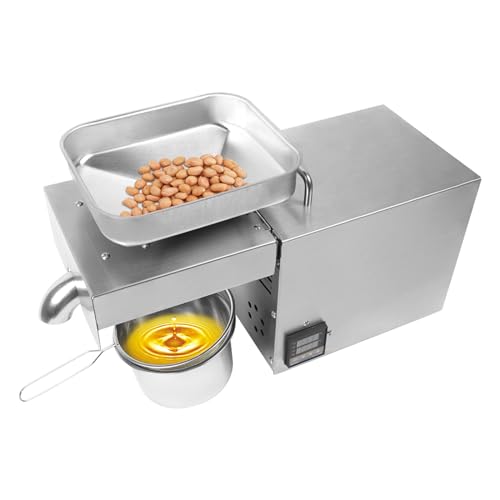
- Hot- and cold-press modes
- Adjustable 104–410°F temperature range
- Includes bowl, filter, brush, and gloves
Best For: Users seeking adjustable heat for varied seeds and nuts
Best Automatic Pick – Household Electric Oil Press
For shoppers comparing oil presses for small kitchens, this electric model emphasizes straightforward operation and steady processing. Its preheat-and-start controls, temperature-focused design, and compatibility with dry or moist seeds make it a practical choice for home oil extraction.
Best For: Home users who want an automatic press for nuts and seeds without pre-roasting.
Pros:
- Simple preheat and start operation.
- 304 stainless steel pressing chamber and screw rod.
- Processes multiple ingredients, including peanuts, sesame, walnuts, almonds, pumpkin seeds, and rapeseed.
- Integrated cooling fan supports continuous squeezing.
Cons:
- At 22 pounds, it is relatively heavy for a small kitchen appliance.
- Its 17.3-inch depth may require substantial counter or storage space.
- Olives must be pitted before pressing.
This is the most convenient option in the group for users who prefer electric operation and repeatable preparation. The larger footprint and weight are worth considering before choosing it for a compact workspace.
Best Manual Value – Gralara Hand-Crank Oil Press
Among oil presses for small kitchens, this Gralara model stands out for its manual design and lack of electricity requirements. The hand crank gives users direct control while the stainless steel construction is intended to be easy to wipe clean.
Best For: Small-home users who want a manual press for occasional fresh oil making.
Pros:
- Operates without electricity.
- Manual hand-crank control for direct pressing.
- Stainless steel construction is easy to wipe clean.
- Suitable for peanut, rapeseed, walnut, tea, and helianthus.
Cons:
- Hand operation requires physical effort.
- Hand-wash-only care may make cleanup less convenient.
- The listed dimensions are unusually large for a product described as compact.
This press makes sense when simplicity and electricity-free use matter more than speed or automation. Check the available counter space carefully, especially because the listed dimensions are substantial.
Best Temperature Control – Automatic Cold/Hot Oil Press
For oil presses for small kitchens that need adjustable heating, this stainless steel electric machine offers a broad 50–250°C temperature range. Automatic heating, a display, and a stated processing capacity of 3–6 kg per hour make it geared toward users who press larger batches.
Best For: Experienced home users who want adjustable cold- and hot-press settings and higher throughput.
Pros:
- Adjustable pressing temperature from 50–250°C.
- Automatic heating with temperature display control.
- Suitable for coconut, sunflower seed, walnut, okra, soybean, perilla, and shelled hemp seed.
- Includes an oil cup, filter, insulation gloves, and instruction manual.
Cons:
- Its commercial positioning may be more machine than a small kitchen needs.
- Hand-wash-only care requires manual cleanup.
- The supplied specifications list both 610W and 600W model details, which may warrant verification.
This is the strongest fit for users who value temperature flexibility and batch capacity over a minimal footprint. Its controls and broader feature set may be unnecessary for occasional, small-volume pressing.
Best Beginner Manual Design – Kowaku Hand-Crank Oil Press
This Kowaku hand-crank model is a straightforward contender among oil presses for small kitchens. It uses no electricity, offers direct manual control, and has stainless steel construction suited to home cooking and beginner use.
Best For: Beginners seeking a simple manual oil press for home cooking.
Pros:
- Electricity-free hand-crank operation.
- Stainless steel construction designed for easy wiping.
- Works with peanut, rapeseed, walnut, tea, and helianthus.
- Includes a collection bottle.
Cons:
- Manual pressing can be slower and more labor-intensive than electric extraction.
- The supplied details do not specify dimensions or processing capacity.
- Hot- or cold-press use may require more hands-on control than an automatic machine.
With its simple controls and included collection bottle, this is a sensible entry-level choice for users who want to try home pressing without adding an electric appliance. Consider an automatic model if you expect frequent or larger batches.
Best Manual Stainless-Steel Pick – Compact CGOLDENWALL Oil Press
For shoppers comparing oil presses for small kitchens, the CGOLDENWALL is a compact manual option with a stainless-steel body and hand-crank operation. It uses physical pressing rather than chemical extraction and is designed for oil-rich seeds and nuts.
Best For: Small kitchens, hands-on users, and pressing peanuts, sunflower seeds, sesame, walnuts, and similar oil-rich ingredients.
Pros:
- Manual operation requires no electrical power.
- Stainless-steel body and handle resist rust.
- Portable design measures about 13 inches deep by 4 inches wide by 14 inches high.
- Includes a one-year warranty and English instructions.
Cons:
- Manual pressing requires hands-on effort.
- Not recommended for flaxseed, rapeseed, or olives according to the supplied notes.
- Continuous heating is required during use, so extra care is needed.
This is a straightforward choice for buyers who prioritize a compact footprint, durable metal construction, and control over the pressing process. Its ingredient limitations make it better suited to common oil-rich nuts and seeds than to specialized crops.
Best Automatic Versatility – JOYKUVA 850W Oil Press Machine
Among oil presses for small kitchens, the JOYKUVA stands out for automated operation, digital controls, and support for hot and cold pressing. Its detachable design and reverse function are intended to make routine cleanup and residue removal easier.
Best For: Home users who want automatic pressing, adjustable temperature control, and a broad selection of dried seeds and nuts.
Pros:
- 850W pure-copper motor is described as low-noise and suitable for continuous operation.
- Supports hot and cold pressing with smart temperature control.
- Digital display, simple buttons, and reverse motor function simplify operation.
- Designed to press more than 30 types of seeds and nuts.
Cons:
- Ingredients must be dried, and many materials require cutting into small pieces.
- Requires about 10 minutes of preheating for pressing.
- Manual cleaning of the pressing rod and chamber is recommended after each use.
The JOYKUVA is the most feature-rich option here, particularly for users who prefer electric operation and ingredient flexibility. Its preparation, preheating, and cleaning requirements should still be considered when countertop convenience is the priority.
Best Simple Hand-Crank Option – Stainless-Steel Home Oil Press
This manual stainless-steel extractor is a practical candidate for oil presses for small kitchens, especially where electricity-free operation matters. The hand crank gives users direct control while keeping the setup focused on basic home pressing.
Best For: Small households, home cooks, and users pressing peanut, rapeseed, walnut, tea, or sunflower ingredients in modest quantities.
Pros:
- Operates manually without electricity.
- Stainless-steel construction is designed for repeated kitchen use.
- Supports cold or hot pressing according to the supplied notes.
- Includes a collection bottle.
Cons:
- Hand-crank operation requires physical effort.
- Hand washing is recommended.
- The listed dimensions are unusually large, so countertop space should be checked carefully.
This model suits buyers who want a simple, direct pressing method rather than digital automation. Before choosing it for a small kitchen, verify the available counter and storage space against the supplied dimensions.
Adjustable Dual-Mode Press – 610W Stainless Steel Oil Extractor
For shoppers comparing oil presses for small kitchens, this model stands out for its adjustable temperature control and cold- or hot-press flexibility. Its polished 304 stainless steel construction, detachable parts, and digital controls support repeatable pressing while keeping cleanup manageable.
Best For: Home users who want temperature-adjustable pressing for nuts and seeds, including peanuts, sesame, walnuts, sunflower seeds, and soybeans.
Pros:
- Supports both cold and hot pressing.
- Adjustable temperature display with an 8-minute preheat timer and thermostatic regulation.
- 304 stainless steel construction with detachable, smooth components for easier cleaning.
- Processes approximately 6.61–13.22 pounds of raw material per hour, according to the supplied specifications.
Cons:
- Hand-wash care is specified.
- Its commercial-style construction may require more counter and storage space than a compact appliance.
This is a versatile choice when control and pressing flexibility matter more than the smallest footprint. The dual modes and temperature management make it especially adaptable for different ingredients and recipes.
High-Power Automatic Press – 820W Home Oil Maker
This automatic 820W press is a practical option for oil presses for small kitchens when straightforward, heated extraction is the priority. It accepts more than 30 listed nuts and seeds, includes useful starter accessories, and uses a stainless steel press chamber and rod designed for secure operation.
Best For: Users who want an automatic heated press for a broad range of nuts and seeds and prefer a complete accessory package.
Pros:
- Compatible with more than 30 types of listed nuts and seeds.
- 820W heater supports rapid heating and automatic extraction.
- Includes a filter, oil cup, cleaning brush, insulated glove, and manual.
- Food-grade 304 stainless steel and a two-year warranty are supplied.
Cons:
- Temperature is non-adjustable.
- Does not support cold pressing.
- Not suitable for olive pulp, herbs, spices, flowers, coffee beans, cocoa beans, or coconuts.
Choose this model for convenience and ingredient range rather than fine temperature control. Its 15.7-inch depth and 820W power make the available counter space and electrical setup worth checking before purchase.
Temperature-Range Press – 610W Seed Oil Maker
For compact cooking spaces seeking oil presses for small kitchens, this 610W machine combines hot and cold pressing with a broad 104–410°F temperature range. Its display, built-in filtering setup, and included accessories make it a hands-on but approachable choice for pressing common seeds and nuts.
Best For: Home or light commercial users who want adjustable heat and steady extraction for peanuts, sesame, flaxseed, walnuts, soybeans, sunflower seeds, and similar ingredients.
Pros:
- Offers both hot and cold pressing modes.
- Temperature adjusts from 104–410°F.
- 610W pure copper motor and 80 RPM press screw support continuous operation.
- Includes a bowl, filter, cleaning brush, and insulated gloves.
Cons:
- Listed capacity is up to 8.8 pounds per hour, which may be slower than higher-output models.
- The supplied details do not specify exact dimensions for storage planning.
This model balances flexibility and practical controls without abandoning a stainless steel food-contact design. It is a good fit when you want to adjust heat by ingredient and value included cleanup accessories.
How We Picked the Best Oil Presses for Small Kitchens
We compared these machines by focusing on the practical concerns that matter most in a compact home kitchen: footprint, power source, operating controls, cleaning access, temperature adjustment, construction, and the types of seeds or nuts each model is intended to handle. We also considered whether a press is better suited to occasional batches, regular meal preparation, or higher-volume use.
Because product listings can vary by seller and configuration, verify the voltage, included accessories, hopper size, and supported ingredients before ordering. “Cold press” and “hot press” capabilities may also differ between models, so check the temperature range and operating instructions carefully.
Quick Comparison
| Type | Best for | Main advantage | Trade-off |
|---|---|---|---|
| Manual hand-crank | Small, occasional batches | Compact and simple | Requires physical effort |
| Compact electric | Regular home use | Faster, easier pressing | Needs counter and storage space |
| Temperature-adjustable electric | Users pressing varied ingredients | More control over processing | Usually larger and more expensive |
| Higher-wattage automatic | Frequent or larger batches | Greater throughput | More noise, heat, and cleanup |
Key Buying Factors for Oil Presses for Small Kitchens
Size, Storage, and Workflow
Measure the counter area and cabinet space before buying. A removable hopper, detachable pressing chamber, or compact manual frame can make storage much easier. Also leave room around electric models for ventilation and safe handling.
Manual or Electric Operation
Manual presses are often the smallest and simplest choice, but they work best for modest quantities and softer ingredients. Electric models reduce effort and are more practical if you plan to press oil frequently. Higher-wattage machines may process faster, though they can be bulkier.
Temperature and Ingredient Compatibility
Look for adjustable temperature controls if you want to work with different seeds and nuts or compare cold- and warm-press methods. Confirm that your preferred ingredients—such as sesame, peanut, walnut, sunflower, or other seeds—are explicitly supported.
Cleaning and Safety
Oil residue can harden quickly, so accessible parts and detachable components are valuable. Check whether the pressing head, hopper, and collection areas can be cleaned without special tools. For electric machines, prioritize stable bases, clear controls, overload protection, and a suitable household voltage.
Who Should Buy Which Oil Presses for Small Kitchens?
Choose a manual press if you have very limited space, make small batches, and do not mind turning a handle. It is also a sensible option for buyers who want straightforward operation without a motor.
Choose a compact automatic press if convenience is more important than the smallest possible footprint. These models suit cooks who expect to make oil regularly but still need a manageable appliance for home use.
Choose a temperature-adjustable or higher-wattage electric model if you press several ingredient types, make larger batches, or want more control over the process. Just confirm that its dimensions, electrical requirements, and cleaning demands fit your kitchen.