Microwave ovens with sensor cooking take the guesswork out of reheating by monitoring humidity and adjusting cooking time automatically. That can help reduce cold centers, overheated edges, and dried-out food.
We compared 10 countertop models across power, capacity, sensor features, controls, turntable design, and everyday convenience to help you find the right fit for your kitchen, apartment, dorm, or family.
Best 10 Microwave Ovens with Sensor Cooking Picks for 2026
Best Overall
Panasonic Inverter Sensor Microwave

- 1,200W inverter cooking
- 10 sensor cook settings
- Compact 1.2-cu.-ft. design
Best For: Even reheating and versatile everyday cooking in a smaller kitchen
Best Quiet-Mode Value
Toshiba Smart Sensor Microwave

- Humidity-sensing cooking
- Mute and ECO modes
- 12 auto menus
Best For: Apartment kitchens and quieter everyday operation
Best Family Size
Toshiba Large Smart Sensor Microwave

- 1.6-cu.-ft. capacity
- 13.6-inch position-memory turntable
- 1,200W sensor-menu cooking
Best For: Families heating large plates and 13-inch pizzas
Best Smart Pick
Toshiba Smart Sensor Microwave
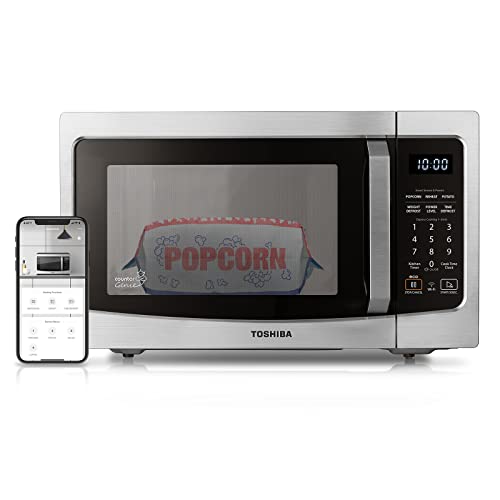
- Humidity sensor adjusts cooking power automatically
- Alexa and app remote-control compatibility
- Mute function, ECO mode, and 23 programs
Best For: Connected kitchens and hands-free reheating
Best Flatbed Design
Toshiba Inverter Sensor Microwave

- Flatbed interior needs no traditional turntable
- Inverter technology supports even cooking
- Eleven moisture-sensing auto menus
Best For: Flexible dish placement and easy cleanup
Best Family Capacity
Farberware Smart Sensor Microwave

- Spacious 1.6-cubic-foot interior
- Smart sensor auto-cook settings
- Ten power levels and multi-stage cooking
Best For: Family kitchens and larger everyday meals
Best with Extra Features
Toshiba 1.6 Cu. Ft. Inverter Microwave

- Inverter technology supports even heating and defrosting.
- Six smart sensor menus adjust cooking automatically.
- 1,250W output with a 13.6-inch turntable.
Best For: Families wanting versatile sensor cooking and inverter heating
Best Compact Pick
Toshiba 1.2 Cu. Ft. Sensor Microwave

- Compact design suits dorms and apartments.
- Thirteen preset menus support flexible sensor cooking.
- Includes mute, memory, and defrost functions.
Best For: Small kitchens needing a space-saving sensor microwave
Best for Large Families
Toshiba 2.2 Cu. Ft. Sensor Microwave
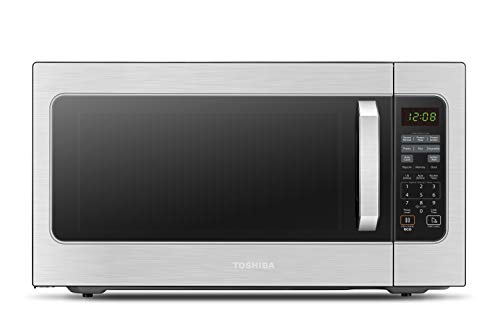
- 2.2-cubic-foot cavity fits 16-inch pizzas and whole chickens.
- Smart humidity sensor adjusts power and cooking time.
- Includes auto defrost, ECO mode, and a 16.5-inch turntable.
Best For: Large households cooking or reheating oversized portions
Best Overall – Panasonic Inverter Sensor Microwave
For shoppers comparing microwave ovens with sensor cooking, the Panasonic NN-SN65KB stands out with 1,200 watts, inverter technology, and 10 sensor cook settings. Its sensor cooking automatically adjusts power and time, while the 1.2-cubic-foot design keeps the countertop footprint relatively compact.
Best For: Even reheating and versatile everyday cooking in a smaller kitchen.
Pros:
- Inverter technology provides a seamless stream of cooking power for more even heating.
- Genius Sensor includes 10 sensor cook settings and sensor reheat.
- Includes 11 power levels, Turbo Defrost, 15 auto-cook options, and Keep Warm.
- Its 13.4-inch turntable fits inside a space-conscious 1.2-cubic-foot interior.
Cons:
- The 1.2-cubic-foot capacity is smaller than the larger models in this roundup.
- The mandatory child lock may be inconvenient for some users.
This is a strong all-around choice when consistent heating and flexible sensor programs matter more than maximum interior capacity.
Best Quiet-Mode Value – Toshiba Smart Sensor Microwave
The Toshiba EM131A5C-SS is a practical pick among microwave ovens with sensor cooking, combining a 1,000-watt output with a humidity sensor that adjusts cooking time and power. Its easy-clean stainless-steel interior, ECO mode, and mute function add useful everyday convenience.
Best For: Apartment kitchens and users who want straightforward sensor cooking with quieter operation.
Pros:
- Smart Humidity Sensor adjusts cooking based on the food’s moisture.
- Offers 12 auto menus, 10 power levels, and sensor reheat.
- Mute function and ECO mode support quieter, more efficient use.
- One-touch start provides quick access to one-to-six-minute cooking at full power.
Cons:
- Its 1,000-watt output is lower than the 1,200-watt models here.
- The 12.4-inch turntable offers less room than the largest microwave in this roundup.
Choose this Toshiba if useful convenience features and sensor-assisted cooking are priorities, especially in a shared space where audible alerts can be disruptive.
Best Family Size – Toshiba Large Smart Sensor Microwave
For households that need more room, this Toshiba is one of the larger microwave ovens with sensor cooking in the group. It pairs 1,200 watts with sensor menus for foods such as pizza, potatoes, and vegetables, plus a 1.6-cubic-foot interior and 13.6-inch position-memory turntable.
Best For: Families that regularly heat large plates or 13-inch pizzas.
Pros:
- 1.6-cubic-foot capacity and a 13.6-inch turntable provide family-size space.
- Sensor menus help optimize heating for popular foods.
- Position-memory turntable returns to its starting position for convenient unloading.
- Includes sound on/off, auto defrost, multi-stage cooking, and a child safety lock.
Cons:
- Its larger exterior requires more countertop space.
- The supplied details list 10 sensor-related cooking programs, fewer than the Panasonic’s stated sensor settings.
This model makes the most sense when interior capacity is the deciding factor and you have enough counter depth for its larger footprint.
Best Large Capacity – GE 2.0-Cubic-Foot Sensor Microwave
The GE GCST20S1WSS is designed for shoppers who want maximum countertop microwave capacity. Its 2.0-cubic-foot interior, 1,200 watts, and moisture-monitoring sensor cooking provide space and automatic adjustments for family meals, while one-touch controls simplify routine use.
Best For: Families, dorm rooms, or apartments that need a spacious countertop microwave.
Pros:
- Large 2.0-cubic-foot capacity with a 16-inch turntable.
- Sensor cooking monitors moisture and adjusts time automatically.
- Provides 1,200 watts, eight convenience cooking settings, and one-touch express controls.
- Includes auto and manual defrost plus a child lock.
Cons:
- Its 24.09-inch width and larger footprint require careful counter measuring.
- It is countertop-only and is not compatible with a trim kit.
- The supplied details list no warranty.
If capacity is more important than a compact footprint, this GE offers the most room in the roundup while retaining sensor cooking and accessible controls.
Best Smart Pick – Toshiba Smart Sensor Microwave
The Toshiba Smart Microwave is a versatile choice for shoppers seeking microwave ovens with sensor cooking and connected controls. Its built-in humidity sensor adjusts cooking power automatically, while Alexa and app compatibility add hands-free convenience.
Best For: Connected kitchens, hands-free operation, and households that want sensor reheat with flexible preset menus.
Pros:
- Humidity sensor automatically adjusts cooking power for reheat tasks.
- Works with Alexa and app-based remote control when paired with an Echo device.
- Offers 23 programs, 10 power levels, ECO mode, and a 12.4-inch turntable.
- Mute function and two-step child lock add practical everyday convenience.
Cons:
- Voice operation requires a compatible Echo device, which is not included.
- The turntable design may be less convenient for unusually shaped or oversized dishes.
With 1.3 cubic feet of capacity and 1100 watts of power, this Toshiba balances everyday cooking performance with smart-home features. It is especially appealing if app control and quieter operation matter as much as sensor cooking.
Best Flatbed Design – Toshiba Inverter Sensor Microwave
This Toshiba flatbed model combines microwave ovens with sensor cooking with inverter technology and a turntable-free interior. Its smart sensor detects food moisture, while the flat surface accommodates different dish shapes and simplifies cleanup.
Best For: Shoppers who want even cooking, flexible dish placement, and a quieter, easy-clean flatbed interior.
Pros:
- Flatbed design handles various dish sizes and multiple plates without a turntable.
- Inverter technology supports precise temperature control and even cooking.
- Eleven smart sensor menus automatically adjust power based on food moisture.
- Includes 11 power levels, mute function, child safety lock, and ECO mode.
Cons:
- The turntable-free interior may require users to adjust dish placement for some foods.
- Its button controls do not offer the Alexa or app control found on some smart models.
At 1200 watts and 1.3 cubic feet, this model offers strong countertop capacity without a traditional rotating plate. It is a practical fit for cooks who prioritize flat, stable loading and inverter-based control.
Best Family Capacity – Farberware Smart Sensor Microwave
The Farberware countertop microwave is a straightforward option for shoppers comparing microwave ovens with sensor cooking and full-size capacity. Its smart sensor auto-cook settings complement 1100 watts of power, ten power levels, and multi-stage cooking.
Best For: Families and home or office kitchens that need generous 1.6-cubic-foot capacity with simple touch controls.
Pros:
- Smart sensor auto-cook settings simplify common cooking tasks.
- Larger 1.6-cubic-foot capacity suits family-size dishes.
- Provides ten power levels, multi-stage cooking, and defrost by weight or time.
- Includes six one-touch options, interior lighting, and a child safety lock.
Cons:
- It lacks the connected controls and mute function listed for the Toshiba models.
- Its 21.8-inch width may require more counter space than compact alternatives.
This Farberware focuses on practical capacity and familiar controls rather than smart-home extras. Its sensor settings, easy-clean design, and family-friendly interior make it a useful everyday workhorse.
Best with Extra Features – Toshiba 1.6 Cu. Ft. Inverter Microwave
For shoppers comparing microwave ovens with sensor cooking, this 1.6-cubic-foot Toshiba stands out for combining smart sensor menus with inverter technology. Its 1,250W output, 13.6-inch turntable, and auto-defrost functions make it a versatile countertop option for everyday meals.
Best For: Families and home cooks who want sensor cooking plus more even heating and defrosting.
Pros:
- Inverter technology is designed to provide even heating and defrosting.
- Six smart sensor menus automatically adjust cooking power for common foods.
- Offers 10 power levels, auto defrost, ECO mode, and a mute function.
- Spacious 1.6-cubic-foot capacity with a 13.6-inch glass turntable.
Cons:
- Its 21.8-inch width and 29-pound weight require a reasonably large countertop.
- It has fewer sensor menus than the smaller Toshiba model in this roundup.
Choose this model when even heating is a priority and you have room for a full-size countertop microwave. The inverter system and smart sensor programs offer a strong balance of convenience and cooking control.
Best Compact Pick – Toshiba 1.2 Cu. Ft. Sensor Microwave
This compact Toshiba is a practical choice for shoppers seeking microwave ovens with sensor cooking in a dorm, apartment, or smaller kitchen. It combines 13 preset menus with 1,000W output, 10 power levels, and a 12.4-inch turntable while keeping its footprint relatively modest.
Best For: Dorm rooms, apartments, and kitchens where counter space is limited.
Pros:
- Compact 20.6-inch-wide design fits smaller countertop setups.
- Thirteen preset menus provide flexible sensor-cooking options.
- Includes mute mode, memory function, weight- and time-based defrosting, and a child lock.
- Black stainless steel exterior offers a modern appearance.
Cons:
- The 1.2-cubic-foot capacity and 12.4-inch turntable are smaller than the other options here.
- Its 1,000W output is lower than the 1,250W model in this roundup.
This model makes the most sense when size and convenience matter more than maximum interior capacity. Its broad preset selection helps simplify everyday reheating and cooking without taking over the counter.
Best for Large Families – Toshiba 2.2 Cu. Ft. Sensor Microwave
Among microwave ovens with sensor cooking, this large Toshiba is built for big portions and oversized dishes. Its 2.2-cubic-foot interior, 16.5-inch turntable, 1,200W output, and smart humidity sensor make it suitable for family-size cooking and reheating.
Best For: Large households that regularly heat 16-inch pizzas, whole chickens, or other oversized meals.
Pros:
- Large 2.2-cubic-foot capacity accommodates a 16-inch pizza or whole chicken.
- Smart humidity sensor automatically adjusts cooking power and time.
- Offers auto defrost by weight or time, multi-stage cooking, and 10 power levels.
- Includes ECO mode, mute option, memory function, and child safety lock.
Cons:
- Its 24.4-inch width and 49.2-pound weight demand substantial counter space.
- The listed six auto menus provide fewer dedicated presets than the compact model.
- Its 1,700W input consumption is higher than the other listed models.
If interior capacity is your main concern, this Toshiba is the clear choice. It is considerably larger and heavier, but the roomy cavity and humidity-sensing controls are well suited to large meals and frequent family use.
How We Picked the Best Microwave Ovens with Sensor Cooking
We focused on models that offer sensor cooking, sensor reheat, or smart humidity sensing alongside practical countertop features. Our comparison considers usable capacity, wattage, preset programs, turntable or flatbed design, inverter technology, cleaning convenience, noise controls, child safety, and smart-home compatibility.
Because countertop space and cooking habits vary, the selection includes compact 1.2-cubic-foot models, mid-size options, large-capacity ovens, and feature-rich choices with Alexa or app control. Product specifications and advertised features should be verified before purchase, especially for model variations and regional listings.
Quick Comparison
| Best For | What to Prioritize | Typical Capacity |
|---|---|---|
| Dorms and small kitchens | Compact footprint, 1,000 watts, mute function | 1.2 cu. ft. |
| Everyday family use | Higher wattage, larger turntable, sensor presets | 1.3–1.6 cu. ft. |
| Large dishes and batch reheating | Wide interior, strong power, generous clearance | 2.0–2.2 cu. ft. |
| More even cooking | Inverter power control or flatbed design | Varies |
Key Buying Factors for Microwave Ovens with Sensor Cooking
Sensor Performance and Presets
Look for sensor reheat, smart humidity sensing, or sensor auto-cook programs that match the foods you prepare most often. Presets are convenient, but they do not eliminate the need to use suitable containers and follow package directions.
Power and Capacity
Wattage affects cooking speed, while interior dimensions determine whether dinner plates, casserole dishes, and tall containers fit comfortably. A larger oven is not automatically better if it consumes valuable counter space.
Turntable, Flatbed, and Inverter Design
Turntables help expose food to microwave energy from different angles. Flatbed models offer easier cleaning and more flexible loading. Inverter technology is designed to deliver more consistent power at lower settings, which can benefit delicate reheating and defrosting.
Convenience and Safety
Useful extras include mute controls, ECO modes, interior lighting, easy-clean surfaces, child locks, auto defrost, and position-memory turntables. Smart connectivity is worthwhile mainly if remote monitoring or voice control fits your routine.
Who Should Buy Which Microwave Ovens with Sensor Cooking?
Choose a compact 1.2-cubic-foot model for a dorm, apartment, office, or small kitchen. Choose a 1.3- to 1.6-cubic-foot oven for the best balance of daily versatility and countertop size. Choose a 2.0- to 2.2-cubic-foot model if you regularly heat large plates, family portions, or oversized cookware.
For users who prioritize gentle, consistent heating, an inverter model is especially appealing. If easy cleaning matters most, consider a flatbed design. Families should prioritize child-lock controls and straightforward sensor presets, while smart-home users may prefer a connected model with app or voice support.