If you want fresh cane juice without relying on electricity, a manual sugarcane juice press is a practical, high-output option for carts, cafés, and busy home setups.
This roundup focuses on machines that balance throughput, roller design, inlet size, and stainless steel construction so you can choose with confidence.
Best 10 Manual Sugarcane Juice Press Picks for 2026
Commercial Triple-Roller Juicer
SmarketBuy 3-Roller Sugar Cane Press

- Three stainless steel rollers for strong extraction
- Separated juicing system helps keep juice cleaner
- Hand crank design reduces effort and stays stable
Best For: juice stands and small businesses
High-Output Handwheel Press

- Large handwheel helps reduce fatigue
- Adjustable rollers improve cane fit and extraction
- Anti-drip faucet and sloped outlet aid cleanup
Best For: busy shops needing manual throughput
Gear-Drive Countertop Press
Commercial Manual Sugar Cane Juicer
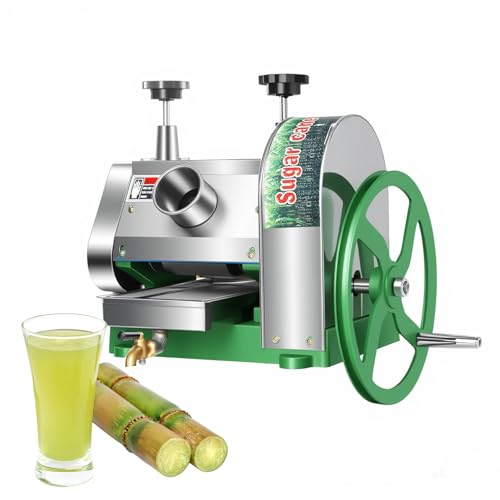
- Gear reduction makes manual cranking easier
- Three rollers press cane deeply and efficiently
- Detachable parts simplify cleaning after use
Best For: countertop use in shops or at home
Heavy-Gear Handwheel Juicer
Samger Stainless Steel Cane Press

- 13.41:1 gearing helps reduce cranking effort
- Adjustable roller gap supports better juice yield
- Fine filter and copper tap improve juice clarity
Best For: high-traffic commercial locations
Commercial High-Output Pick
INTBUYING 3-Roller Manual Sugarcane Juicer
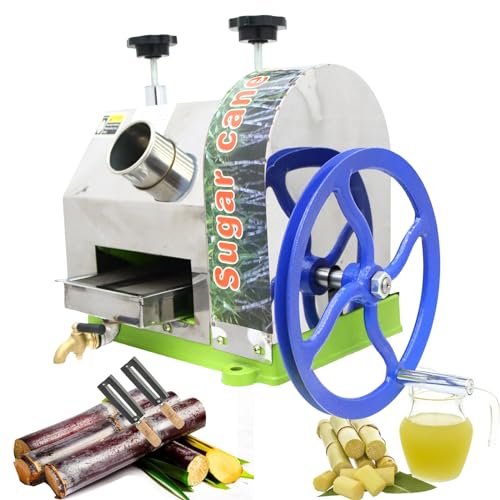
- Three rollers with claimed up to 80% yield
- 330 lbs/h output for heavier service
- Adjustable gap and 2.4-inch feed inlet
Best For: Commercial stalls and busy juice counters
Compact Commercial Value
110 LBS/H Stainless Steel Sugarcane Juicer

- 110 lbs/h output with three rollers
- All-SUS201 stainless steel construction
- Wide inlet plus dual roller regulators
Best For: Small shops and portable commercial setups
Balanced Everyday Choice
VEVOR 110LBS/H Manual Sugarcane Juicer

- 110 lbs/h output with ergonomic hand crank
- Three stainless steel rollers and filter screen
- 2.4-inch inlet with easy roller adjustment
Best For: Home or light commercial buyers wanting a balanced press
Commercial Heavy-Duty Pick
Garveetech 3-Roller Sugarcane Press

- 3 stainless steel rollers with 110 LBS/H output
- All-stainless-steel build for rust resistance
- 2.4-inch inlet with adjustable roller gap
Best For: Commercial counters, stalls, and shops
Easy-Start Commercial Value
FOHERE 3-Roller Sugar Cane Juicer
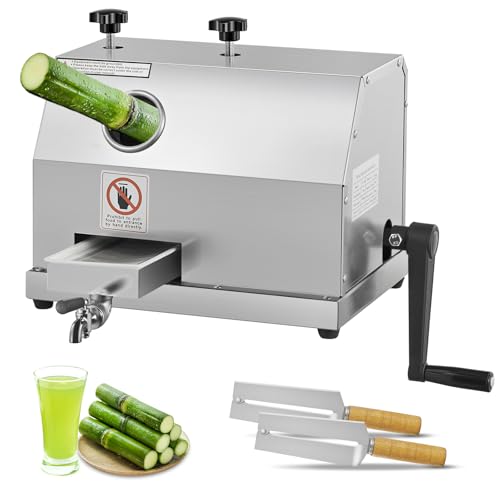
- No-assembly manual press with hand crank
- 201 stainless steel body and rollers
- 2.4-inch inlet with high-density filtration
Best For: Buyers who want a ready-to-use commercial press
Torque-Boost Convertible Pick
Manual Sugar Cane Juicer Machine

- 13.41:1 gear ratio reduces manual effort
- 2-inch inlet with adjustable roller gaps
- Can be converted to electric with a compatible motor
Best For: Users who want manual use now and electric conversion later
Commercial Triple-Roller Juicer – SmarketBuy 3-Roller Sugar Cane Press
If you want a manual sugarcane juice press built for steady output, this SmarketBuy model focuses on yield, hygiene, and durability. Its three stainless steel rollers, adjustable spacing, and separated juicing system are aimed at extracting more juice while keeping the process clean and efficient for home setups or small businesses.
Best For: Juice stands, small shops, and users who want a heavy-duty manual press with strong extraction.
Pros:
- Three heavy-duty stainless steel rollers with adjustable spacing for thorough crushing.
- Separated transmission and juicing systems help keep juice cleaner.
- Ergonomic hand crank and reinforced gears reduce effort during use.
- Brass faucet and open stainless steel surfaces make dispensing and cleaning easier.
Cons:
- Large, commercial-style build may be more machine than casual home users need.
- Motor conversion is possible, but professional installation is recommended.
This is a practical pick if you care most about juice output, clean operation, and a machine that can handle regular use. It is especially appealing for business settings where consistency and easy cleanup matter.
High-Output Handwheel Press – 330 LBS/H Manual Cane Juicer
This manual sugarcane juice press is built for users who want solid output without electricity. The larger handwheel, adjustable roller width, and three-roller design are meant to make pressing easier while improving juice extraction, especially in busy commercial or household settings.
Best For: Shops and high-traffic counters that want a manual juicer with easy operation and good throughput.
Pros:
- Adjustable roller width helps match cane thickness for better pressing.
- Large 10.8-inch handwheel is designed to reduce fatigue during long use.
- Three rollers and a 60-80% extraction rate support efficient juicing.
- Anti-drip faucet and sloped bagasse outlet improve day-to-day workflow.
Cons:
- Best performance depends on matching the rollers to cane thickness correctly.
- Requires manual effort, so it is less convenient than powered equipment.
For users who want a straightforward, low-noise press with practical details like residue discharge and drip control, this model is well thought out. It suits places that need dependable juicing without adding electricity to the setup.
Gear-Drive Countertop Press – Commercial Manual Sugar Cane Juicer
If you are comparing a manual sugarcane juice press for both business and home use, this model stands out for its gear reduction and stable stainless steel build. The wide inlet, detachable juice-contact parts, and roller setup are all aimed at making pressing smoother, cleaner, and easier to maintain.
Best For: Users who want easier cranking, simple cleaning, and a sturdy counter-mounted press.
Pros:
- Gear reduction system and reinforced bearings help lower operating effort.
- Three stainless steel rollers support deep fiber compression.
- Tool-free detachable juice-contact parts make cleaning more convenient.
- Wide 2.5-inch inlet speeds up prep and accepts larger cane pieces.
Cons:
- Heavier commercial build may be more than a casual user needs.
- Motor-ready interface is mainly useful for experienced users planning upgrades.
This is a strong choice if you want a manual machine with practical workflow advantages rather than a bare-bones press. Its emphasis on easier cranking and cleaner maintenance makes it appealing for repeat use.
Heavy-Gear Handwheel Juicer – Samger Stainless Steel Cane Press
This manual sugarcane juice press is aimed at users who want stronger leverage and dependable output from a stainless steel machine. With three rollers, multiple gears, a large handwheel, and an adjustable roller gap, it is designed to make juicing easier while helping produce cleaner juice.
Best For: Hotels, shops, schools, and parks that need a durable manual cane juicer with strong gearing.
Pros:
- Three steel rollers and a 13.41:1 gear ratio help make pressing less laborious.
- Large inlet and adjustable roller gap support easier cane feeding and better yield.
- Fine filter and copper tap help reduce bagasse in the finished juice.
- Manual handwheel design is rust resistant and simple to set up.
Cons:
- At 76.25 pounds, it is a substantial machine to move or position.
- Electric conversion requires a professional if you plan to upgrade it.
Overall, this model is a practical fit for buyers who want a manual press with a more mechanical, leverage-focused feel. Its gearing and filtration details make it especially attractive where cleaner juice and steady output matter.
Commercial High-Output Pick – INTBUYING 3-Roller Manual Sugarcane Juicer
If you need a manual sugarcane juice press for steady output, this INTBUYING model is built around three solid rollers, a 2.4-inch feed inlet, and a hand crank that keeps operation straightforward. It is aimed at users who want higher juice yield, low-noise performance, and a stainless steel build that can handle regular commercial use.
Best For: juice stands, restaurants, and other buyers who want a high-output manual press with adjustable roller gap control.
Pros:
- Three-roller design supports twice pressing and claims up to 80% juice yield.
- 330 lbs/h output suits higher-volume service needs.
- Adjustable roller gap and 2.4-inch inlet help handle different cane sizes.
- Stainless steel build and gear reducer design support durability and lower-noise use.
Cons:
- Manual operation still requires physical effort, even with the hand crank.
- Requires weekly grease maintenance for the transmission gear.
- The product footprint may be more than casual home users need.
This is a practical pick if throughput matters more than compact convenience. It makes the most sense for buyers who want a durable manual sugarcane juice press with commercial-style output and simple mechanical controls.
Compact Commercial Value – 110 LBS/H Stainless Steel Sugarcane Juicer
This manual sugarcane juice press focuses on simple commercial use with three stainless steel rollers, a wide 2.4-inch inlet, and a compact footprint. It is designed for buyers who want a rust-resistant machine that filters juice well and keeps cleanup straightforward.
Best For: small beverage shops, outdoor stalls, and fruit stores that want a durable manual press with easy maintenance.
Pros:
- Three stainless steel rollers deliver up to 110 lbs per hour of output.
- All-SUS201 construction adds rust resistance and easy cleaning.
- High-density filter screen helps produce smoother juice.
- 2.4-inch feed port and dual regulators make cane handling more flexible.
Cons:
- Hand wash only care may be less convenient for some operators.
- Weighing 83.8 pounds, it is not especially lightweight.
- Manual crank operation is best suited to lower- to mid-volume use.
Overall, this is a solid option if you want a sturdy manual sugarcane juice press with straightforward cleaning and reliable daily service. It leans toward compact commercial use rather than maximum throughput.
Balanced Everyday Choice – VEVOR 110LBS/H Manual Sugarcane Juicer
The VEVOR manual sugarcane juice press is built for buyers who want efficient hand-powered juicing in a compact commercial-friendly format. With three stainless steel rollers, a large filter screen, and a 2.4-inch inlet, it is designed to extract smooth juice while keeping the machine easy to place in smaller service areas.
Best For: home and commercial buyers who want a stainless steel manual press with simple adjustment and strong filtration.
Pros:
- 110 lbs/h productivity fits steady manual juicing needs.
- Three stainless steel rollers and ergonomic crank improve operation.
- Large filter screen helps remove coarse residue for smoother juice.
- 2.4-inch inlet and top pressure regulators add flexibility for cane sizes.
Cons:
- Manual hand-powered use is still labor-intensive for long shifts.
- Hand wash only care may slow cleanup.
- Included components are basic, so this is not a feature-heavy machine.
If you want a balanced manual sugarcane juice press, this VEVOR model offers a useful mix of output, filtration, and stainless steel durability. It is a practical fit where space is limited but consistent juice quality still matters.
Commercial Heavy-Duty Pick – Garveetech 3-Roller Sugarcane Press
If you need a manual sugarcane juice press built for steady throughput, this Garveetech model is aimed at commercial-style use. The stainless steel body, 3-roller design, and 2.4-inch inlet make it a practical option for shops or stalls that want fast juicing with simple hand-powered operation.
Best For: Beverage shops, outdoor stalls, fruit shops, and hotel kitchens that want a durable hand-crank sugarcane press.
Pros:
- 3 stainless steel rollers and a claimed 110 LBS/H output for higher-volume juicing.
- All-stainless-steel construction helps resist rust and makes cleanup simpler.
- Large 2.4-inch feed port and top pressure regulators help handle different cane sizes.
- High-density filter screen is designed to produce smoother juice with less residue.
Cons:
- At 85.1 pounds, it is heavy and not meant for easy moving around.
- Hand wash only, so upkeep is more manual than with some powered equipment.
- Best suited to buyers who can support a commercial-sized countertop footprint.
Overall, this manual sugarcane juice press is a strong fit if your priority is durable construction and high output rather than portability. It focuses on straightforward extraction, easy adjustment, and a compact commercial layout.
Easy-Start Commercial Value – FOHERE 3-Roller Sugar Cane Juicer
The FOHERE manual sugarcane juice press is designed for buyers who want commercial output without a complicated setup. With a hand-powered crank, 3 stainless steel rollers, and a 2.4-inch inlet, it aims to deliver consistent juice extraction for both home and small-business use.
Best For: Juice bars, restaurants, cafes, farmers markets, and home kitchens that want a ready-to-use manual press.
Pros:
- 110 LBS/H claimed output supports higher-volume juice service.
- No assembly required, so it is ready to use right out of the box.
- 201 stainless steel construction is built for durability and rust resistance.
- High-density filtration is intended to produce clear juice with minimal residue.
Cons:
- Hand-powered operation still depends on user effort for every batch.
- Hand wash only, which adds cleaning work after service.
- Commercial-style size may be more machine than some casual home users need.
In practical terms, this model stands out for convenience: it combines a large inlet, sturdy stainless build, and no-assembly setup. If you want a manual sugarcane juice press that feels business-ready from day one, it is easy to consider.
Torque-Boost Convertible Pick – Manual Sugar Cane Juicer Machine
This manual sugarcane juice press emphasizes strong gearing and flexible use. It combines a 3-roller stainless steel press with a heavy steel framework, a 2-inch inlet, and a design that can also be converted to electric operation with a compatible motor if needed.
Best For: Shops, hotels, schools, and outdoor stalls that want a manually operated press with the option to convert later.
Pros:
- 13.41:1 gear ratio is designed to reduce effort during manual pressing.
- Claimed 110 lbs hourly output suits higher-demand settings.
- 2-inch inlet and adjustable roller gaps help with thicker cane and re-pressing.
- Convertible to electric operation with a compatible 500-600W motor.
Cons:
- Belt and motor are not included for electric conversion.
- Cast iron and steel build may be less lightweight than simpler home units.
- Hand wash only, so cleanup is still fully manual.
For buyers who value torque and future flexibility, this model offers a useful middle ground. It works as a manual sugarcane juice press now, while leaving the door open for a powered setup later.
How We Picked the Best Manual Sugarcane Juice Press Models
We prioritized machines that are built for real juicing volume, not occasional novelty use. The most important filters were roller count, stated hourly output, inlet width, body and roller material, and whether the design supports smooth hand-crank operation under load.
We also looked for practical features that matter in daily use, such as wider inlets for less prep work, stainless steel parts for easier cleaning and corrosion resistance, and commercial-style frames that can handle repeated pressing.
Quick Comparison: What Matters Most
Most models in this roundup sit in the same general performance class, but a few differences can change the buying decision. A 2.0-inch inlet usually means more cane trimming, while 2.4-inch to 2.5-inch inlets reduce prep time. Three-roller designs are common because they help extract juice efficiently and consistently. If you plan to serve multiple customers or make large batches, look closely at stated output ratings around 110 lbs/h or higher.
Key Buying Factors for a Manual Sugarcane Juice Press
Inlet Size and Feed Convenience
A wider inlet makes the machine faster to use because you spend less time cutting cane into narrow sections. For commercial settings, this can improve workflow more than a small difference in horsepower-style marketing claims.
Roller Design and Extraction Efficiency
Three stainless steel rollers are a strong baseline for a Manual Sugarcane Juice Press. They help grip fibrous cane, reduce slippage, and improve extraction without requiring excessive force from the operator.
Material and Durability
Stainless steel is the preferred choice for contact parts and exterior surfaces because it is easier to clean and better suited to wet, sticky juice environments. If the machine will be used often, sturdier construction is worth prioritizing over a lower upfront price.
Output Expectations
Manufacturers often advertise output in pounds per hour. Treat this as a best-case reference rather than a guarantee. Real-world throughput depends on cane freshness, operator speed, feed preparation, and how often the machine needs clearing or cleaning.
Who Should Buy Which Manual Sugarcane Juice Press?
If you are running a juice stand, restaurant, or mobile beverage setup, choose a high-output model with a wide inlet and stainless steel rollers. If your goal is occasional home use, a simpler model with solid construction and a smaller inlet may be enough.
Buyers who value easier prep should lean toward 2.4-inch or 2.5-inch inlet machines, while those focused on compactness or lower cost can consider 2.0-inch options. In short, the best Manual Sugarcane Juice Press for you is the one that matches your daily volume, prep time, and cleaning needs.