Making smooth sauces and purees is easier when a food strainer separates skins, seeds, and pulp before they reach the finished recipe. The best manual food strainer machines can turn cooked tomatoes, apples, berries, and other produce into consistent results with less peeling and prep.
This roundup compares clamp-style strainers, hand-crank food mills, suction-base models, and related sauce-making tools so you can choose the right capacity, mounting system, disc options, and cleanup routine for your kitchen.
Best 10 Manual Food Strainer Machines Picks for 2026
Versatile Clamp-On Pick

- 1.3mm screen separates skins and seeds
- Clamp fits countertops 3/4 to 2-1/8 inches thick
- Optional motor and additional screens available
Best For: Sauces, purees, jams, and baby food
Classic Sauce-Making Choice
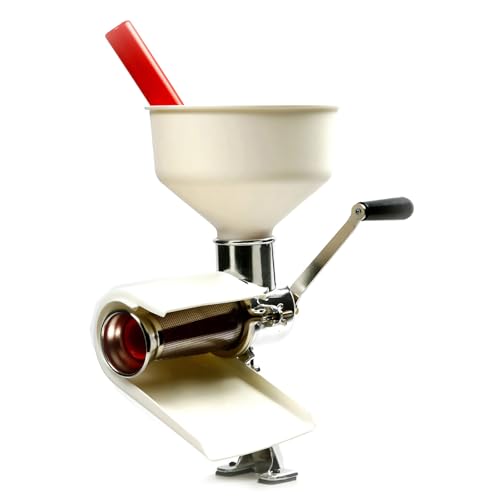
- 3-quart listed capacity
- Separates juice and pulp in one operation
- Includes fine mesh screen and standard spiral
Best For: Everyday fruit, vegetable, and puree straining
Large-Hopper Workhorse
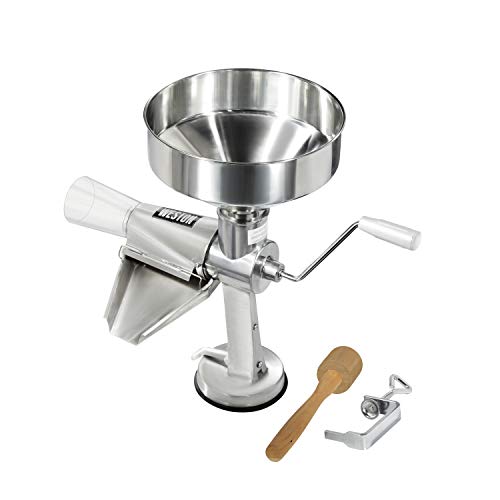
- One-gallon hopper for larger batches
- Suction-cup and C-clamp dual mount
- Includes splash guard, stomper, and 1.5mm screen
Best For: High-volume tomato sauce and preserve making
Texture-Control Food Mill
Hungry Artisan 4-Disc Food Mill

- Four discs range from fine to coarse
- Stainless steel and dishwasher-safe construction
- Support hooks and ergonomic crank improve control
Best For: Custom-texture purees, sauces, jams, and mashed potatoes
Countertop Tomato Mill

- Separates tomato skins and seeds
- Suction base steadies the mill
- Includes stainless steel pusher
Best For: Tomato sauce, salsa, juice, and puree
Hand-Crank Multi-Texture Mill
3-Disc Stainless Steel Food Mill

- Three discs provide different textures
- No outlet needed for operation
- Stainless steel construction and crank
Best For: Canning, applesauce, sauces, and purees
Powered Clamp Strainer
Johnny Apple Sauce Maker with Motor

- Includes an electric motor and hand crank
- Clamp fits 3/4- to 2-1/8-inch counters
- Separates skins and seeds from produce
Best For: Sauces, juices, jams, and larger puree tasks
Best Stainless Steel Pick

- Stainless steel body with three milling discs
- Dual hooks help stabilize the mill on a bowl
- Dishwasher-safe and includes useful accessories
Best For: Home cooks making sauces, potatoes, jams, and purees
Best Manual Sauce Maker

- Includes four screens and two produce spirals
- Clamp fits countertops from 3/4 to 2-1/8 inches
- Designed for sauces, juices, jams, and purees
Best For: Home preservers processing varied fruits and vegetables
Best Electric Upgrade

- 250-watt motor with forward and reverse speeds
- One-gallon hopper for larger batches
- Includes three stainless steel screens
Best For: Large-batch canning, sauces, purees, and salsa
Versatile Clamp-On Pick – Johnny Apple Sauce Maker
If you want one of the more adaptable manual food strainer machines for homemade sauces and purees, the Johnny Apple Sauce Maker is a practical choice. Its fine 1.3mm screen separates skins and seeds, while the clamp mounts to countertops from 3/4 to 2-1/8 inches thick.
Best For: Home cooks making applesauce, tomato sauce, jams, baby food, purees, and pie fillings.
Pros:
- Handles fruits, vegetables, sauces, juices, and purees.
- Includes a fine apple/tomato screen and standard spiral.
- Secure clamp provides a stable countertop setup.
- Optional electric motor and extra screens expand its capabilities.
Cons:
- Electric motor and additional screens cost extra.
- Clamp mounting requires a compatible countertop edge.
This is a strong all-purpose option for small-to-medium home batches, especially if you value accessory expandability and a sturdy clamp design.
Classic Sauce-Making Choice – Norpro 1951 Sauce Master
The Norpro 1951 Sauce Master is a straightforward entry in the manual food strainer machines category. It uses a hand-operated design to force produce through a chrome-plated steel screen while separating juice and pulp in one operation.
Best For: Cooks who want a basic strainer for vegetables, fruits, purees, and homemade sauces.
Pros:
- Listed 3-quart capacity suits routine batch preparation.
- Automatically separates juice and pulp.
- Includes a fine mesh screen, spiral, recipe, and instructions.
- Optional berry, pumpkin, and salsa screens are available.
Cons:
- Additional specialty screens are sold separately.
- The supplied notes do not specify a mounting system or electric-motor option.
Choose this model if you prefer a familiar, uncomplicated sauce strainer with useful add-on screen options for different ingredients.
Large-Hopper Workhorse – Weston Metal Tomato Strainer
For shoppers comparing manual food strainer machines for larger prep jobs, the Weston Metal Tomato Strainer stands out with its one-gallon hopper. Its stainless steel construction, splash guard, and dual-mount system are designed to make processing tomatoes and other soft produce more controlled.
Best For: Large-batch tomato sauce, jams, preserves, salsa, and fruit or vegetable purees.
Pros:
- One-gallon hopper supports larger batches.
- Dual suction-cup and C-clamp mounting works on various flat surfaces.
- Includes a stomper and 1.5mm multipurpose screen.
- Splash guard and chute help direct puree with less mess.
Cons:
- Additional screens require the separately sold accessory kit.
- Its larger hopper may be more than needed for occasional small batches.
This is a practical pick for harvest-season processing when capacity, surface flexibility, and splash control matter more than compact storage.
Texture-Control Food Mill – Hungry Artisan 4-Disc Food Mill
The Hungry Artisan 4-Disc Food Mill offers a different take on manual food strainer machines, using interchangeable stainless steel discs rather than a single fixed screen. Its hand crank is suited to purees, sauces, mashed potatoes, baby food, and preserving projects where texture control is important.
Best For: Home cooks who want fine, ultra-fine, or coarse results from soft fruits, vegetables, potatoes, jams, and sauces.
Pros:
- Four interchangeable discs provide texture flexibility.
- Stainless steel construction resists rust and corrosion.
- Dishwasher-safe design simplifies cleanup.
- Spring-loaded crank, silicone grip, and support hooks aid stability and comfort.
Cons:
- It is a food mill rather than a dedicated tomato press with a hopper.
- Users should check the product dimensions and capacity for their cookware.
Consider this model when texture customization and easy cleanup are higher priorities than processing whole large batches through a dedicated sauce press.
Countertop Tomato Mill – Suction-Base Tomato Strainer
This compact option is designed for cooks who want a straightforward manual food strainer machine for tomatoes. Its suction-cup base helps hold the mill in place while it separates skins and seeds from juice for sauces, salsa, and purees.
Best For: Tomato sauce, fresh salsa, juice, and potato puree in smaller kitchen batches.
Pros:
- Suction mount helps stabilize the food mill during use.
- Separates skins and seeds while juice flows into the tray.
- Includes a stainless steel pusher for guiding tomatoes through the mill.
- Useful for straining, juicing, and pureeing tomatoes.
Cons:
- Its recommended uses are focused primarily on tomatoes and similar preparations.
- The plastic construction may not suit shoppers seeking an all-stainless-steel mill.
- A suction base requires a suitable smooth countertop for secure mounting.
This is a practical pick for garden harvests and farm-to-table cooking when tomato prep is the main priority. The built-in support and included pusher make it approachable for routine sauce and salsa making.
Hand-Crank Multi-Texture Mill – 3-Disc Stainless Steel Food Mill
The Hungry Artisan 3-Disc Food Mill is a versatile manual food strainer machine for cooks who want adjustable textures without an electrical connection. Its hand crank and interchangeable discs support preparations ranging from chunky applesauce to smooth sauces and purees.
Best For: Applesauce, tomato sauce, canning, baby food, mashed potatoes, and other adjustable-texture purees.
Pros:
- Includes coarse, medium, and fine stainless steel discs.
- Hand-crank operation works anywhere without an outlet.
- Stainless steel body, discs, and crank are designed for repeated use.
- Handles applesauce, tomato sauce, baby food, jam bases, and mashed potatoes.
Cons:
- Manual cranking requires more hands-on effort than an electric strainer.
- At 15.5 inches long, it may need substantial storage space.
- The supplied notes do not specify a clamp or suction mounting system.
Choose this model when texture control and broad recipe coverage matter more than powered convenience. The three discs make it especially useful for seasonal canning and recipes that vary from coarse to smooth.
Powered Clamp Strainer – Johnny Apple Sauce Maker with Motor
This Johnny Apple Sauce Maker combines manual and powered operation, making it a flexible manual food strainer machine for larger or more varied preparation tasks. It separates skins and seeds from fruits and vegetables and includes an electric motor for reducing hand-cranking effort.
Best For: Sauces, juices, jams, baby food, pie fillings, purees, and cream soups when secure countertop mounting is important.
Pros:
- Can be operated with the hand crank or included electric motor.
- Separates skins and seeds from a variety of fruits and vegetables.
- Clamp fits countertops from 3/4 to 2-1/8 inches thick.
- Includes a 1.3 mm apple/tomato screen and stainless steel screens.
Cons:
- Powered use requires access to an electrical outlet.
- Clamp-based setup is less portable than an unmounted hand mill.
- The supplied configuration includes one apple/tomato screen rather than multiple texture discs.
This is the strongest fit for shoppers who want both powered convenience and manual backup. Its broad food-use range, sturdy clamp design, and included motor make it well suited to recurring sauce, canning, and puree work.
Best Stainless Steel Pick – 3-Disc Rotary Food Mill
For cooks comparing manual food strainer machines, this stainless steel food mill offers a sturdy, bowl-friendly design for smaller batches of sauces, mashed potatoes, jams, and canned foods. Its three interchangeable milling discs let you adjust the texture while the dual hooks help keep the mill stable during use.
Best For: Home cooks who want a versatile manual mill for sauces, potatoes, fruits, and vegetables.
Pros:
- Food-grade stainless steel body with a mirror-polished finish.
- Three milling discs support fine, medium, and coarser textures.
- Dual hooks and soft silicone-covered handles promote steadier cranking.
- Dishwasher-safe parts and a hanging hole simplify cleanup and storage.
Cons:
- Manual cranking requires more effort than an electric strainer.
- The supplied details do not specify the bowl diameter or batch capacity.
This is a practical choice when you value stainless steel construction, flexible disc options, and easy cleanup. The included spoon, funnel, and measuring spoon add useful convenience for preparation and canning tasks.
Best Manual Sauce Maker – Johnny Apple Sauce Maker
This Johnny Apple Sauce Maker is a strong option among manual food strainer machines for separating skins and seeds while preparing sauces, purees, juices, jams, and baby foods. Its clamp-based setup mounts to countertops between 3/4 and 2-1/8 inches thick, while the included screens and spirals cover a broad range of produce.
Best For: Gardeners and home preservers processing apples, tomatoes, berries, pumpkins, grapes, and salsa ingredients.
Pros:
- Includes berry, apple/tomato, pumpkin, and salsa screens.
- Comes with standard and grape spirals for different produce.
- Sturdy clamp provides a 10-square-inch clamping surface.
- Includes a five-year warranty and BPA-free plastic components.
Cons:
- Requires countertop clamping and manual hand-crank operation.
- The optional electric motor is sold separately.
- Its 5.1-pound build may be less convenient to move frequently.
With multiple screens and spirals included, this model is especially well suited to varied preservation projects. It takes more setup than a simple handheld mill, but the clamp and accessory selection support repeated batch processing.
Best Electric Upgrade – Weston Deluxe Tomato Strainer
Although it is electric rather than manual, this Weston model is a useful comparison point for shoppers evaluating manual food strainer machines and deciding whether larger batches justify powered processing. Its 250-watt motor, one-gallon hopper, reverse function, and three stainless steel screens are designed for sauces, purees, jellies, salsa, and preserving.
Best For: Canning enthusiasts and gardeners processing large quantities of tomatoes and soft produce.
Pros:
- 250-watt motor offers forward and reverse speeds.
- One-gallon hopper supports larger processing batches.
- Three screens handle multipurpose, smooth puree, and chunky results.
- Includes a stomper for feeding produce into the hopper.
Cons:
- Requires access to a 120-volt AC power source.
- At 17 inches tall, it needs more storage space than a manual mill.
- It includes a one-year warranty, shorter than the five-year warranty listed for the Johnny model.
This is the better fit when speed and batch capacity matter more than hand-crank simplicity. The reverse setting can help prevent jams, while the interchangeable screens make it adaptable for both smooth preparations and chunky salsa.
How We Picked the Best Manual Food Strainer Machines
We focused on the features that matter during real sauce-making and preserving projects: construction materials, hopper capacity, mounting stability, disc or screen options, crank effort, cleanup, and the types of produce each design can handle. The selection includes traditional hand-crank mills, clamp-mounted tomato strainers, suction-base models, and options with electric assistance.
Because product names and configurations can vary, check the current listing for included screens, attachments, motor components, and mounting hardware before ordering. A food mill designed for soft cooked produce is not necessarily suitable for raw or fibrous ingredients.
Quick Comparison
| Best For | Look For |
|---|---|
| Small batches and occasional use | Compact hand-crank mill with a stable base |
| Tomato sauce and salsa | Strainer that removes skins and seeds efficiently |
| Applesauce and fruit purees | Interchangeable discs or a versatile screen system |
| Large harvests | Generous hopper, secure mounting, and high throughput |
| Reduced manual effort | Motorized or electric-assisted configuration |
Key Buying Factors for Manual Food Strainer Machines
Straining Method and Texture
Hand-crank mills press cooked food through a perforated disc, while tomato strainers typically use a rotating auger and screen to separate pulp from skins and seeds. Multiple discs are valuable if you make both silky sauces and thicker purees.
Capacity and Mounting
A larger hopper helps when processing garden produce in batches, but it also needs a firm attachment point. Clamp-based models work well on compatible counters or tables; suction bases are convenient on smooth surfaces but may be less dependable during forceful cranking.
Materials and Cleanup
Stainless steel components resist staining and are generally a good choice for acidic tomatoes and frequent use. Look for removable screens, simple assemblies, and dishwasher-safe parts where available. Rinse pulp promptly so seeds and fibers do not dry inside the mechanism.
Manual Effort and Durability
A smooth crank, ergonomic handle, rigid frame, and reliable mounting system reduce fatigue. For occasional batches, a basic mill may be enough. If you process bushels of tomatoes or apples, throughput and motor assistance can matter more than the lowest purchase price.
Who Should Buy Which Manual Food Strainer Machines?
Choose a compact hand-crank food mill if you make small batches of mashed potatoes, applesauce, jams, or purees. Choose a clamp-mounted tomato strainer if your priority is quickly removing skins and seeds from cooked tomatoes or soft fruit. A multi-disc stainless steel mill is the most flexible option for households making several textures throughout the year.
For serious gardeners, canners, or anyone processing large harvests, prioritize hopper size, secure mounting, replacement screens, and easy cleaning. An electric model may be worth considering when repetitive cranking is tiring, but manual machines remain appealing for their lower complexity, portability, and control.