Manual corn grinders give home cooks a practical way to process corn, grains, spices, and other dry ingredients without electricity. The best model depends on the texture you want, how often you grind, and whether you value capacity or compact storage.
We’ve compared 10 hand-crank mills across cast-iron construction, hopper design, adjustability, clamping stability, and everyday versatility to help you choose with confidence.
Best 10 Manual Corn Grinders Picks for 2026
Best Overall

- 2,400 g high hopper
- Adjustable grinding control
- Clamps to 1/2–2-inch tables
Best For: Versatile home grinding and traditional corn preparation
Best Heavy-Duty Option

- 0.53-gallon hopper
- Coarse, medium, and fine settings
- Stable 32.2-pound carbon-steel body
Best For: High-capacity grinding in a dedicated workspace
Best for Traditional Recipes
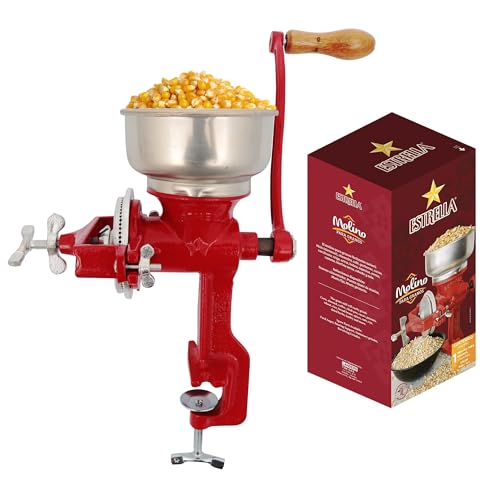
- Traditional cast-iron molino design
- Suitable for masa and nixtamal
- Removable parts for cleaning
Best For: Tortillas, tamales, pupusas, and other traditional recipes
Best All-Around Manual Corn Grinder

- Adjustable coarse-to-fine grinding
- Includes clamp and mounting hardware
- Handles corn, masa, flour, spices, and coffee
Best For: Versatile home milling and traditional recipes
Best Traditional Design
Victoria Manual Cast Iron Corn Mill

- Sturdy cast-iron construction
- Clamps to 1/2- to 2-inch tables
- Versatile for grains, nuts, seeds, and spices
Best For: Traditional coarse-to-medium home milling
Best for Batch Grinding
Chefcaptain Manual Corn Grinder
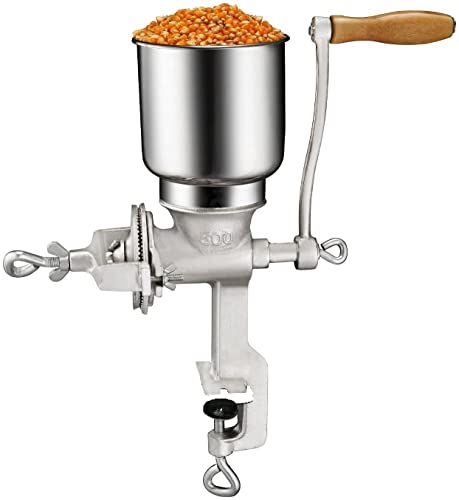
- Grinds up to 1 pound per minute
- Cast-iron build for durability
- Handles corn, wheat, grains, and nuts
Best For: Faster manual batch preparation
Versatile Hand Mill

- Handles corn, grains, coffee, herbs, spices, and seeds
- Adjustable nut controls powder size
- Heavy-duty hand-crank design for kitchen or commercial use
Best For: Multi-purpose manual grinding at home or in food-service settings
Small-Batch Control
VEVOR Manual Corn Grinder with Low Hopper

- Low hopper is suited to smaller batches
- Table clamp fits 0.79–1.58-inch openings
- Adjustable disc and dust cover support controlled grinding
Best For: Stable, contained grinding of modest quantities
High-Capacity Hopper

- High hopper reduces frequent refilling
- Clamp stabilizes the mill on compatible tables
- Adjustable disc handles varied grinding textures
Best For: Longer manual grinding sessions with larger batches
Best Overall – Victoria Cast Iron Corn Mill
For shoppers comparing manual corn grinders, the Victoria offers a sturdy cast-iron build, adjustable grinding, and a high hopper with 2,400 g capacity. Its clamp-on design and included non-slip protector make it practical for regular kitchen or workshop use.
Best For: Versatile home grinding, brewing, and traditional corn preparation.
Pros:
- Heavy-duty cast iron construction with erosion-resistant discs.
- Adjustable screw helps control coarse and fine textures.
- Clamps to tables 1/2 to 2 inches thick and includes a surface protector.
- Handles corn, grains, coffee, spices, nuts, beans, and more.
Cons:
- Cannot produce a superfine texture.
- Not designed to turn whole wheat into fine powder.
- Manual operation may require effort for larger batches.
The Victoria is a well-rounded choice when durable construction and broad ingredient compatibility matter more than superfine milling. Its limitations are worth noting for users focused on fine flour.
Best Heavy-Duty Option – VEVOR Flywheel Grain Mill
Among manual corn grinders, the VEVOR stands out for its 32.2-pound carbon-steel body, wide base, flywheel, and 0.53-gallon hopper. Three fineness settings provide flexibility for grains, spices, coffee beans, and nuts without relying on electricity.
Best For: High-capacity grinding and users who want a stable, heavy-duty mill.
Pros:
- Powder-coated carbon steel resists rust and wear.
- Wide base helps reduce vibration during grinding.
- Offers coarse, medium, and fine settings.
- Flywheel supports hand-crank use and optional belt or motor drive; motor is not included.
Cons:
- At 32.2 pounds, it is less portable than smaller mills.
- Requires multiple passes when a finer texture is needed.
- Optional motor is not included.
This is a strong fit for buyers who prioritize stability and batch capacity. Its substantial weight and larger footprint make it better suited to a dedicated workspace than occasional countertop use.
Best for Traditional Recipes – Estrella Molino de Maíz
The Estrella is one of the more tradition-focused manual corn grinders, using a cast-iron hand-crank design for corn, nixtamal, masa, coffee, and spices. Its countertop clamp and removable parts suit home cooks preparing tortillas, tamales, pupusas, and other fresh recipes.
Best For: Traditional Mexican and Latin American cooking with freshly ground ingredients.
Pros:
- Cast-iron construction is designed for dependable long-term use.
- Adjustable settings accommodate different grinding needs.
- Clamps to countertops up to 1.5 inches thick.
- Removable parts simplify cleaning and storage.
Cons:
- Its clamp fits a narrower thickness range than some competing mills.
- Manual grinding requires hands-on effort.
- The supplied notes do not specify a hopper capacity.
Choose the Estrella when recipe tradition and easy cleanup are priorities. It is especially appealing for cooks who want a dedicated molino-style tool rather than a general-purpose high-capacity mill.
Best Large-Hopper Value – High Hopper Iron Corn Grinder
This high-hopper model is a practical option among manual corn grinders for buyers who want fewer refills. Its cast-iron body, adjustable grinding plate, table clamp, and auger are suited to corn, malt, beans, wheat berries, coffee, home brewing, dough making, and poultry feed.
Best For: Efficient batch grinding for home brewing, baking, and animal-feed preparation.
Pros:
- Large hopper helps reduce the need for frequent refilling.
- Adjustable plate controls the resulting particle size.
- Auger is designed to grind grains evenly and thoroughly.
- Adjustable base fits tables of different thicknesses.
Cons:
- The supplied notes do not specify the hopper capacity.
- Manual operation may be demanding during extended batches.
- Designed for coarse-to-fine grinding, not a specified superfine flour texture.
This grinder makes sense for users who value a large hopper and broad utility at home. Its ability to handle brewing, dough, and feed tasks adds flexibility, while the unspecified capacity makes direct size comparisons harder.
Best All-Around Manual Corn Grinder – Corona Cast Iron Grain Mill
For shoppers comparing manual corn grinders, the Corona offers a durable cast-iron build, a 0.8-quart hopper, and adjustable settings for everything from coarse grains to finer flour and masa. Its included clamp and mounting hardware make it a practical countertop option for regular home use.
Best For: Home cooks who want one manual mill for corn, masa, flour, spices, coffee, and other grains.
Pros:
- Adjusts from coarse to fine textures for masa, tortillas, tamales, flour, and cracked grains.
- Heavy-duty cast iron construction with food-safe tin plating.
- Includes hopper, grinding plates, clamp, handle, mounting hardware, and stabilizing pad.
- Clamp fits countertops up to 1.45 inches thick for stable grinding.
Cons:
- Manual operation requires hands-on effort.
- Its 4.11-kilogram construction may be heavier than simpler kitchen mills.
The Corona is a versatile pick if you need more than a dedicated corn grinder. Its adjustable grind and broad ingredient range make it especially useful for traditional recipes and everyday small-batch milling.
Best Traditional Design – Victoria Manual Cast Iron Corn Mill
Among manual corn grinders, the Victoria stands out for its traditional Colombian cast-iron construction, low hopper, and adjustable grinding screw. It clamps to tables from 1/2 to 2 inches thick and includes a rubber protector to help reduce slipping and protect the work surface.
Best For: Traditional home milling, brewing, and cooks who value a sturdy, versatile hand-crank design.
Pros:
- Heavy-duty cast iron body with double tin plating and erosion-resistant discs.
- Adjustable screw lets you change the coarseness and fineness of the grind.
- Works with corn, barley, grains, coffee, seeds, nuts, beans, spices, and more.
- Wide table compatibility and included non-slip rubber protector.
Cons:
- Cannot grind to a superfine texture.
- Will not grind whole wheat into a fine powder.
- Backed by a 90-day limited warranty.
The Victoria is a solid choice for coarse-to-medium grinding and broad kitchen versatility. Its stated texture limits make it less suitable for superfine flour, but its stable clamp range and durable construction support demanding manual use.
Best for Batch Grinding – Chefcaptain Manual Corn Grinder
For buyers seeking manual corn grinders with a stated output rate, the Chefcaptain is designed to grind up to 1 pound per minute. Its cast-iron construction and ability to handle grains and nuts make it a useful option for batch preparation without relying on electricity.
Best For: Home cooks and small-batch food preparation where faster manual grinding is useful.
Pros:
- Rated to grind up to 1 pound per minute.
- Durable cast-iron construction designed for long-term use.
- Handles corn, wheat, other grains, and nuts.
- Includes preparation guidance to remove manufacturing oils or dust before use.
Cons:
- Supplied notes do not specify adjustable grind settings.
- Initial preparation and rinsing are required before normal use.
- Manual grinding still requires physical effort, even with the stated output rate.
The Chefcaptain makes the most sense when throughput is a priority. Its clear 1-pound-per-minute claim and sturdy cast-iron build favor batch work, while shoppers seeking finely adjustable textures may prefer a model with explicitly documented settings.
Versatile Hand Mill – Iron Manual Corn Grinder
This manual corn grinder is a versatile hand-crank option for kitchens, bakeries, restaurants, and other food-preparation settings. Its iron construction handles corn, wheat, oats, coffee, herbs, spices, and seeds, while the adjustable nut lets you control the powder size.
Best For: Home or commercial users who want one manual grinder for multiple grains and dry ingredients.
Pros:
- Works with corn, coffee, herbs, oats, spices, seeds, and other grains.
- Adjustable grinding setting helps tailor powder coarseness.
- Hand-crank operation requires no electricity and is designed for straightforward use.
- Food-grade, durable construction with an ergonomic design.
Cons:
- At 7.7 pounds, it is relatively heavy to move or store.
- Supplied details do not list included components or mounting hardware.
This is a practical pick when ingredient flexibility matters more than compactness. Choose it for broad kitchen use, especially if you want to grind both corn and smaller ingredients such as coffee or spices.
Small-Batch Control – VEVOR Manual Corn Grinder with Low Hopper
This VEVOR manual corn grinder is designed for controlled, small-batch grinding. Its low hopper, table clamp, adjustable grinding disc, and dust cover make it a focused choice for processing corn, grains, spices, nuts, and coffee without electricity.
Best For: Users who value stable, contained grinding for smaller quantities.
Pros:
- Low hopper suits small batches and helps limit frequent handling.
- Clamp fits tables with openings from 0.79 to 1.58 inches.
- Adjustable disc allows coarser or finer results, with repeat grinding for finer textures.
- Cast-iron body has a powder-coated finish to resist rust and wear.
Cons:
- Low hopper holds less grain than the high-hopper version.
- Requires a compatible table edge for the included clamp.
The low-hopper design is well suited to occasional prep, baking, and home brewing where batch size is modest. The clamp and dust cover are useful additions for keeping the grinder steady and the work area cleaner.
High-Capacity Hopper – VEVOR Manual Corn Grinder
This VEVOR manual corn grinder uses a high hopper to hold more grain at once, reducing the need for frequent refills during grinding. The hand-crank mill processes corn, grains, spices, nuts, and coffee, with a clamp for steadier table use and an adjustable disc for changing the texture.
Best For: Users who prefer longer grinding sessions with fewer hopper refills.
Pros:
- High hopper accommodates more grain at a time.
- Processes corn, grains, spices, nuts, and coffee beans.
- Adjustable grinding disc supports different textures and repeat passes for finer results.
- Powder-coated cast iron construction is designed to resist rust and wear.
Cons:
- Its 17.72-inch height may require more storage space.
- Requires a compatible table edge for the 0.79–1.58-inch clamp opening.
Compared with a low-hopper mill, this model prioritizes capacity and fewer interruptions. It is a strong fit for users who expect to grind larger amounts manually and have sufficient vertical storage or countertop clearance.
How We Picked the Best Manual Corn Grinders
We focused on the features that matter most during real hand-grinding: durable metal construction, a stable mounting system, useful hopper capacity, grind adjustment, and compatibility with corn and other dry ingredients. We also considered whether each design suits occasional kitchen use, regular masa preparation, or heavier household grinding.
Because product specifications can vary by listing and configuration, confirm the current hopper size, included clamp, adjustment range, and care instructions before buying. Cast iron typically offers excellent durability, but it may require drying and occasional seasoning to prevent rust.
Quick Comparison
- Best for larger batches: High-hopper models generally reduce refilling and are convenient for frequent grinding.
- Best for compact setups: Low-hopper mills are easier to fit beneath cabinets and may be simpler to store.
- Best for versatility: Look for adjustable burrs or plates suitable for corn, wheat, oats, coffee, spices, and similar dry foods.
- Best for stability: A strong table clamp and a rigid base help prevent movement while turning the crank.
Key Buying Factors for Manual Corn Grinders
Construction and Durability
Cast iron and carbon steel can withstand repeated use, but they are heavy. Check that the grinding components are firmly assembled and that the finish is suitable for food contact. Avoid putting most cast-iron mills in the dishwasher; clean them according to the manufacturer’s instructions and dry them promptly.
Hopper Size and Design
A high hopper usually holds more ingredients and makes batch work less interrupted. A low hopper may be a better choice when counter clearance, storage, or portability matters. Capacity is only useful if the mill remains stable and easy to feed.
Grind Control
Adjustable settings help you move from coarse cracked corn to finer meal or flour, although hand mills may not match an electric flour mill for ultra-fine results. For masa, confirm that the grinder is appropriate for prepared nixtamal and follow the maker’s guidance.
Mounting and Effort
Look for a dependable clamp, broad mounting surface, and comfortable crank. Hard or very dry grains require more effort, so a secure work surface is essential. A slower, smoother turn is usually preferable to forcing the handle.
Who Should Buy Which Manual Corn Grinders?
Choose a high-hopper mill if you regularly process larger quantities of corn, wheat, or other grains and want fewer refills. Choose a low-hopper model if you have limited counter space or expect to store the grinder between uses.
Choose a heavy cast-iron grinder for durability and traditional hand-milling. Choose a model with clearly adjustable fineness if you want one tool for coarse meal, flour, and several dry ingredients. If you only grind occasionally or need very fine flour with minimal effort, an electric mill may be more practical.