Making fresh oil at home or in a small production setting is easier with the right electric oil press. These machines vary widely in capacity, temperature control, operating speed, and ease of cleaning.
We’re comparing 10 selected models—from compact home-friendly presses to higher-output commercial machines—so you can choose equipment that matches your ingredients, batch size, and workflow.
Best 10 Electric Oil Presses Picks for 2026
Best High-Capacity Pick
VEVOR 11-LB Electric Oil Press

- Up to 11 lb/h stated output
- 122°F–572°F hot and cold control
- Presses more than 30 types of seeds and nuts
Best For: High-output home, restaurant, and small commercial pressing
Best Manual Alternative
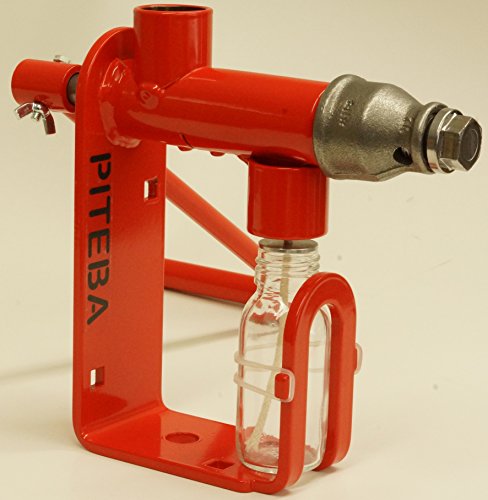
- Needs no external power
- Designed for continuous expelling
- Compact design weighs about 5.2 lb
Best For: Portable, low-maintenance manual oil pressing
Best Continuous-Use Pick

- Stated output of 5–9 kg/h
- Designed for 24-hour operation
- 104°F–572°F control with LED display
Best For: Extended home, farm, workshop, and light commercial use
Best Midrange Stainless-Steel Pick

- Stated output of 9–13.5 lb/h
- Hot and cold modes with digital monitoring
- Stainless-steel body for home or commercial use
Best For: Automatic pressing of common nuts and oil-bearing seeds
Balanced Home Pressing

- Hot and cold pressing modes
- Digital temperature control with preheat timer
- 304 stainless-steel body with safety shutoff
Best For: Home users prioritizing flexibility and simple controls
High-Output Versatility

- 1500W motor with 5 kg/hour peanut capacity
- Multiple hot, cold, and frying modes
- LCD touch panel with intelligent temperature control
Best For: Larger batches and varied seed-and-nut processing
Heavy-Duty Production
1800W Automatic Seed Oil Press
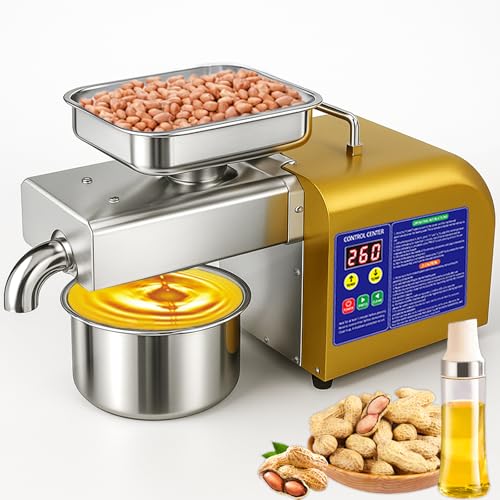
- 11–20 lb/h stated output for larger workloads
- 104–572°F hot-and-cold temperature range
- Designed for home and commercial operation
Best For: High-volume pressing of compatible oilseeds
Top All-Rounder

- Hot- and cold-press modes
- 40–300°C adjustable temperature
- Continuous feeding with reverse function
Best For: Home kitchens and light commercial use
Automatic Workhorse
610W Stainless Steel Oil Press

- 50–250°C temperature adjustment
- Stainless-steel, non-fingerprint shell
- Listed throughput of 3–6 kg per hour
Best For: Routine small-batch seed and nut pressing
Energy-Conscious Pick

- Cold- and hot-press operation
- Durable 304 stainless-steel body
- Stated 0.5–0.6 kW hourly consumption
Best For: Energy-conscious users pressing varied seeds and nuts
Best High-Capacity Pick – VEVOR 11-LB Electric Oil Press
For shoppers comparing electric oil presses, the VEVOR Oil Press Machine stands out for its stated capacity of up to 11 pounds per hour and broad ingredient compatibility. Its adjustable 122°F–572°F range supports both hot and cold pressing for home, restaurant, or market use.
Best For: Home cooks and small commercial users who want high output, wide temperature control, and compatibility with more than 30 nuts and seeds.
Pros:
- Processes up to 11 pounds of flaxseed per hour.
- Adjustable temperature range supports hot and cold pressing.
- Includes an oil cup, filter screen, gloves, and cleaning brush.
- Stainless steel core components are designed for high-temperature, high-pressure use.
Cons:
- Its 28.7-pound weight may make moving it less convenient.
- The listed 220-volt power requirement may not suit every household setup.
The VEVOR is a strong choice when throughput and versatility matter most. Confirm your electrical compatibility before buying, and note that hand-wash cleaning is recommended.
Best Manual Alternative – Nut and Seed Oil Expeller
Although many electric oil presses require a power source, this Nut and Seed Oil Expeller takes a manual approach. It is designed for continuous expelling with no external power, making it a compact option for shoppers who prioritize simplicity and portability.
Best For: Small farms, health-conscious users, and anyone who wants a compact oil expeller without relying on electricity.
Pros:
- Requires no external power source.
- Designed for continuous expelling with minimal maintenance.
- Compact and lightweight at approximately 5.2 pounds.
- Offers a simple operating approach.
Cons:
- Manual operation requires more physical effort than an automatic electric press.
- The notes do not provide an hourly output figure or temperature controls.
This is best viewed as a straightforward, portable alternative rather than a high-throughput machine. Choose it if avoiding electricity and keeping maintenance simple are more important than automation.
Best Continuous-Use Pick – 1800W Hot & Cold Oil Press
This 1800W machine is one of the more production-oriented electric oil presses in the roundup. It claims output of 5–9 kg per hour and 24-hour continuous operation, while its 104°F–572°F temperature range accommodates both hot and cold pressing.
Best For: Households, farms, workshops, and light commercial users needing extended operation and adjustable processing temperatures.
Pros:
- Stated output reaches 5–9 kg, or about 11–20 pounds, per hour.
- Designed for 24-hour continuous operation.
- LED display provides real-time temperature monitoring.
- Includes a reverse function to help release the pressing rod and reduce clogging.
Cons:
- Its 26-pound package weight suggests it is less portable than compact presses.
- The higher-output design may be more machine than occasional users need.
With continuous-use capability, a high-power motor, and a complete accessory kit, this model fits buyers who expect regular batches. Its stated 110V voltage is also worth checking against your outlet before purchase.
Best Midrange Stainless-Steel Pick – 820W Automatic Oil Press
The 820W Automatic Oil Press offers a practical balance for shoppers seeking electric oil presses for home or commercial use. It supports hot and cold modes, reports output of 9–13.5 pounds per hour, and uses an intelligent panel for temperature monitoring and timed operation.
Best For: Users wanting automatic temperature control, continuous operation, and a stainless-steel machine for common nuts and seeds.
Pros:
- Stated output ranges from 9 to 13.5 pounds per hour.
- Supports hot and cold pressing with a 104°F–464°F temperature range.
- Intelligent panel displays temperature and manages the pressing countdown.
- Designed for continuous operation and includes a filter, cup, brush, and gloves.
Cons:
- It is not intended for olives, cocoa beans, spices, flowers, herbs, or coffee beans.
- The 820W rating is lower than the higher-powered machines in this roundup.
This model suits buyers who want automated controls without moving to the highest stated wattage. Its ingredient restrictions are important, so verify that your preferred seeds and nuts are supported before ordering.
Balanced Home Pressing – 610W Hot & Cold Oil Press
This 610W option is a practical entry point for shoppers comparing electric oil presses for occasional home use. It combines hot and cold pressing, a digital temperature display, and an 8-minute preheat countdown for more controlled extraction from nuts and seeds.
Best For: Home users who want hot- and cold-press flexibility with automated temperature management.
Pros:
- 304 stainless-steel construction is designed for heat resistance, wear resistance, and durability.
- Hot and cold pressing supports different oil crops while helping preserve flavor and nutrients.
- Digital temperature control, preheat countdown, overheating protection, and auto power-off simplify operation.
Cons:
- Its 610W motor is less powerful than the higher-wattage machines in this roundup.
- The listed oil yield is up to 45%, so output varies by ingredient and preparation.
This model stands out for straightforward controls and protective features rather than maximum throughput. It is a sensible choice when convenience and versatility matter more than continuous commercial production.
High-Output Versatility – 1500W Automatic Oil Extractor
For shoppers seeking electric oil presses with more power and extended operation, this 1500W stainless-steel machine offers multiple pressing methods and an LCD touch control panel. It is rated for pressing up to 5 kg of peanuts per hour and continuous operation for up to 24 hours.
Best For: Users who need higher throughput and broad compatibility with seeds and nuts.
Pros:
- 1500W motor and stated 5 kg-per-hour peanut pressing capacity support larger batches.
- Cold press, hot press, and frying modes accommodate different oil crops and preferences.
- Intelligent temperature control displays and adjusts the working temperature through the digital screen.
- Stainless-steel construction, low-noise operation, and included accessories support routine use.
Cons:
- The higher power and 5 kg capacity may be more than needed for occasional small batches.
- The supplied notes do not specify an operating temperature range.
With its stronger motor and long working-time rating, this is the more production-oriented pick of the first two machines. Its multiple modes also make it useful for households or small operations pressing several types of oil-rich seeds.
Heavy-Duty Production – 1800W Automatic Seed Oil Press
This 1800W machine is aimed at buyers comparing electric oil presses for demanding home or commercial workloads. It offers hot and cold extraction, a 104–572°F temperature range, real-time monitoring, and a stated output of 11–20 pounds per hour.
Best For: Home or commercial users who need high throughput and broad temperature adjustment.
Pros:
- 1800W power and a stated 11–20 lb/h output support substantial production.
- Temperature settings from 104–572°F provide broad control for different oilseeds.
- Automatic panel operation includes real-time temperature display and heating countdown.
- High-hardness stainless-steel pressure components and all-steel gears are designed for durability.
Cons:
- Freshly pressed oil is turbid and should settle for 24 hours before separation and use.
- It cannot extract olives and is not suitable for cocoa beans, spices, flowers, herbs, or coffee beans.
- At 25.1 pounds, it is less convenient to move than a lightweight countertop appliance.
This is the strongest choice when throughput and extended operation are the main priorities. Buyers should confirm that their intended ingredients are supported and plan for settling and filtering the freshly pressed oil.
Top All-Rounder – 820W Hot & Cold Oil Press
For shoppers comparing electric oil presses, this 820W model stands out for its broad ingredient compatibility, continuous feeding, and flexible hot- or cold-press operation. Its adjustable 40–300°C temperature range and LED display make it suitable for experimenting with different seeds and nuts at home or in light commercial use.
Best For: Home users and light commercial buyers who want high power, broad compatibility, and precise temperature control.
Pros:
- Supports hot and cold pressing for more control over extraction and flavor.
- Works with more than 30 types of seeds and nuts, including peanut, sesame, walnut, and flaxseed.
- Continuous-feed hopper and reverse function help reduce interruptions and simplify cleanup.
- Includes a filter, oil cup, cleaning brush, glove, outlet tube, and manual.
Cons:
- Its 17-pound weight and 16 × 11 × 8-inch package size may limit portability.
- The wide 40–300°C temperature range may require some experimentation for different ingredients.
Choose this model when versatility and operating control matter most. The stainless-steel pressing system and included accessories make it a well-equipped option for regular small-batch oil pressing.
Automatic Workhorse – 610W Stainless Steel Oil Press
This automatic electric oil press is a practical choice for buyers who want stainless-steel construction, adjustable heating, and steady small-batch output. It can process several common oil-bearing materials, with the manufacturer listing a capacity of approximately 3–6 kg per hour.
Best For: Users seeking an automatic stainless-steel press for peanuts, sunflower seeds, soybeans, walnuts, and similar ingredients.
Pros:
- Non-fingerprint stainless-steel exterior is designed to resist rust and corrosion and is easier to clean.
- Adjustable pressing temperature from 50–250°C with automatic heating and temperature display.
- All-steel gear structure and pure-copper motor wiring are designed for stable operation.
- Simple installation and disassembly, with an oil cup, filter, insulation gloves, and manual included.
Cons:
- The notes identify the motor as 150W even though the product is marketed as a 610W model, so specifications should be verified before purchase.
- Hand-wash care may make cleanup more involved than with dishwasher-safe equipment.
This model focuses on automatic operation and durable stainless-steel construction. It is worth considering for routine pressing, provided the listed power specifications match your requirements.
Energy-Conscious Pick – 600W Cold/Hot Oil Machine
Among electric oil presses, this 600W model emphasizes durable 304 stainless steel, dual cold- and hot-press modes, and relatively low stated energy use. It is designed for a wide range of ingredients, including avocado, coconut, flax, peanut, castor, hemp, perilla, canola, and sesame seeds.
Best For: Buyers who want a durable 110V press with both pressing modes and an energy-saving design for peanut pressing.
Pros:
- Cold pressing preserves natural taste, color, and nutrients, while hot pressing is intended to improve aroma and yield.
- 304 stainless-steel construction is described as impact-, abrasion-, and rust-resistant.
- Stated consumption is 0.5–0.6 kW per hour during peanut pressing.
- Rear ventilation holes support heat dissipation during operation.
Cons:
- The supplied notes do not specify an adjustable temperature range or digital temperature display.
- Exact processing capacity and included accessories are not provided.
- The product listing contains duplicated durability information, so some specifications may need confirmation.
This is a sensible option when material durability and operating efficiency take priority. Its dual-mode design adds flexibility, but shoppers wanting detailed temperature controls or a clearly stated throughput should compare specifications carefully.
How We Picked the Best Electric Oil Presses
We evaluated these Electric Oil Presses by focusing on the specifications that most affect real-world use: motor power, stated pressing capacity, hot- and cold-press capability, temperature range, continuous-operation features, controls, construction, and suitability for home or commercial environments. Because advertised output can vary by seed type, moisture, preparation, and operating temperature, treat capacity figures as useful comparisons rather than guaranteed results.
We also considered practical details such as reverse functions for clearing jams, automatic feeding, stainless-steel construction, adjustable controls, and whether a machine appears designed for occasional household batches or longer production runs.
Quick Comparison
| Best For | Look For | Typical Advantage |
|---|---|---|
| Home use | Compact design, simple controls, manageable cleaning | Lower cost and easier storage |
| Frequent small batches | Automatic feeding, reverse control, adjustable heat | More consistent operation |
| Small commercial work | Higher wattage, larger hopper, continuous operation | Greater throughput |
| Temperature-sensitive oils | Cold-press mode and precise temperature adjustment | More control over extraction |
Key Buying Factors for Electric Oil Presses
Capacity and Motor Power
Choose capacity based on how much oilseed you plan to process in one session. Higher-wattage models generally support heavier workloads, but they can also consume more electricity and require more counter or floor space. Do not compare wattage alone; consider the advertised pounds-per-hour or kilograms-per-hour rating and the ingredients you use most often.
Hot and Cold Pressing
Hot pressing can improve flow and extraction for some seeds, while cold pressing may better suit buyers prioritizing lower-temperature processing. A broad, adjustable temperature range is helpful, but verify that controls are clear and that the machine can maintain the selected temperature during operation.
Controls, Feeding, and Jam Prevention
LCD or digital controls make temperature and operating settings easier to monitor. Continuous feeding reduces interruptions, while a press-and-reverse function can help clear compacted material. These features are especially valuable when processing peanuts, sesame, coconut, soybeans, or other ingredients with different textures and oil content.
Construction and Cleanup
Stainless-steel components are generally preferred for durability and routine food preparation, but removable parts matter just as much. Check how easily the press chamber, nozzle, hopper, and residue outlet can be accessed and cleaned. Always follow the manufacturer’s instructions for cooling, disassembly, and food-contact maintenance.
Who Should Buy Which Electric Oil Presses?
Occasional home users should prioritize straightforward controls, moderate capacity, compact storage, and easy cleanup over maximum output. Enthusiastic home producers may benefit from adjustable hot and cold settings, automatic feeding, and reverse control for fewer interruptions. Small businesses and serious hobbyists should focus on higher throughput, durable stainless-steel construction, longer duty cycles, and reliable temperature adjustment.
Before ordering, confirm the machine’s voltage, available counter space, included accessories, warranty, replacement-part availability, and the manufacturer’s recommended seed types. The best electric oil press is not necessarily the most powerful model—it is the one that safely handles your ingredients and expected workload without creating unnecessary cleanup or operating complexity.