Choosing the right commercial pasta machine can improve consistency, speed, and labor efficiency in a busy kitchen. The best option depends on your required output, pasta shapes, available space, and cleaning routine.
We selected 10 machines spanning countertop rollers, electric cutters, automatic presses, and higher-output extruders so you can match the equipment to your menu and workflow.
Best 10 Commercial Pasta Machine Picks for 2026
Best Heavy-Duty Electric Pick
750W Stainless Steel Commercial Pasta Machine

- 750W motor with claimed 45–66 lb/hour output
- Presses, kneads, and cuts dough in one unit
- 304 stainless-steel roller and cutter components
Best For: Restaurants and high-volume home kitchens needing versatile dough processing
Best Compact Italian Option
Marcato Atlasmotor Electric Pasta Machine
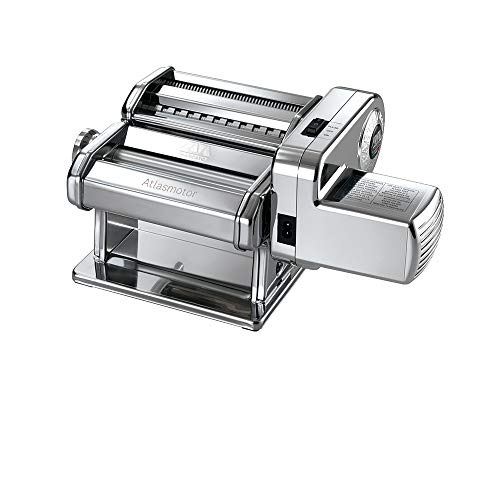
- Made and assembled in Italy
- Includes hand crank, clamp, and electric motor
- Ten thickness positions and 6-inch sheet width
Best For: Compact kitchens and lower-volume pasta making with manual or electric control
Best Value Commercial Roller

- 2-in-1 dough pressing and pasta cutting
- 0.12–18mm adjustable thickness range
- Steel gears and double-belt transmission
Best For: Home or restaurant users needing a sturdy roller with integrated cutting
Best Extrusion Capacity
Automatic 15–20kg/h Pasta Squeezing Machine

- 15–20kg/hour stated commercial output
- Includes Fusilli, Spaghetti, and Penne dies
- Stainless body with casters and built-in handles
Best For: Small and medium food businesses producing shaped pasta
Best High-Capacity Pick
Automatic 3-in-1 Pasta and Noodle Maker

- Produces about 45–55 lb of noodles per hour
- Handles pasta, wrappers, ramen, and flatbreads
- Adjustable thickness with dual 3 mm/9 mm cutters
Best For: Restaurants and small businesses needing high output and versatile dough processing
Best for Pasta Variety
Full-Automatic Extrusion Pasta Maker

- Produces 10–25 kg of pasta per hour
- Includes fusilli, spaghetti, and penne molds
- Supports many shapes through optional dies
Best For: Commercial kitchens and food businesses making assorted extruded pasta
Best Adjustable Roller
Electric Dough Roller Pasta Machine
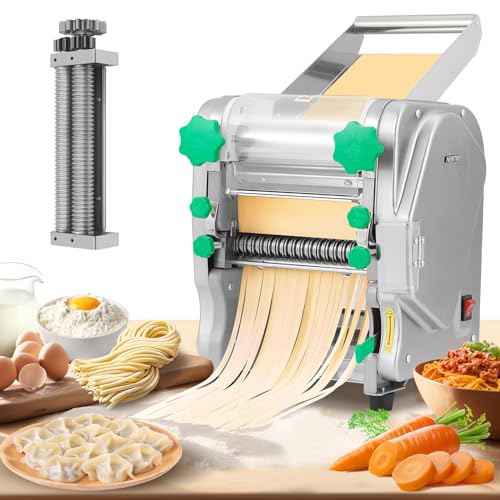
- Adjusts dough thickness from 0.1–18 mm
- Includes fettuccine and round pasta blades
- Switches easily between pressing and cutting
Best For: Smaller commercial kitchens and homes making pasta and wrappers
Compact Commercial Pick
Stainless Steel Electric Pasta Press

- 550W motor for high-gluten dough
- Adjustable thickness control
- Includes a 3mm round knife
Best For: Small commercial kitchens and home users needing automatic pressing
High-Volume Workhorse
3-in-1 Commercial Dough Sheeter

- 30–50 kg/h stated capacity
- 2,200W kneading, sheeting, and cutting
- Includes removable 3mm knife set
Best For: Bakeries, restaurants, and other high-volume food operations
Versatile Mid-Size Choice
Dual-Cutter Electric Pasta Maker

- 3mm and 9mm dual noodle cutters
- Three-in-one kneading, pressing, and cutting
- Compact 46-pound stainless steel body
Best For: Mixed noodle and dumpling-wrapper production in compact kitchens
Best Heavy-Duty Electric Pick – 750W Stainless Steel Commercial Pasta Machine
For buyers seeking a versatile commercial pasta machine, this YIMOHOME model combines kneading, rolling, and cutting in one electric unit. Its 750W motor, stainless-steel construction, adjustable 0.1–20mm dough thickness, and stated output of 45–66 pounds per hour suit restaurants, busy kitchens, and larger home pasta projects.
Best For: Restaurants and home cooks who want one machine for noodles, pasta sheets, dumpling wrappers, and other rolled doughs.
Pros:
- 750W motor with a claimed 45–66 lb/hour noodle workload.
- 304 food-grade stainless-steel roller and cutter components.
- Combines kneading, pressing, and cutting, with multiple cutter options.
- Adjustable dough thickness from 0.1 to 20mm.
Cons:
- At about 46 pounds, it requires a dedicated, stable work area.
- The many functions and cutter choices may be more than occasional users need.
This is a strong choice when production capacity and dough versatility matter more than compact storage. Confirm the available workspace and cleaning routine before choosing it for a smaller kitchen.
Best Compact Italian Option – Marcato Atlasmotor Electric Pasta Machine
This Marcato Atlasmotor is a compact commercial pasta machine option for buyers who value Italian manufacture and hands-on control. The set includes the Atlas 150, hand crank, clamp, and Pastadrive motor, allowing you to make pasta sheets up to 6 inches wide with either manual or electric operation.
Best For: Small kitchens, cooking demonstrations, and lower-volume pasta production where compact size and manual control are useful.
Pros:
- Made and assembled in Italy.
- Includes both a hand crank and electric Pastadrive motor.
- Ten thickness positions provide repeatable adjustment.
- Compatible with 11 separately available Marcato accessories.
Cons:
- Its 6-inch sheet width is narrower than many full-size commercial machines.
- Additional pasta shapes require separately available accessories.
- The listed operation mode is manual, even though the set includes a motor.
Choose this model when flexibility, established construction, and a smaller footprint are priorities. It is less suited to buyers needing high-throughput production or wide commercial sheets.
Best Value Commercial Roller – Newhai 750W Pasta Maker
The Newhai 750W is a practical commercial pasta machine for users who want pressing and cutting without repeatedly removing the blades. Its adjustable 0.12–18mm thickness range, steel gears, double-belt transmission, and stated suitability for restaurants and homes make it a flexible option for varied dough work.
Best For: Restaurant or home users who need a heavy-duty roller with integrated dough pressing and noodle cutting.
Pros:
- 2-in-1 pressing and cutting design avoids blade removal during use.
- 750W motor with adjustable 0.12–18mm thickness.
- Thickened steel body, stainless-steel roller, and steel gears.
- Non-slip pads help keep the machine stable without securing it.
Cons:
- Automatic protective shutdown occurs after 1–2 hours of continuous operation.
- Requires a 10–20 minute cooling period before restarting after shutdown.
- At about 22kg, it is not especially portable.
This machine balances commercial-style construction with useful thickness control and straightforward operation. Plan production around its stated cooling cycle if you expect extended continuous use.
Best Extrusion Capacity – Automatic 15–20kg/h Pasta Squeezing Machine
This automatic commercial pasta machine is designed for extrusion rather than rolling sheets. Its 2.2kW motor, stated 15–20kg per hour output, large hopper, and included Fusilli, Spaghetti, and Penne dies make it a strong fit for small to medium commercial operations producing shaped pasta.
Best For: Cafes, restaurants, and food stalls that need automatic shaped-pasta production at commercial volumes.
Pros:
- Stated production capacity of 15–20kg per hour.
- Includes three replaceable dies for Fusilli, Spaghetti, and Penne.
- Stainless-steel body is durable and easy to clean.
- Handles and four anti-slip casters support repositioning.
Cons:
- It makes extruded pasta rather than rolled sheets or noodles.
- At about 220 pounds, moving it still requires substantial effort despite the casters.
- Only three dies are included; other shapes require compatible additional dies.
Consider this model when output and shaped-pasta variety are more important than compactness. Its hopper-and-die design is a better match for commercial extrusion workflows than for traditional sheet pasta.
Best High-Capacity Pick – Automatic 3-in-1 Pasta and Noodle Maker
If you need a commercial pasta machine that can handle more than standard noodles, this automatic 3-in-1 model combines kneading, pressing, and cutting in one compact stainless steel unit. It produces approximately 45–55 pounds of fresh noodles per hour and supports several pasta, wrapper, and flatbread applications.
Best For: Restaurants, noodle shops, dumpling businesses, and home cooks who want high output and multiple dough-making functions.
Pros:
- Produces about 45–55 pounds of fresh noodles per hour.
- Makes spaghetti, linguine, fettuccine, ramen, dumpling wrappers, wonton skins, and more.
- Adjustable dough thickness from 0.1–5 mm with 3 mm and 9 mm cutting options.
- Food-grade stainless steel body is designed for easier cleaning.
Cons:
- At 44 pounds, it may require a dedicated, stable counter space.
- The included cutters are limited to two noodle widths.
Its combination of commercial-scale output and broad dough versatility makes it a strong choice when one machine needs to cover both pasta and dumpling production. The 110V, 550W setup also suits many home and small-business kitchens.
Best for Pasta Variety – Full-Automatic Extrusion Pasta Maker
This commercial pasta machine is built for automatic extrusion and shaped pasta production. With a 2.2 kW motor, a stated capacity of 10–25 kg per hour, and three included dies, it is aimed at businesses that need consistent batches of spaghetti, penne, fusilli, and other formed pasta.
Best For: Bakeries, restaurants, snack businesses, and food-processing operations producing multiple extruded pasta shapes.
Pros:
- Includes Fusilli, spaghetti, and penne molds.
- Supports additional shapes such as macaroni, rotini, farfalle, and conchiglie with different dies.
- Offers a stated production capacity of 10–25 kg per hour.
- Automatic operation and stainless steel construction suit production environments.
Cons:
- Additional dies must be purchased separately.
- At 176 pounds, it is considerably less portable than countertop models.
- Its 19.7-by-18.5-by-30.7-inch footprint requires substantial workspace.
This is the most production-oriented option of the three, particularly for users focused on extruded shapes rather than rolled sheets. Its included molds provide a useful starting range, while extra dies expand the menu at additional cost.
Best Adjustable Roller – Electric Dough Roller Pasta Machine
For buyers who prioritize adjustable dough thickness, this commercial pasta machine offers a 20 cm working width and a broad 0.1–18 mm thickness range. Its separate pressing and cutting modes, dual-use fettuccine blade, and round pasta blade make it a practical fit for pasta and wrapper preparation.
Best For: Home kitchens and smaller commercial operations that need an electric roller for fettuccine, round pasta, dumpling wrappers, and wonton wrappers.
Pros:
- Adjusts dough thickness from 0.1–18 mm.
- Includes a 2 mm/6 mm dual-use blade and a 2.5 mm round pasta blade.
- Switches between pressing and cutting without removing the blade.
- Updated nylon gears, hatch buckle, and bottom guard support quieter and safer operation.
Cons:
- Its 7.8-inch dough width is narrower than some production machines.
- It weighs about 42–45 pounds, so it is not especially easy to move frequently.
- It offers fewer pasta-shape options than an extrusion machine.
The wide thickness adjustment is the main advantage here, especially for users making both thin pasta and thicker wrappers. It is better suited to rolling and cutting applications than to high-volume shaped-pasta extrusion.
Compact Commercial Pick – Stainless Steel Electric Pasta Press
This stainless steel electric pasta press is a practical commercial pasta machine for smaller restaurants, hotels, food-processing settings, or busy home kitchens. Its 550-watt motor, adjustable thickness control, and 3mm round knife support routine noodle and wrapper production while helping reduce manual effort.
Best For: Small-scale commercial kitchens and households that need automatic noodle pressing with adjustable thickness.
Pros:
- Durable stainless steel construction is designed to resist rust and simplify cleaning.
- 550-watt pure copper motor is built to handle high-gluten dough and batch production.
- Adjustable thickness control supports more uniform sheets, with a stated range down to 0.3 cm.
- Can produce round noodles, wide noodles, dumpling skins, and wonton skins.
Cons:
- Only one 3mm round blade is included.
- The listed maximum sheet thickness is 3mm, limiting thicker dough applications.
- Its 110V electrical setup should be matched to the intended workspace.
Choose this model when you want a relatively compact automatic press with straightforward controls and stainless steel construction. It is better suited to light- or moderate-volume production than to the 30–50 kg/h capacity of the larger machine in this roundup.
High-Volume Workhorse – 3-in-1 Commercial Dough Sheeter
This heavy-duty commercial pasta machine combines dough kneading, sheeting, and noodle cutting in one 2,200-watt unit. With a stated 30–50 kg/h capacity, a 300mm roller, and adjustable 1–10mm thickness, it is designed for bakeries, restaurants, canteens, and food-processing operations.
Best For: High-volume professional kitchens producing noodles, pasta, dumpling skins, and wonton wrappers.
Pros:
- Three functions—kneading, pressing, and cutting—help consolidate production steps.
- Rated capacity of 30–50 kg/h supports higher-volume output.
- Removable noodle knives allow different widths; a 3mm knife set is included.
- All-steel gears, stainless steel rollers, and an upgraded sprocket drive are designed for durable, smoother operation.
Cons:
- At 198 pounds, it is substantially heavier and less portable than countertop models.
- Only the 3mm noodle knife set is supplied; other widths require additional knife sets.
- The 110V machine may require a suitable dedicated commercial setup.
This is the strongest choice here for production volume and multifunctionality, but its footprint and weight make it excessive for occasional household use. Confirm available floor space, power, and accessory costs before buying.
Versatile Mid-Size Choice – Dual-Cutter Electric Pasta Maker
This electric commercial pasta machine offers kneading, pressing, and cutting in a relatively compact stainless steel body. Its 550-watt motor, dual 3mm and 9mm cutters, and stated 45–55 lb/h output make it a flexible option for noodle shops, snack bars, restaurants, and home kitchens.
Best For: Users who want one compact machine for noodles, dumpling wrappers, wonton skins, and other rolled doughs.
Pros:
- Dual cutters produce 3mm and 9mm noodles without changing to a separate machine.
- Three-in-one operation combines kneading, dough pressing, and noodle cutting.
- Adjustable dough thickness is listed from 0.1–5mm, supporting wrappers and noodles.
- At approximately 46 pounds and 13 by 10 by 18 inches, it is easier to move than the larger workhorse model.
Cons:
- Its 550-watt motor and 45–55 lb/h stated output are less substantial than the 2,200-watt commercial model.
- The fixed dual-cutter setup offers fewer included width options than a machine with interchangeable knives.
- The supplied notes do not specify a removable cutter design.
Consider this model when flexibility and portability matter more than maximum throughput. The two built-in noodle widths and broad thickness adjustment make it especially useful for mixed noodle and dumpling-wrapper production.
How We Picked the Best Commercial Pasta Machines
We evaluated these machines by looking at the factors that matter most in restaurant and production settings: motor power, stated throughput, construction, included dies or cutters, operating controls, versatility, and ease of maintenance. We also considered whether each design is better suited to laminated pasta sheets, cut noodles, or extruded shapes such as penne, macaroni, fusilli, and conchiglie.
Product specifications can vary by seller and configuration, so confirm voltage, dimensions, included accessories, and actual capacity before ordering. A machine advertised for commercial use may still be intended for light-duty or countertop operation.
Quick Comparison
| Best For | Look For | Typical Design |
|---|---|---|
| Fresh pasta sheets and noodles | Adjustable rollers and interchangeable cutters | Electric roller machine |
| Small restaurants and catering | Stainless construction, simple controls, moderate output | Countertop commercial unit |
| Extruded shapes | Strong motor, forming dies, continuous feed system | Automatic pasta press |
| High-volume production | Published hourly capacity, durable drivetrain, easy cleaning | Automatic extruder |
Key Buying Factors for a Commercial Pasta Machine
Capacity and Duty Cycle
Match the machine’s real production rate to your busiest service period, not your average day. A lower-output roller may be ideal for made-to-order pasta, while a 15–20 kg/h class extruder is more appropriate for batch production. Ask whether the stated rate applies to dough preparation, extrusion, or finished pasta.
Rollers, Cutters, and Dies
Choose a roller and cutter system for lasagna sheets, tagliatelle, spaghetti, or dumpling wrappers. For shaped pasta, prioritize a press with the dies you actually need. Replacement accessories and compatible die availability can matter as much as the initial selection.
Construction and Power
Stainless steel is useful in commercial kitchens because it resists corrosion and is easier to sanitize. Check the motor wattage alongside the transmission and duty-cycle information; wattage alone does not guarantee sustained performance. Verify that the electrical specification matches your kitchen’s outlet.
Cleaning and Workflow
Look for removable cutters, accessible dough-contact parts, and a design that does not require extensive disassembly between batches. Never assume a component is dishwasher-safe unless the manufacturer says so. Consider where flour, dough, and finished pasta will be handled around the machine.
Who Should Buy Which Commercial Pasta Machine?
Choose a compact electric roller if your kitchen makes fresh sheets or noodles in moderate quantities and values flexibility. A model with multiple cutters is the better fit for menus that change frequently. Select an automatic press when shaped pasta is central to production and consistent extrusion matters more than sheet thickness.
For restaurants with limited counter space, prioritize footprint, storage, and straightforward controls over maximum advertised output. High-volume caterers and pasta producers should focus on throughput, continuous operation, service support, and spare parts. Home users or very small operations should avoid paying for industrial capacity they will not use; a lighter commercial-style machine may provide the best balance of cost, control, and cleanup.