The best bag sealing machines make it easier to close plastic packaging securely, protect contents from air and moisture, and create cleaner-looking finished packages.
This roundup compares 10 options ranging from compact handheld sealers and manual impulse models to continuous band machines designed for faster, repeatable production.
Best 10 Bag Sealing Machines Picks for 2026
Best Adjustable Manual Sealer
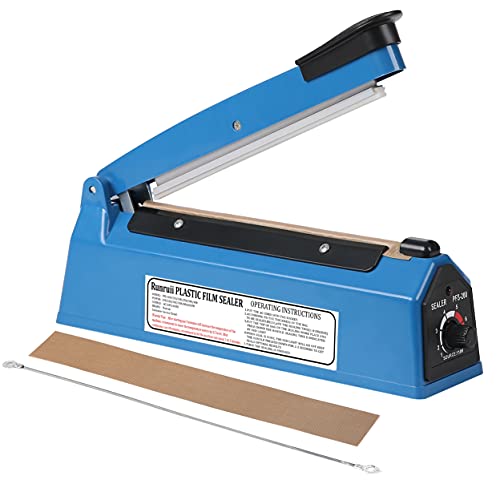
- Eight adjustable temperature settings
- No warm-up time required
- Designed for PE and PP bags
Best For: Household, retail, and small-batch plastic bag sealing
Best Meat-Bag Tape Sealer

- Includes tape for about 1,200 bags
- Seals and cuts in one motion
- Manual, no electrical power needed
Best For: Ground meat and freezer bag processing
Best Compact Food Sealer
METRONIC 12-Inch Impulse Sealer

- Adjustable temperature dial
- No warm-up time needed
- Compact tabletop design
Best For: Home and small-business food or craft packaging
Best Automatic Production Sealer

- Automatic sealing up to 16 m/min
- Adjustable 6–12 mm seal width
- Supports embossing and printing
Best For: Commercial and higher-volume plastic bag sealing
Reliable Countertop Sealing
METRONIC 8-Inch Impulse Sealer

- Adjustable heat for different bag materials
- No warm-up time and an 8-inch seal width
- Sturdy iron construction for home or small-business use
Best For: Countertop food and small-business packaging
Portable Kitchen Convenience

- Seals and cuts in one handheld tool
- Six heat settings suit varied bag thicknesses
- Rechargeable battery with LED power display
Best For: Portable snack and food-bag resealing
High-Volume Manual Sealing

- Eight temperature settings for plastic bags
- Quick impulse operation with no warm-up
- Built-in fuse and replacement element grip included
Best For: Household, retail, produce, and grocery packaging
Heavy-Duty Horizontal Pick

- Horizontal continuous sealing at up to 16 m/min
- Includes date, remark, logo, and batch-style printing capability
- All-metal body with adjustable heat and speed controls
Best For: Production lines needing horizontal sealing with integrated printing
Vertical Production Pick
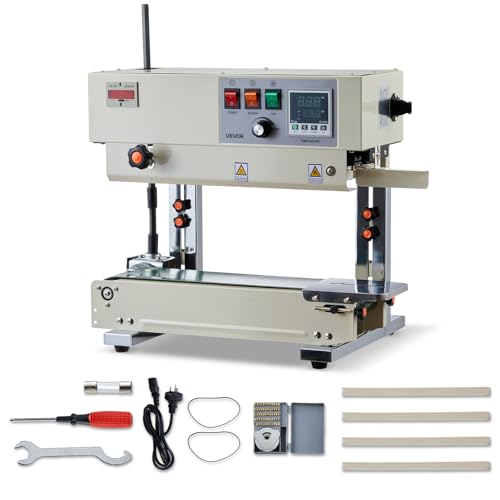
- Vertical sealing speeds up to 52.5 ft/min
- Built-in counter tracks sealed bags during production
- Optional roller printing and adjustable temperature control
Best For: Shops and small production spaces needing vertical sealing and counting
Compact Commercial Pick

- Automatic sealing speeds up to 16 m/min
- 0–300°C temperature range for varied materials
- Six-inch conveyor supports smooth bag feeding
Best For: Commercial workstations wanting compact, adjustable continuous sealing
Best Adjustable Manual Sealer – 12-Inch Impulse Heat Sealer
If you need straightforward bag sealing machines for household, retail, grocery, or light industrial use, this 12-inch manual impulse sealer offers adjustable temperature control and requires no warm-up time. It is designed for PE and PP plastic bags, but it does not cut bags.
Best For: Home users, small retailers, produce sellers, and grocery applications needing manual seals on plastic bags.
Pros:
- Eight temperature settings accommodate different bag materials.
- No warm-up time is required before sealing.
- Built-in fuse and reinforced construction support regular use.
- Includes an extra replacement element grip.
Cons:
- Manual operation requires holding the handle down for 2–3.5 seconds.
- It cannot cut bags.
- Its 12-inch sealing width may not suit larger packages.
This is a practical choice when adjustable heat and simple operation matter more than automation or cutting. Its compact design and stated capacity for more than 10,000 bags make it suitable for recurring small-batch sealing.
Best Meat-Bag Tape Sealer – LEM Poly Bag Tape Sealer
Among bag sealing machines for meat storage, this manual LEM model uses a twist-and-seal process to wrap tape around poly bags. It includes a 72-yard roll of 3/8-inch tape rated to seal approximately 1,200 poly meat bags.
Best For: Processing ground pork, beef, wild game, and other meat intended for freezer storage.
Pros:
- Wraps tape around the bag, seals it, and cuts in one smooth motion.
- Included tape can seal approximately 1,200 poly meat bags.
- Manual design requires no electrical power.
- Backed by a one-year factory warranty and lifetime customer support.
Cons:
- Designed around poly meat bags and compatible tape rather than heat sealing.
- Requires replacement tape as the included roll is used.
- Its manual process may be less suitable for high-volume automated production.
This sealer is specialized rather than universal, but it is well matched to freezer-bound meat packaging. The included tape and integrated sealing-and-cutting motion make it a convenient option for home processors and small meat operations.
Best Compact Food Sealer – METRONIC 12-Inch Impulse Sealer
This METRONIC model is one of the more accessible bag sealing machines for home and small-business packaging. Its 12-inch impulse bar seals plastic packaging without warm-up time, while the adjustable temperature dial helps accommodate different bag materials.
Best For: Sealing cookies, snacks, bath bombs, baked goods, coffee, and similar small packaged products.
Pros:
- Adjustable heat settings support different plastic bags.
- No warm-up time is needed.
- Compact 1.2-pound design is easy to position on a tabletop.
- Heating technology helps block airborne dust and keep contents fresh and dry.
Cons:
- The sealer activates only when the handle is pressed down.
- Users must hold the handle for 3–5 seconds per seal.
- Manual operation is less convenient than continuous automatic sealing for large batches.
For occasional food, craft, or small-business packaging, this unit offers a simple balance of portability and adjustable heat. Its tabletop format is convenient, though higher-volume users may prefer a continuous band design.
Best Automatic Production Sealer – VEVOR Continuous Band Sealer
For higher-throughput bag sealing machines, this VEVOR continuous band sealer provides automatic operation, digital temperature control, and speeds up to 16 m/min. Its carbon steel construction and adjustable 6–12 mm seal width support a broader range of plastic packaging tasks.
Best For: Commercial or production-oriented users sealing plastic bags and films from 0.02 to 0.8 mm thick.
Pros:
- Continuous automatic sealing reaches speeds up to 16 m/min.
- Digital controls allow parameter adjustment and temperature control.
- Adjustable 6–12 mm sealing width supports varied packaging needs.
- Can add embossing and alphanumeric printing.
Cons:
- At 21.7 pounds, it is considerably less portable than manual sealers.
- Its 600-watt design and larger footprint may be excessive for occasional home use.
- Routine maintenance may involve belts, fuses, and other replacement accessories.
This is the strongest fit for users who need repeatable, faster sealing rather than occasional manual packaging. The automatic band system, adjustable seal width, and included maintenance accessories make it better suited to sustained workflows.
Reliable Countertop Sealing – METRONIC 8-Inch Impulse Sealer
For shoppers comparing bag sealing machines for home food storage or small-business packaging, the METRONIC 8-inch impulse sealer offers manual heat control in a sturdy tabletop format. Its adjustable temperature dial helps accommodate different bag materials and thicknesses, while impulse operation requires no warm-up time.
Best For: Home kitchens, bakeries, bath-bomb makers, and small businesses sealing cookies, coffee, and other dry goods.
Pros:
- Adjustable temperature setting for different plastic bags
- 8-inch sealing width and quick, no-preheat operation
- Iron construction and pure copper coil are designed for durability
- Manual operation helps create seals that block dust and moisture
Cons:
- Corded electric design is less portable than rechargeable models
- Requires testing and adjustment to avoid overheating thinner bags
- Manual pressure and a 3–5-second hold are required for sealing
The METRONIC is a practical choice when you want a dedicated countertop sealer with adjustable heat and a straightforward manual workflow. Start at a low temperature and adjust gradually for the material being sealed.
Portable Kitchen Convenience – Mini Rechargeable Bag Sealer
If portability matters when choosing among bag sealing machines, this mini rechargeable model combines heat sealing and cutting in a handheld design. Six temperature gears help match different bag thicknesses, and the LED display shows remaining battery power for easier everyday use.
Best For: Resealing snack bags, chips, food-storage bags, and mylar bags at home, while traveling, or during camping.
Pros:
- Combines bag sealing and excess-material cutting
- Rechargeable battery avoids frequent disposable battery replacement
- Six adjustable heat gears support thin, medium, and thicker bags
- Compact handheld design is easy to carry and store
Cons:
- Battery-powered operation requires charging
- Handheld format is intended for smaller everyday resealing tasks
- Plastic construction may feel less substantial than an iron tabletop sealer
This mini sealer is the most convenient option for quick snack and food-bag resealing. Its cutter and rechargeable design add flexibility, especially when you do not want a corded appliance taking up counter space.
High-Volume Manual Sealing – 8-Inch Poly Bag Sealer
For buyers seeking bag sealing machines for household, retail, produce, or grocery use, this 8-inch impulse sealer provides eight temperature settings and quick manual operation. It seals PE and PP bags without continuous heating, and its built-in fuse adds a safety feature for routine use.
Best For: Retail counters, produce and grocery packaging, household projects, and users who need to seal multiple plastic bags.
Pros:
- Eight temperature adjustments support different plastic packaging bags
- No warm-up time and a lightweight design help speed up workflow
- Built-in fuse supports safer operation
- Includes an extra replacement element grip
Cons:
- Corded 110-volt operation limits mobility
- Manual sealing requires holding the handle for about 2–3.5 seconds
- Designed primarily for plastic bags rather than every packaging material
With its broad temperature adjustment range and impulse-style energy use, this model suits users who need repeatable plastic-bag sealing without a constantly heated element. It is a useful fit for light commercial or busy household packaging.
Heavy-Duty Horizontal Pick – FR900K Printing Band Sealer
For production lines that need dependable bag sealing machines with date or batch marking, the VEVOR FR900K combines continuous horizontal sealing with adjustable speed and temperature controls. Its conveyor and cooling/heating blocks are designed to support steady operation across plastic, aluminum foil, compound, and paper bags.
Best For: Businesses needing horizontal continuous sealing with an integrated printing function and durable metal construction.
Pros:
- Adjustable sealing speed up to 16 m/min and seal width from 6–15 mm.
- Printing accessories can mark dates, remarks, introductions, or logos during sealing.
- Handles bag materials from plastic and aluminum foil to compound and paper bags.
- Automatic conveyor, thermostatic control, and a 750-watt copper motor support continuous use.
Cons:
- Its 21.85-inch length and 750-watt power requirement may be more than small operations need.
- The supplied specifications list a broad thickness range, so users should verify compatibility with their specific bags.
The FR900K is a strong choice when sealing and printing need to happen in one horizontal workflow. Its all-metal body and adjustable controls make it better suited to regular commercial or industrial packaging than occasional household use.
Vertical Production Pick – Adjustable 900M Band Sealer
This VEVOR vertical band sealer is one of the more flexible bag sealing machines for shops, warehouses, bakeries, and small workshops. It offers adjustable temperature and speed, a built-in counter, and optional roller printing for tracking dates, batches, or specifications.
Best For: Small production environments that want vertical continuous sealing, bag counting, and optional printing in one machine.
Pros:
- 600-watt motor reaches speeds up to 52.5 ft/min for faster packaging.
- Adjustable 0.24–0.47-inch seal width accommodates different bag sizes.
- Temperature adjusts from 32–572°F, with a quick reference chart for setup.
- Built-in counter and included PTFE-coated conveyor belts help support organized production.
Cons:
- At 28 pounds and 21.65 inches tall, it requires a suitable dedicated workspace.
- Printing requires swapping type wheels rather than using a permanently fixed marking setup.
Choose the 900M when vertical feeding and production tracking matter as much as sealing speed. Its broad temperature range and included accessories make it a practical option for varied packaging tasks, while the automatic operation keeps routine sealing straightforward.
Compact Commercial Pick – FRC-520 Desktop Heat Sealer
The FRC-520 is a compact commercial option for buyers comparing bag sealing machines for plastic, foil, compound, and paper packaging. Its automatic continuous operation, digital temperature control, adjustable speed, and integrated conveyor are aimed at consistent desktop or workbench packaging.
Best For: Commercial users who need a relatively compact automatic sealer with straightforward temperature adjustment.
Pros:
- Sealing speed reaches up to 16 m/min for efficient packaging workflows.
- Adjustable 6–12 mm seal width suits many commercial bags and pouches.
- Temperature range from 0–300°C helps accommodate different bag materials.
- Integrated 6-inch conveyor belt supports smooth feeding across various bag sizes.
Cons:
- It does not list an integrated printing function or bag counter.
- The stated compatible thickness range is 0.02–0.16 mm, narrower than some continuous sealers.
The FRC-520 focuses on the essentials: continuous heat sealing, adjustable settings, and controlled bag feeding. It is a sensible fit for commercial packaging stations that do not need built-in printing and want a smaller 22-pound machine.
How We Picked These Bag Sealing Machines
We selected machines across the main categories buyers are likely to consider: compact mini sealers, manual impulse heat sealers, tape-based poly bag sealers, and continuous band sealers. We looked at practical differences including sealing width, operating method, temperature control, speed adjustment, portability, and suitability for different bag materials.
Because packaging needs vary widely, the list includes both simple tools for occasional household use and heavier-duty machines for retail, workshop, food-preparation, and small-business applications. Product specifications should always be checked before purchase, particularly for supported materials, maximum bag thickness, voltage, and available replacement parts.
Quick Comparison
| Machine type | Best suited to | Main advantage | Potential limitation |
|---|---|---|---|
| Mini bag sealer | Occasional home use | Small and easy to store | Limited sealing capacity |
| Manual impulse sealer | Home, crafts, and small batches | Simple operation and clean heat seals | Requires manual placement for every bag |
| Tape sealer | Poly bags and retail packaging | Fast, convenient closure without heat | Not suitable for every film type |
| Continuous band sealer | Frequent or commercial packaging | Consistent, repeatable sealing | Larger, heavier, and more expensive |
Key Buying Factors for Bag Sealing Machines
Sealing Width and Bag Size
Match the jaw or band width to the packages you plan to close. Eight-inch models work well for many small and medium bags, while 12-inch sealers provide more flexibility. Continuous machines are preferable when bags vary in size or need to be processed repeatedly.
Material Compatibility
Many heat sealers are designed for thermoplastic films such as polyethylene and polypropylene, but thickness and construction still matter. Confirm that the machine supports your specific bags. Paper-lined, foil, laminated, and unusually thick packaging may require a specialized sealer.
Temperature, Timing, and Speed Controls
Adjustable heat and sealing time help prevent weak seals on thick materials and melted or distorted edges on thin films. Continuous band models add speed control, which is useful when balancing throughput with seal quality.
Manual or Continuous Operation
Manual impulse machines are affordable and straightforward for intermittent use. Continuous band sealers reduce handling time and provide a more efficient workflow for large batches, but they need more counter space and setup.
Maintenance and Replacement Parts
Heating elements, sealing tapes, belts, blades, and other wear parts may eventually need replacement. A machine with readily available consumables can be more economical over time than a cheaper model that is difficult to service.
Who Should Buy Which Bag Sealing Machines?
- For occasional household storage: Choose a mini sealer or compact manual impulse model if portability and low cost matter most.
- For crafts, resale packaging, and small batches: An 8- or 12-inch impulse sealer offers a useful balance of control, capacity, and simplicity.
- For poly bags that do not need heat sealing: A tape-based sealer can provide a quick, tidy closure with minimal setup.
- For frequent packaging work: Choose a continuous horizontal band sealer for efficient desktop production.
- For heavier bags or specialized workflows: A vertical band model may be easier to use when products are loose, bulky, or better supported from below.
Before ordering, compare the machine’s seal width, compatible film, temperature range, speed, footprint, and replacement-part availability with your expected workload. The best Bag Sealing Machines are not necessarily the most powerful; they are the ones that match your materials and production volume without adding unnecessary complexity.