The best utility carts for restaurants help move dishes, ingredients, cookware, cleaning supplies, and small equipment without slowing down service. The right model can also add valuable storage in prep areas, kitchens, dining rooms, and back-of-house spaces.
This roundup compares 10 commercial-style carts by capacity, construction, tier layout, mobility, and safety features. Whether you need a compact foodservice cart or a high-capacity workhorse, use the guide below to narrow your options.
Best 10 Utility Carts for Restaurants Picks for 2026
Heavy-Duty Capacity Pick
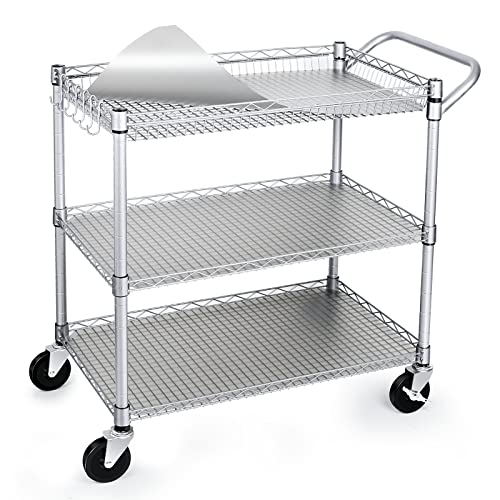
- Supports up to 990 pounds
- Adjustable three-shelf design
- Quiet casters with two locks
Best For: Restaurants and kitchens moving heavy loads
Easy-Clean Organization Pick

- 300-pound total capacity
- Quiet casters with two locks
- Raised shelves and easy-access fronts
Best For: Indoor restaurant and supply organization
Bus-Tub Transport Pick

- 390-pound combined capacity
- Dual molded push-pull handles
- Four swivel casters
Best For: Restaurant supply and bus-tub transport
Balanced Restaurant Workhorse

- 400-pound total capacity
- Two lockable swivel casters
- Open-front, raised-edge trays
Best For: Versatile restaurant and kitchen service
Maximum-Capacity Pick
NTE 3-Tier Heavy-Duty Rolling Cart

- 990-pound total capacity
- Adjustable and removable shelves
- Includes liners and six S-hooks
Best For: Restaurants moving heavy or bulky supplies
Lightweight Plastic Pick

- 300-pound maximum capacity
- Lightweight PP and aluminum build
- Swivel wheels with two brakes
Best For: Lighter-duty food service and organization
Commercial Wire Pick
Finnhomy 3-Tier Steel Service Cart
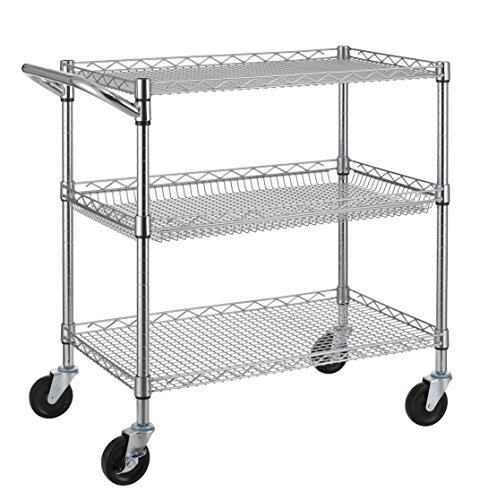
- 500-pound recommended moving capacity
- NSF-listed steel wire construction
- Adjustable shelves and two locking wheels
Best For: Commercial kitchens and restaurant storage
Best Overall
High-Capacity 3-Tier Service Cart

- 510-pound maximum capacity
- Four locking swivel casters
- Raised, spill-resistant shelf edges
Best For: Busy restaurant and catering teams needing stability and load capacity
Best Large-Format Pick
Heavy-Duty Commercial Bus Cart

- Large three-tier work area
- Heavy-duty plastic and aluminum build
- Quiet, lockable wheels
Best For: Foodservice teams needing more shelf space for indoor transport
Best Compact Value
Lightweight Plastic Restaurant Cart

- Compact three-tier footprint
- Scratch- and rust-resistant shelves
- Two lockable wheels
Best For: Smaller kitchens and teams needing a lighter everyday cart
Heavy-Duty Capacity Pick – 990-Lb Metal Utility Cart
For restaurants that need to move substantial loads, this metal utility cart offers three adjustable shelves, a push handle, and a stated 990-pound capacity. Its chrome-plated surface and included shelf liners make it a practical option among utility carts for restaurants.
Best For: Commercial kitchens, restaurants, warehouses, and other workspaces moving heavy supplies.
Pros:
- Supports up to 990 pounds on wheels.
- Three shelves adjust in 1-inch increments and include liners.
- Four quiet swivel casters include two locking wheels.
- Includes a ventilated basket, six hooks, and a push bar.
Cons:
- Its 26-pound metal construction may be less convenient to carry than lighter carts.
- The larger 35.63-inch depth may require careful space planning.
Choose this model when load capacity and flexible storage matter more than a compact footprint. Its listed dimensions are 35.63 by 18.1 by 33.93 inches, and assembly is designed to require no tools.
Easy-Clean Organization Pick – 300-Lb Plastic Utility Cart
This three-tier plastic utility cart combines thickened polypropylene shelves with aluminum posts, making it a practical choice for organized indoor transport. Its raised edges, quiet casters, and tray-access design suit everyday utility carts for restaurants.
Best For: Restaurants, hotels, classrooms, offices, and indoor supply organization.
Pros:
- Supports up to 300 pounds total, or 100 pounds per shelf.
- Four quiet TPR casters roll smoothly, with two lockable wheels.
- Raised sides help secure items while the low front edge simplifies loading.
- Two side handles and rounded corners support comfortable maneuvering.
Cons:
- Its 31.5 by 16 by 38-inch profile may not suit low-clearance areas.
- The plastic shelf design is intended for a lower capacity than the heavy-duty metal option.
With a 300-pound rating and a 17.2-pound listed weight, this cart balances capacity with easier handling. Assembly uses the included rubber mallet and protective bump caps.
Bus-Tub Transport Pick – 390-Lb Service Cart
Commercial 3-Shelf Rolling Service Utility Cart | Capacity 390 lbs. | 37" x 34" x 16" | Black
Check Price On AmazonDesigned for everyday service work, this three-shelf cart offers a 390-pound combined capacity and dual molded handles for pushing or pulling. It is a straightforward option for restaurants needing utility carts for restaurants to carry supplies or full bus tubs.
Best For: Restaurant back-of-house transport, canned goods, tableware, and bus tubs.
Pros:
- Three plastic shelves provide a combined 390-pound capacity.
- Dual handles support control from either end.
- Four swivel casters help navigate corners and furniture.
- One-inch shelf clearance accommodates a range of stored items.
Cons:
- The casters are described as swivel but not lockable.
- Its 34-inch width may be less suitable for narrow aisles.
This cart is a practical middle-ground choice for operations that want substantial capacity without moving to a metal-shelf design. Its smooth plastic body is also positioned for use in kitchens, offices, workshops, and warehouses.
Balanced Restaurant Workhorse – WORKPRO 400-Lb Utility Cart
The WORKPRO three-tier cart pairs polypropylene trays with an aluminum frame and two handles, providing a balance of capacity, maneuverability, and easy cleaning. It is a versatile fit for restaurants seeking utility carts for restaurants that can also serve kitchen, office, or warehouse duties.
Best For: Restaurants and kitchens needing a versatile cart for food, supplies, or tools.
Pros:
- Supports up to 400 pounds total, with 134 pounds per tier.
- Four swivel casters include two brakes for positioning.
- Raised tray edges help keep items from falling during transport.
- Open-front trays make loading and unloading easier.
Cons:
- Assembly requires a rubber mallet.
- The open-front shelves provide less containment than fully enclosed storage.
With a listed 31.5-inch width and 36.6-inch height, this model offers useful storage without the larger footprint of some heavy-duty carts. Its combination of lockable wheels and open-front access makes it well suited to active service areas.
Maximum-Capacity Pick – NTE 3-Tier Heavy-Duty Rolling Cart
For restaurants needing utility carts for restaurants that can handle substantial loads, this NTE model combines a 990-pound total capacity with three adjustable metal shelves. Its industrial casters, liners, and included hooks make it practical for moving supplies, cookware, or service items around a busy workspace.
Best For: Restaurants and commercial kitchens transporting heavy or bulky items.
Pros:
- Supports up to 990 pounds across three shelves.
- Adjustable or removable shelves accommodate different item sizes.
- Includes shelf liners, six S-hooks, and two lockable casters.
- Anti-rust, waterproof metal finish is designed for regular use.
Cons:
- At 25.1 pounds, it is heavier than the plastic-cart option.
- The listed dimensions may require dedicated storage or aisle space.
This is the strongest choice in the group for high-capacity restaurant transport. Choose it when load capacity and flexible shelf setup matter more than having the lightest cart.
Lightweight Plastic Pick – VEVOR 3-Tier Utility Cart
This VEVOR cart is a practical option for utility carts for restaurants when easy maneuverability and water resistance are priorities. Its polypropylene shelves, aluminum frame, raised edges, and swivel casters suit food-service, storage, and general transport tasks.
Best For: Restaurants wanting a lighter cart for indoor food service and organization.
Pros:
- Lightweight 18.9-pound design is easy to maneuver.
- Supports up to 300 pounds, with shelf-specific load ratings.
- Waterproof, rust-resistant PP and aluminum construction.
- Four-inch swivel wheels include two lockable casters.
Cons:
- Its 300-pound capacity is lower than the metal alternatives.
- Plastic shelves may be less suitable for the heaviest commercial loads.
For routine transport where staff frequently reposition the cart, this model offers a useful balance of mobility, storage, and easier handling. It is best suited to lighter-duty restaurant workflows rather than maximum-load hauling.
Commercial Wire Pick – Finnhomy 3-Tier Steel Service Cart
For utility carts for restaurants that need a commercial-grade wire design, the Finnhomy combines three ventilated shelves with a steel frame and adjustable shelf heights. Its NSF listing, chrome anti-rust finish, and 500-pound recommended moving capacity make it suited to busy kitchens and storage areas.
Best For: Restaurants needing a durable wire cart for food, appliances, or supplies.
Pros:
- Recommended moving capacity is up to 500 pounds.
- NSF-listed commercial-grade construction with chrome anti-rust shelves.
- Ventilated baskets and one-inch shelf adjustment intervals improve flexibility.
- Four-inch swivel wheels include two brakes.
Cons:
- Wire shelving may require care with very small items.
- Its 26.5-pound weight makes it the heaviest option listed.
This cart is a solid middle ground between the highest-capacity NTE and the lighter VEVOR. Its ventilated wire shelves and commercial design are especially useful for restaurant storage and moving larger equipment.
Best Overall – High-Capacity 3-Tier Service Cart
For restaurants needing dependable utility carts for restaurants, this three-tier model combines a 510-pound capacity with four locking swivel casters. Its raised shelf edges, ergonomic handle, and compact footprint make it practical for moving supplies through kitchens, pantries, warehouses, and offices.
Best For: Restaurant and catering teams that need high capacity, secure parking, and flexible indoor storage.
Pros:
- Supports up to 510 pounds with thicker aluminum tubes and robust PP shelves.
- Four 360-degree swivel casters lock to help stabilize the cart while loading.
- Raised shelf edges help keep items from falling, while the lower front allows easy access.
- Includes a rubber mallet and protection pad for assembly.
Cons:
- The 34.25-inch overall length may require more maneuvering space than smaller carts.
- Assembly is still required before use.
This is a strong all-around choice when stability and load capacity matter most. The four locking casters and spill-resistant shelf design are especially useful during busy service, while the three-tier layout supports organized transport.
Best Large-Format Pick – Heavy-Duty Commercial Bus Cart
This large commercial cart is a practical option for restaurants that need extra shelf area and a substantial frame. With a 40.15-inch length, three tiers, heavy-duty plastic trays, and aluminum supports, it is designed for foodservice, warehouse, workshop, and office use.
Best For: Foodservice operations that prioritize a large working surface and quiet, lockable movement.
Pros:
- Large 40.15-by-19.29-inch overall size provides generous carrying space.
- Heavy-duty high-density plastic construction supports up to 550 pounds according to the product notes.
- Lockable, silent wheels help the cart stop securely and move quietly.
- Rust-resistant aluminum legs and easy-clean, nonslip trays suit demanding work areas.
Cons:
- Its larger footprint may be less convenient in narrow restaurant aisles.
- The supplied details list both a 550-pound product claim and a 500-pound maximum capacity specification, so buyers should verify the intended limit.
Choose this model when surface area is more important than compact storage. Its large trays and quiet lockable wheels make it well suited to moving foodservice supplies, though the dimensions deserve careful consideration before placing it in a tight kitchen.
Best Compact Value – Lightweight Plastic Restaurant Cart
For smaller kitchens and support areas, this compact three-tier model offers a useful balance of capacity and maneuverability. Its 31.5-inch-wide footprint, polypropylene shelves, ergonomic handles, and four swiveling wheels make it a practical choice among utility carts for restaurants.
Best For: Restaurant staff, offices, and warehouses that need a lighter cart for everyday indoor transport.
Pros:
- Compact 31.5-by-16.9-inch dimensions are easier to position in limited spaces.
- Three polypropylene shelves resist scratches, dents, chips, and rust.
- Four swiveling wheels support easy movement, with two lockable wheels for parking.
- Includes a rubber hammer and protective bumping cap for installation.
Cons:
- Only two wheels lock, rather than all four.
- The product notes cite both a 480-pound support claim and a 510-pound listed maximum, so the capacity should be confirmed.
- Disassembly after installation is difficult.
This cart is a sensible fit when you want a lighter, more compact option with durable plastic shelves. Its limited locking capability and conflicting capacity figures make it worth checking the listing details before purchase.
How We Picked These Utility Carts for Restaurants
We focused on carts suited to demanding foodservice environments rather than light household use. Key considerations included stated weight capacity, shelf configuration, material, wheel design, handle ergonomics, maneuverability, and cleaning practicality. The selection includes metal wire carts, solid plastic carts, and models with lockable casters so different restaurants can match a cart to their workflow.
Because published specifications can vary by seller and configuration, verify dimensions, weight ratings, assembly details, and warranty terms before ordering. A cart’s practical capacity may also be lower when loads are uneven, tall, or difficult to secure.
Quick Comparison
| Best For | Look For | Typical Advantage |
|---|---|---|
| Heavy equipment and bulk supplies | Metal frame and high weight rating | Greater rigidity and durability |
| Food, dishes, and spill-prone items | Solid plastic shelves | Easy wiping and contained loads |
| Service and bussing | Three tiers and swivel casters | Accessible storage during trips |
| Busy prep areas | Locking wheels and sturdy handle | Better control when parked or turning |
Key Buying Factors for Utility Carts for Restaurants
Capacity and Shelf Layout
Choose a weight rating that exceeds your normal load, not just the heaviest occasional load. Three shelves offer useful organization, but check the clearance between tiers if you carry tall containers, appliances, or stacked dishware.
Materials and Cleaning
Plastic carts are generally quick to wipe down and may be quieter around dining areas. Metal or wire carts can provide stronger support and ventilation, but their surfaces may require more attention around spills and crumbs. Look for smooth, corrosion-resistant finishes and shelves that are easy to access.
Mobility and Stability
Swivel casters make tight turns easier, while larger wheels usually handle thresholds and uneven floors better. Lockable wheels help keep the cart stable during loading, unloading, or service. Confirm that the handle is comfortable and that the cart will fit through doors, aisles, and elevators.
Size and Storage
Measure the route as well as the parking location. A wide cart may carry more but can obstruct narrow kitchen aisles. Consider whether it can be stored beneath counters, beside prep tables, or in a designated service area.
Who Should Buy Which Utility Carts for Restaurants?
Choose a heavy-duty metal cart if you regularly transport cookware, beverage supplies, bulk ingredients, or equipment. A plastic three-tier model is often the better choice for routine bussing, food transport, and cleanup because it is lightweight and simple to maintain. Restaurants with narrow corridors should prioritize compact dimensions and responsive swivel casters, while high-volume operations should favor reinforced construction, generous capacity, and dependable wheel locks.
For front-of-house service, prioritize quiet movement, a clean appearance, and stable shelves. For back-of-house work, capacity, impact resistance, and easy sanitation usually matter more. Whatever your use case, match the cart to your floor plan and daily load so it improves workflow instead of becoming another obstacle.