Fresh citrus juice can lift breakfast service, bar programs, and signature drinks fast—if your equipment keeps up. The right restaurant-grade juicer should be durable, easy to clean, and sized for your volume.
Below, we’ve narrowed the field to 10 options that balance output, reliability, and countertop practicality for busy kitchens and service counters.
Best 10 Citrus Juicer for Restaurant Picks for 2026
Manual Countertop Classic

- Manual lever delivers strong extraction force.
- Acid-resistant build suits commercial citrus use.
- NSF certified with removable parts for cleaning.
Best For: Restaurants needing a durable manual citrus press.
Premium Lever Press
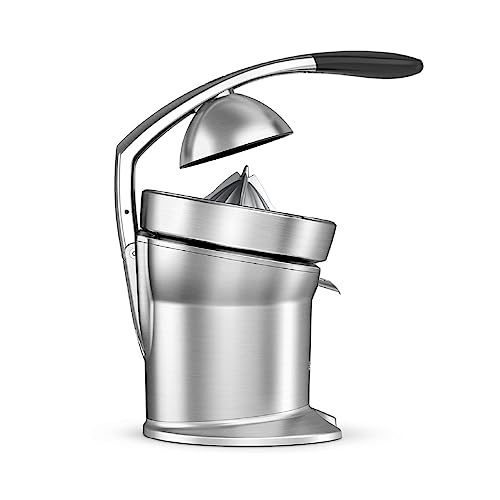
- Power-assisted lever reduces pressing effort.
- Quadra-Fin cone targets efficient citrus extraction.
- Dishwasher-safe parts and drip-stop spout aid cleanup.
Best For: Compact beverage setups wanting an easy electric press.
Quiet High-Output Option
Hamilton Beach FreshMark Electric Citrus Juicer
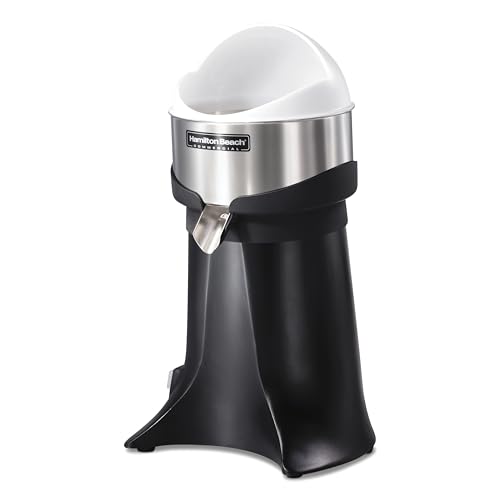
- Quiet brushless motor built for long-term use.
- Three reinforced reamers handle multiple citrus sizes.
- Extra-tall spout works with glasses and pitchers.
Best For: Busy drink stations needing a quieter electric juicer.
Fully Automatic Commercial Machine

- Automates peeling, juicing, and filtering.
- Rated for up to 25 oranges per minute.
- Large chute and detachable parts help service and cleaning.
Best For: High-volume orange juice service in food businesses.
Hands-Free Countertop Pick
Vinci Electric Juicer, Compact Citrus Press
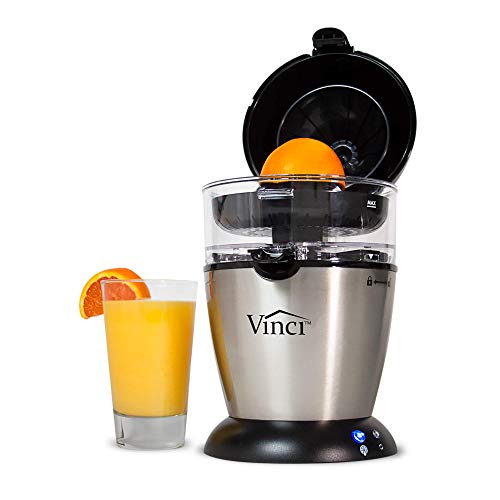
- Hands-free, fully enclosed juicing
- Pressure-sensitive extraction helps reduce bitterness
- 12 oz bowl with locking spout and pulp filters
Best For: Small cafes and cocktail stations needing clean, quick citrus prep
Heavy-Duty Manual Workhorse

- Reinforced cast iron for daily use
- Long lever and suction base improve stability
- Detachable parts and stainless strainer aid cleanup
Best For: Bars and restaurants wanting a durable manual press
High-Output Commercial Choice
Waring Compact Electric Citrus Juicer

- Up to 120 oranges per hour
- Compact size suits small workspaces
- Die-cast base with vibration-dampening feet
Best For: Busy bars and prep areas needing commercial citrus output
Heavy-Duty Manual Pick

- Cast iron body for continuous juicing
- Lever design reduces squeezing effort
- Dishwasher-safe contact parts and steel cup
Best For: Restaurants needing a durable manual citrus press
Commercial Electric Pick

- 200W corded electric citrus press
- Three interchangeable extracting bulbs
- Up to 20 gallons per hour ability
Best For: High-volume restaurants and juice counters
High-Yield Semi-Auto Pick

- Over 80% juice yield
- Processes 132-176 lbs per hour
- Built-in filter plate and peel bucket
Best For: Busy restaurants needing high-output citrus extraction
Manual Countertop Classic – Hamilton Beach Commercial 932
If you want a citrus juicer for restaurant use that is simple, sturdy, and built to handle high-volume squeezing without electricity, the Hamilton Beach Commercial 932 is a strong fit. Its manual lever design delivers up to 2000 lbs. of force for maximum juice extraction, while the acid-resistant finish and NSF certification make it a practical commercial countertop option.
Best For: Restaurants, cafés, and bars that need a durable manual juicer for lemons, limes, oranges, and grapefruits.
Pros:
- Manual arm applies up to 2000 lbs. of force for strong juice extraction.
- Acid-resistant metal construction is made to handle citrus wear and tear.
- Sure Grip feet help keep the unit steady during pressing.
- Removable stainless steel strainer cone and ABS funnel simplify cleaning.
Cons:
- Manual operation takes more effort than an electric juicer.
- Hand wash care may slow cleanup in busy kitchens.
Overall, this is a straightforward commercial juicer for operators who value durability, food-safety certification, and reliable extraction over automation.
Premium Lever Press – Breville Citrus Press Pro
The Breville 800CPXL is a polished citrus juicer for restaurant-style service when you want an electric press with smooth operation and controlled output. Its power-assisted lever, quad-fin cone, and drip-stop spout are designed to make juicing faster and cleaner for oranges, lemons, limes, and grapefruits.
Best For: Small foodservice counters or beverage stations that want an easy-press citrus juicer with dishwasher-safe parts.
Pros:
- Power-assisted lever makes pressing fruit easier.
- Quadra-Fin cone is designed for strong extraction across citrus sizes.
- Drip-stop spout helps reduce counter mess.
- Several key parts are dishwasher safe for easier cleanup.
Cons:
- Not a high-volume commercial extractor for heavy continuous service.
- Lower power and single-speed design may be less versatile than larger machines.
This is a good fit if you want a refined, easy-to-clean press that balances convenience with solid citrus extraction.
Quiet High-Output Option – Hamilton Beach FreshMark Electric Citrus Juicer
For a citrus juicer for restaurant service that needs speed and a quieter footprint, the Hamilton Beach FreshMark Electric Citrus Juicer is built for busy drink stations. Its brushless induction motor, three reinforced reamers, and extra-tall spout are aimed at fast, dependable juicing into glasses, pitchers, and storage containers.
Best For: Restaurants, cafés, and bars that want a quiet electric citrus juicer with multiple reamer sizes.
Pros:
- Brushless induction motor is designed for long-term use and quieter operation.
- Three interchangeable reamers cover lemons, limes, oranges, and grapefruit.
- Extra-tall open spout makes it easier to fill different containers.
- Detachable bowl collar, bowl, and reamers simplify cleaning.
Cons:
- At 28.1 pounds, it is fairly heavy for a countertop juicer.
- It still uses a manual feed-and-ream setup rather than full automation.
In short, this model offers a practical middle ground between manual presses and full automatic machines, especially where noise and speed both matter.
Fully Automatic Commercial Machine – VEVOR Orange Juicer
If you need a citrus juicer for restaurant workflows centered on oranges, this VEVOR automatic machine is built for speed and hands-off operation. It automates peeling, juicing, and filtering, and the large feed chute plus top storage basket help keep service moving with less prep.
Best For: Restaurants, juice bars, and foodservice counters that need a fully automatic orange juicer with high throughput.
Pros:
- Fully automated process handles peeling, juicing, and filtering.
- 120W motor is rated to extract juice from up to 25 oranges per minute.
- Large feed chute and storage basket reduce prep interruptions.
- Detachable parts and pull-out filter box make cleaning easier.
Cons:
- Designed for oranges only, so it is less flexible than multi-citrus juicers.
- Large 121.3-pound unit takes significant counter or floor space.
This is a strong choice when speed and automation matter most, especially in operations focused heavily on fresh orange juice.
Hands-Free Countertop Pick – Vinci Electric Juicer, Compact Citrus Press
If you want a citrus juicer for restaurant prep that keeps service moving without constant hand pressure, this Vinci model is built for speed and consistency. Its fully enclosed chamber helps contain juice and splashes, while the auto-press function extracts citrus in about 10 seconds per fruit.
Best For: Small cafes, cocktail stations, and kitchens that need a clean, hands-free electric citrus juicer for fast daily batching.
Pros:
- Hands-free operation with a fully enclosed juicing chamber
- Pressure-sensitive extraction helps reduce bitter rind scraping
- Fits citrus from small limes up to 4.5-inch grapefruits
- 12 oz BPA-free bowl with locking spout for controlled dispensing
Cons:
- 12 oz bowl is modest for higher-volume back-to-back juicing
- 50-watt motor is geared more toward convenience than heavy throughput
- Works best when the menu calls for frequent small batches, not large bulk production
Overall, this is a practical choice when cleanliness, ease of use, and quick citrus prep matter more than maximum output. The dishwasher-safe removable parts also make it easier to keep up with restaurant cleanup routines.
Heavy-Duty Manual Workhorse – CO-Z Cast Iron Citrus Juicer
This citrus juicer for restaurant use is a strong fit when you want a manual press that can handle daily service without electricity. The cast iron build, long lever, and suction base are designed to make juicing oranges, lemons, limes, grapefruit, and even pomegranates easier at the counter.
Best For: Bars, cafes, and restaurants that need a durable manual juicer for steady front-of-house or prep-side use.
Pros:
- Reinforced cast iron construction is rated for heavy daily use
- Long lever with rubber grip makes pressing easier
- Nonslip suction base helps keep the unit stable
- Detachable parts and stainless strainer simplify cleanup
Cons:
- Manual operation requires more physical effort than electric models
- Bulky footprint may take up noticeable counter space
- Best suited to steady individual pressing rather than high-speed automated output
For venues that value durability and control over automation, this model delivers a straightforward commercial-style pressing setup. It is especially appealing where electric power is inconvenient or where a hands-on juicing station makes sense.
High-Output Commercial Choice – Waring Compact Electric Citrus Juicer
When you need a citrus juicer for restaurant service that can keep up with real volume, this Waring commercial model stands out for speed. It is compact enough for small spaces, yet it is rated to juice up to 120 oranges per hour with a universal reamer for different citrus types.
Best For: Busy bars and restaurant prep areas that need a compact electric juicer with commercial throughput.
Pros:
- Rated for up to 120 oranges per hour
- Compact footprint works well in tight prep areas
- Heavy-duty die-cast base with vibration-dampening feet
- Universal reamer handles multiple citrus fruits
Cons:
- Single-speed design keeps operation simple, but less flexible
- Plastic construction is less premium than metal-bodied alternatives
- More focused on citrus throughput than specialty features
For operations where output matters most, this is the most commercial-minded option in the group. Its small footprint and high stated capacity make it a strong fit for beverage programs that need consistent citrus juice without taking over the counter.
Heavy-Duty Manual Pick – Cast Iron Citrus Press
If you need a citrus juicer for restaurant prep that can handle frequent use without electricity, this cast iron manual press is built for straightforward, high-leverage squeezing. It’s designed for citrus and pomegranates, with a stainless steel cup and removable parts that make cleanup easier after busy service.
Best For: Restaurants, bars, or kitchens that want a durable manual press for oranges, lemons, and similar fruit.
Pros:
- Heavy-duty cast iron construction for continuous juicing
- Lever action helps reduce effort while squeezing
- Stainless steel cup included for collecting juice
- Parts in contact with fruit can be removed and washed in the dishwasher
Cons:
- Manual operation may be slower than an electric unit in high-volume settings
- Best suited to halved fruit rather than whole fruit loading
- Large, heavy design may take up counter space
This is a practical choice if you value durability and simple operation over automation. The suction base also helps keep it steady during use, which is helpful on a busy counter.
Commercial Electric Pick – Chrome Juicer
For a citrus juicer for restaurant use that leans into speed and output, this electric commercial model is built for serious volume. It’s rated for citrus fruits, uses a 200-watt corded motor, and includes three interchangeable extracting bulbs to match different fruit sizes and service needs.
Best For: High-volume food service operations that need an electric citrus press with commercial output.
Pros:
- Commercial electric design for faster juice extraction
- Includes 3 interchangeable extracting bulbs
- Rated for up to 20 gallons per hour ability
- Dishwasher safe for easier cleanup
Cons:
- Heavier unit at 31 pounds
- Designed specifically for citrus fruits rather than a broad range of produce
- Chrome finish may show wear or fingerprints in a busy prep area
If your priority is throughput, this model is a strong fit for commercial prep stations. Its portable design and bulb options make it more flexible than a basic single-size press.
High-Yield Semi-Auto Pick – Commercial Orange Juicer
If you want a citrus juicer for restaurant service with higher automation and strong output, this semi-automatic machine is built around physical pressing and filtration. It processes oranges, lemons, and pomegranates, uses rotating shaft assemblies, and includes a peel collecting bucket and PC cover for commercial workflows.
Best For: Restaurants, beverage shops, and fruit counters that want a higher-capacity electric citrus extractor.
Pros:
- High juice yield of over 80% according to the product notes
- Processes 132-176 lbs of citrus fruit per hour
- Large fruit basket supports quick refilling during operation
- Built-in filter plate separates juice from pulp
Cons:
- Requires fruits to be washed, peeled, pitted, and cut to size
- Hand wash only
- Large footprint and 51.4-pound weight may limit easy repositioning
This is the most automated option in the group for operators focused on output and filtration. It’s especially useful where consistent juice volume matters more than compact size.
How We Picked the Best Citrus Juicer for Restaurant Use
We focused on commercial-friendly designs that can handle repeated use without slowing service. Priority went to build quality, throughput, ease of cleanup, footprint, and whether the machine makes sense for a low-volume café, high-traffic brunch spot, or full-service restaurant.
We also looked at juice consistency, operator effort, and whether the machine is better suited to oranges, lemons, limes, or mixed citrus service.
Quick Comparison
Manual presses are best for smaller batches, premium presentation, and quieter service. Electric countertop juicers are a better fit when you need faster output and less labor. High-capacity commercial extractors make sense for operations that juice continuously during peak hours.
Key Buying Factors for a Citrus Juicer for Restaurant
Volume and Speed
Estimate how many drinks or juice orders you serve per hour. A compact manual press may be enough for a café, while brunch-heavy restaurants and juice-forward menus usually benefit from electric models with faster cycle times.
Durability and Materials
Commercial use demands sturdy construction. Cast iron, stainless steel, and commercial-grade metal housings typically hold up better than lightweight consumer units, especially when used every day.
Cleanup and Sanitation
Look for removable strainers, accessible parts, and smooth surfaces that wipe down quickly. In a busy restaurant, a juicer that is hard to disassemble can become a bottleneck.
Counter Space and Noise
If space is tight, a compact footprint matters. Noise also matters near guests, host stands, or open kitchens; manual presses and quieter electric units are often preferable in those settings.
Fruit Versatility
Some machines handle small citrus well but struggle with larger oranges or grapefruits. Make sure the juicer matches your menu and can handle the fruit sizes you actually serve.
Who Should Buy Which Citrus Juicer for Restaurant?
If you need occasional fresh juice with minimal noise, choose a manual press. If you want faster service and fewer labor steps, an electric countertop model is usually the best fit. For higher-volume operations, look for a commercial extractor built for repeated production and easy maintenance.
For most buyers searching for a Citrus Juicer for Restaurant use, the best choice is the one that matches peak-hour demand, available prep space, and cleaning workflow—not just raw power.